Opening the book…
Friendships
How do you define friendship? There is no right or wrong answer. Friendship, like family, is in the eye of the beholder. In essence, friendship is often thought of as a close relationship with a person with whom you have a common interest or connection. Friendship is often considered a voluntary social relationship, but it can become voluntary personal if there is a large amount of contact and self-disclosure. Self-disclosure is when you purposefully share personal information with another individual. It includes the expression of your observations, thoughts, feelings, and needs.

The term chosen families (Weston, 1991) originally referred to families that members of the LGBTQIA+ community formed with friends, community members, and others, when their families of origin excluded them, due to their sexuality or gender expression. In modern times, many of us have formed small groups of intimate friends and neighbors who act as our most trusted companions, essentially like family. The term friendsgiving has become commonplace, indicating that we are sharing Thanksgiving with non-family members, whom we consider close friends (Fetters, 2018).
Reflection Questions
- Do you have a group of close friends you consider to be your chosen family?
- What are the advantages of having non-family members in your intimate group for celebrations, discussions of difficult issues, and support?
- If you do not have a “chosen family,” who would you include in this group?
Common Friendship Types
As with all relationships, friendships look different over time, and as we get older. For adults, in particular, there are three common types of friendships: reciprocal, associative, and receptive.
Reciprocal Friendships
Reciprocal friendships involve people who are equally invested in the relationship. They share a similar appreciation for each other’s company, and a desire to maintain a connection throughout changing circumstances. Perhaps you have a friend whom you have known for a long time, maybe since childhood, to whom you are still connected despite having grown in different ways. This person might even be your “best friend”—someone you feel you can talk to about anything without judgment, and vice versa.
Associative Friendships
Associative friendships are a lighter version of reciprocal friendship. They include people who have the same level of respect and fondness for one another, but they connect less frequently with less depth. In these relationships, the two people involved are more like close acquaintances. They may connect over specific shared interests. For example, maybe you volunteer somewhere and work with the same community of people every week or month. You have likely bonded and grown relatively close within a specific area; however, it is not clear that this relationship extends beyond the boundaries of your specific common interest area.
Receptive Friendships
Receptive friendships tend to have some imbalance of power. Common examples include when you have a friendly relationship with your boss or yoga instructor. These relationships can be very meaningful, however, they can be tricky if the power imbalance gets in the way. When participating in a receptive friendship, it is important to be aware of the possibility that the person who is the supervisor or mentor could take advantage of the power differential in the relationship. This would be an abuse of power.
After reading the section on different types of friendships, could you think of examples from your own life that fit within the three categories?
- Take a moment to name a reciprocal friend. How long have you known this person? What is special about this relationship?
- Can you discuss an associative friend? Where did you meet? Do you ever hang out or talk outside of the place where you have a common interest?
- Is there anyone in your life with whom you have a large power differential, but you would still consider this person your friend? Discuss this receptive friendship and whether you have ever been in a situation where someone with power abused their position within your relationship.
- When you think of these different types of friendships, what norms come to mind? What communication tactics work best to sustain them? Would you call them voluntary, or involuntary? Social, or personal?
- Are friendships free from structure and rules? If not, what rules or norms have you set with your friends?
No matter the circumstance, friendships are a valuable part of our lives. Friendships are often safe spaces for us to be ourselves, to practice having healthy boundaries and experiment with other parts of our personalities. Another type of relationship that can also feel both fulfilling and challenging is a romantic partnership. Let’s examine some nuances and dynamics that may be in place when someone becomes more than a friend.
Friendships Across the Life Span
Adolescence
Adolescence begins with the onset of puberty and lasts through the teen years. We typically make our first voluntary close social relationships during adolescence as cognitive and emotional skills develop. At this time, our friendships are usually with others of the same age/grade in school, gender, and race, and friends typically have similar attitudes about academics and similar values (Rawlins, 1992). These early friendships allow us to test our interpersonal skills, which affects the relationships we will have later in life. For example, emotional processing, empathy, self-disclosure, and conflict become features of adolescent friendships in new ways and must be managed (Collins & Madsen, 2006). Adolescents begin to see friends rather than parents as providers of social support, as friends help negotiate the various emotional problems often experienced for the first time (Collins & Madsen, 2006).

Friendships in adolescence become important as we begin to create an identity that is separate from our family. Japharl – Family – CC BY 2.0.
This new dependence on friendships can also create problems. For example, as adolescents progress through puberty and forward on their identity search, they may experience some jealousy and possessiveness in their friendships as they attempt to balance the tensions between their dependence on and independence from friends. Additionally, as adolescents articulate their identities, they look for acceptance and validation of self in their friends, especially given the increase in self-consciousness experienced by most adolescents (Rawlins, 1992). Those who do not form satisfying relationships during this time may miss out on opportunities for developing communication competence, leading to lower performance at work or school and higher rates of depression (Collins & Madsen, 2006). The transition to college marks a move from adolescence to early adulthood and opens new opportunities for friendship and challenges in dealing with the separation from hometown friends.
Early Adulthood
Early adulthood encompasses the time from around eighteen to twenty-nine years of age, and although not every person in this age group goes to college, most of the research on early adult friendships focuses on college students. Those who have the opportunity to head to college will likely find a canvas for exploration and experimentation with various life and relational choices relatively free from the emotional, time, and financial constraints of starting their own family that may come later in life (Rawlins, 1992).
As we transition from adolescence to early adulthood, we are still formulating our understanding of relational processes, but people report that their friendships are more intimate than the ones they had in adolescence. During this time, friends provide important feedback on self-concept, careers, romantic and/or sexual relationships, and civic, social, political, and extracurricular activities. It is inevitable that young adults will lose some ties to their friends from adolescence during this transition, which has positive and negative consequences. Investment in friendships from adolescence provides a sense of continuity during the often rough transition to college. These friendships may also help set standards for future friendships, meaning the old friendships are a base for comparison for new friends. Obviously, this is a beneficial situation relative to the quality of the old friendship. If the old friendship was not a healthy one, using it as the standard for new friendships is a bad idea. Additionally, nurturing older friendships at the expense of meeting new people and experiencing new social situations may impede personal growth during this period.
Adulthood
Adult friendships span a larger period of time than the previous life stages discussed, as adulthood encompasses the period from thirty to sixty-five years old (Rawlins, 1992). The exploration that occurs for most middle-class people in early adulthood gives way to less opportunity for friendships in adulthood, as many in this period settle into careers, nourish long-term relationships, and have children of their own. These new aspects of life bring more time constraints and interpersonal and task obligations, and with these obligations comes an increased desire for stability and continuity. Adult friendships tend to occur between people who are similar in terms of career position, race, age, partner status, class, and education level. This is partly due to the narrowed social networks people join as they become more educated and attain higher career positions. Therefore, finding friends through religious affiliation, neighborhood, work, or civic engagement is likely to result in similarity between friends (Bleiszner & Adams, 1992).
Even as social networks narrow, adults are also more likely than young adults to rely on their friends to help them process thoughts and emotions related to their partnerships or other interpersonal relationships (Bleiszner & Adams, 1992). For example, a person may rely on a romantic partner to help process through work relationships and close coworkers to help process through family relationships. Work life and home life become connected in important ways, as career (money making) intersects with and supports the desires for stability (home making) (Rawlins, 1992). Since home and career are primary focuses, socializing outside of those areas may be limited to interactions with family (parents, siblings, and in-laws) if they are geographically close. In situations where family isn’t close by, adults’ close or best friends may adopt kinship roles, and a child may call a parent’s close friend “Uncle Andy” even if they are not related. Spouses or partners are expected to be friends; it is often expressed that the best partner is one who can also serve as best friend, and having a partner as a best friend can be convenient if time outside the home is limited by parental responsibilities. There is not much research on friendships in late middle age (ages fifty to sixty-five), but it has been noted that relationships with partners may become even more important during this time, as parenting responsibilities diminish with grown children and careers and finances stabilize. Partners who have successfully navigated their middle age may feel a bonding sense of accomplishment with each other and with any close friends with whom they shared these experiences (Rawlins, 1992).
Later Life
Friendships in later-life adulthood, which begins in one’s sixties, are often remnants of previous friends and friendship patterns. Those who have typically had a gregarious social life will continue to associate with friends if physically and mentally able, and those who relied primarily on a partner, family, or limited close friends will have more limited, but perhaps equally rewarding, interactions. Friendships that have extended from adulthood or earlier are often “old” or “best” friendships that offer a look into a dyad’s shared past. Given that geographic relocation is common in early adulthood, these friends may be physically distant, but if investment in occasional contact or visits preserves the friendship, these friends are likely able to pick up where they left off (Rawlins, 1992). However, biological aging and the social stereotypes and stigma associated with later life and aging begin to affect communication patterns.
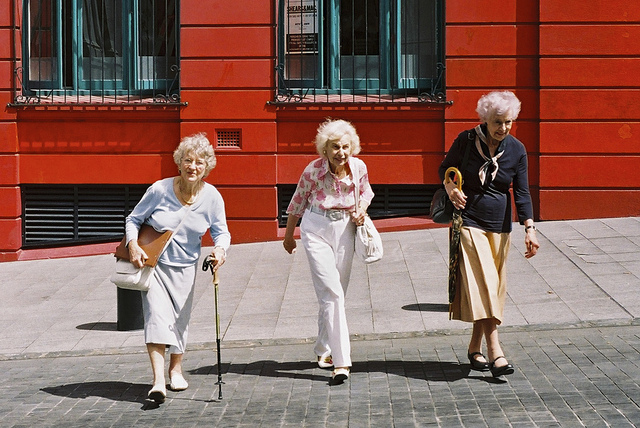
Obviously, our physical and mental abilities affect our socializing and activities and vary widely from person to person and age to age. Mobility may be limited due to declining health, and retiring limits the social interactions one had at work and work-related events (Bleiszner & Adams, 1992). People may continue to work and lead physically and socially active lives decades past the marker of later life, which occurs around age sixty-five. Regardless of when these changes begin, it is common and normal for our opportunities to interact with wide friendship circles to diminish as our abilities decline. Early later life may be marked by a transition to partial or full retirement if a person is socioeconomically privileged enough to do so. For some, retirement is a time to settle into a quiet routine in the same geographic place, perhaps becoming even more involved in hobbies and civic organizations, which may increase social interaction and the potential for friendships. Others may move to a more desirable place or climate and go through the process of starting over with new friends. For health or personal reasons, some in later life live in assisted-living facilities. Later-life adults in these facilities may make friends based primarily on proximity, just as many college students in early adulthood do in the similarly age-segregated environment of a residence hall (Rawlins, 1992).
Friendships in later life provide emotional support that is often only applicable during this life stage. For example, given the general stigma against aging and illness, friends may be able to shield each other from negative judgments from others and help each other maintain a positive self-concept (Rawlins, 1992). Friends can also be instrumental in providing support after the death of a partner. Men, especially, may need this type of support, as men are more likely than women to consider their spouse their sole confidante, which means the death of the wife may end a later-life man’s most important friendship. Women who lose a partner also go through considerable life changes, and in general more women are left single after the death of a spouse than men due to men’s shorter life span and the tendency for men to be a few years older than their wives. Given this fact, it is not surprising that widows in particular may turn to other single women for support. Overall, providing support in later life is important given the likelihood of declining health. In the case of declining health, some may turn to family instead of friends for support to avoid overburdening friends with requests for assistance. However, turning to a friend for support is not completely burdensome, as research shows that feeling needed helps older people maintain a positive well-being (Rawlins, 1992).
What do you actually expect from a "good friend"? Science says it boils down to six things.
In Friendship Standards: The Dimensions of Ideal Expectations, researcher Jeffrey Hall ran three linked studies with a combined total of over 1,300 participants to figure out what people really mean when they picture their ideal friend. Starting with 181 items pulled from decades of past friendship research — everything from loyalty and self-disclosure to wealth and athletic ability — Hall used statistical factor analysis to whittle these down to a clean structure. Six core dimensions emerged: symmetrical reciprocity (loyalty, honesty, mutual support), communion (intimacy and self-disclosure), enjoyment (humor, fun, good personality), instrumental aid (favors and practical help), similarity (shared interests and attitudes), and agency (wealth, attractiveness, connections, fitness). This six-factor structure held up consistently whether participants were male or female, younger or older, and whether they came from a university sample or a broader international internet sample — meaning these aren't just quirks of one particular group, but something close to a universal template people use to judge their friendships. Interestingly, participants rated symmetrical reciprocity and communion as far more important than "agency" traits like wealth or attractiveness, even though those resource-related qualities still formed their own distinct, meaningful category. The study also found modest gender differences echoing prior research: women tended to place higher value on reciprocity, communion, enjoyment, and similarity, while men placed relatively more value on agency.
Discussion Questions
- Of the six dimensions identified — symmetrical reciprocity, communion, enjoyment, instrumental aid, similarity, and agency — which one do you personally weigh most heavily when you think about what makes someone a good friend? Has that changed for you over time?
- This study measured expectations for same-sex friendships only, since that's where most prior research had focused. How do you think these six dimensions might shift for cross-sex friendships, where things like "similarity" or "communion" could carry different social meanings or risks?
- Do you think the relative weight of these six dimensions shifts as people move from adolescence, to early adulthood, to adulthood, to later life? For example, would agency (status, connections, resources) matter more when people are first building their social and professional lives, and matter less once those things feel more settled? Which dimension do you think would rise or fall the most across the lifespan, and why?
Hall, J. A. (2012). Friendship standards: The dimensions of ideal expectations. Journal of Social and Personal Relationships, 29(7), 884–907.
Interpersonal Communication 2nd Edition Copyright © 2025 by Jason S. Wrench; Narissra M. Punyanunt-Carter; and Katherine S. Thweatt is licensed under a Creative Commons Attribution-NonCommercial-ShareAlike 4.0 International License, except where otherwise noted.
- Bleiszner, R. and Rebecca G. Adams, Adult Friendship (Newbury Park, CA: Sage, 1992), 2.
- Rawlins, W. K., Friendship Matters: Communication, Dialectics, and the Life Course (New York: Aldine De Gruyter, 1992), 271.
This page titled 11.3.2: Friendship was last modified on Sun, 04 Oct 2026 01:47:32 GMT and is shared under a CC BY-SA 4.0 license and was authored, remixed, and/or curated by Brooke Hanniff, Angela Hoppe-Nagao, and Kimberlie Yee-Jung.
The book could not be loaded just now.