Opening the book…
“Strip the silks from the broads.” —Cecil B. DeMille[1]
“Stripping the silks” does not denote some hideous action; it is movie industry speak for removing diffusing material (silk or gauze) from a type of light fixture (broad). A complete compendium of terms used in the film industry would fill an entire book, so this chapter gives an overview of some of the key personnel on set. In the lighting department, the director of photography, gaffer, best boy, and sparks are the main personnel for lighting a set safely and in keeping with the director’s vision for color, mood, and tone in a movie. This chapter outlines each of their roles, responsibilities, and who they report to. In addition, other key players, such as the director and producer, are also outlined in this chapter. It should be noted that some of these roles and responsibilities overlap depending on the film’s budget (especially low-budget or student films).
As there are so many roles and personnel involved in the film industry, this chapter only covers the main personnel that would be used on a small production of around twenty students. The faculty member serves as the executive producer.

Film production, akin to military precision, has a hierarchical structure and chain of command. High-end budget films have thousands of crew members, whilst a student production might only have a dozen crew members or even less. Below is a diagram for a higher-end production. Lower-budget films might double up or eliminate some positions entirely.
On a budget sheet, the costs are arranged into “above the line” and “below the line” financials. Every line on the budget related to cast and crew, and every other item paid for (e.g., locations, permits, costumes, props, make-up, food, transportation, accommodation, etc.) are variable costs and considered “below the line.” Fixed costs are called “above the line,” and pertain to the executive producer, producer, cinematographer, writer, and major cast, and they are usually given a fixed salary that would not change.

Everything else “below the line” has costs that change, usually on a daily basis. The charts above and below are not intended to show every single position on a set, especially high-end ones, but include the basics that would be needed for a student-run production. You can use this as a jumping-off point for your productions, adding roles according to the class numbers and what is available to them.

Executive Producer (EP)
The executive producer (EP) is usually responsible for the financing of a production and is subsequently in charge. They can often be the rulers of all things, and their decision is final.

However, this is not always the case. I have been on productions where all the EPs are investors who have given lesser amounts of money to production and have no desire to oversee anything. The prestige of having one’s name as an EP in the credits is often a glamorous appeal to folks and the reward for donating some money. I worked on a set where the director wanted his girlfriend to be part of the production and would not work if she was not part of it. The producer made her an EP with a strict demand: she could only watch the filming. On a student production, EP and producer can overlap.
Producer
Critical in the preproduction phase, the producer handles the financial and organizational aspects of a production and approves expenditure. Sometimes the responsibilities of EP and producers can overlap due to their versatility and skills at negotiation, troubleshooting, and fundraising. Often in collaboration with the EP, they usually pick and secure the rights to a script, and hire the director, creative personnel, cast, and crew. They have control over logistics and resources and are key to ensuring production runs smoothly. The producer also often acts as the mediator between departments and must make tough decisions. In general, there are two main types of producers: those who are hands-on and affect the look of the film, e.g., Jerry Bruckheimer (The Rock),[2] and those who are never seen but felt, e.g., Michael Douglas (One Flew Over the Cuckoo’s Nest),[3] whose father, Kirk Douglas, gave him the rights to the film.[4]

Director
Here are just a few influential directors over the decades: DW Griffith; Georges Méliès; Akira Kurosawa; Alfred Hitchcock; Steven Spielberg; Werner Herzog; and Pedro Almodóvar. However, not to be forgotten are female directors such as: Alice Guy-Blaché; Dorothy Arzner; Nora Ephron; Jane Campion; and Kathryn Bigelow. The director is primarily responsible for overseeing the shooting and editing phases of film production and is often involved at various stages of pre-production.

Directorial style is as varied as acting styles, with some directors known to be difficult taskmasters and others easygoing creatives. In 1995, as a young filmmaker, I was lucky enough to interview Scottish Director, Bill Forsyth (Gregory’s Girl,[5] Local Hero[6]). He was involved in a cultural endeavor to encourage children’s interest in filmmaking in Kippen, a small village in Scotland. Forsyth told me he was involved in every aspect of a film but felt actors were to be given respect and gentle guidance. He was extremely gracious, and after the interview was complete, he helped me put away my equipment. Scottish actor Bill Paterson, who played a main character in Forsyth’s Comfort and Joy[7] said, “He was a lovely director and never had any difficulty talking through what he had in mind.”[8]
Directors should have the final say, but they have a delicate balancing act in bringing their vision to the screen, on time and on budget, whilst keeping their bosses happy, i.e., executive producers and producers. Sometimes a director is also a producer and juggles technical and creative work with financial roles. Students who wish to take on this challenging role should be aware that directing films is not an easy job.

The ability to communicate ideas and their overall vision to everyone is essential. I have seen students who become egotistical, ignore useful input from others, and treat others with disdain. Recently, I had a student director who did not acknowledge the main actor whatsoever until they were on set, and even then, it was a cursory, but loud, “action.” This is not an effective way to behave off set, let alone on set. I took this student aside and communicated this to him. Balancing collaboration with the cast and crew, getting the job done efficiently, and handling problems professionally is challenging for even the most experienced filmmaker.
Close up
Directors dealing with intimate shots often do not take this seriously enough and have the potential to put actors in uncomfortable situations, whether for a student production or a high-end movie. I was a consultant for Edit Media’s OER Intimacy in the Classroom guidelines, which I use with my students regularly. I recommend students follow these guidelines, so they have a strong grasp of fairness, equity, and sensitivity in the industry.

Troubleshooting technical and creative issues can often be easier than handling tricky situations with personnel. It is helpful to have written documentation of rules and policies for working on set to reference if such situations do arise. For example, I rely on these Rules for Dismissal (also available in the Student Resources section at the end of the chapter). This document has been invaluable for major problems caused by some personnel and is a mini version of real-life situations on a set. Only once in twenty years of teaching has a student been fired from a production. They humbly had to ask another group to join them.
First Assistant Director (1st AD)
In addition to assisting the director, the 1st AD has an especially significant role in scheduling and communicating with the crew, constantly checking that the cast and crew are in the correct place and on time. They create detailed daily schedules in collaboration with the producer, director, and heads of departments, and oversee the daily call sheets. Additionally, and most importantly, they oversee the safety of everyone on set. Please see further details in Chapter 2 Safety on Set, and the safety checklist in this chapter’s Student Resources to use/amend accordingly.

The main organizational tools and documents the 1st AD uses are call sheets, schedules, and a Day Out Of Days (DOODs) (see links to examples and templates in the Student Resources section at the end of the chapter). The DOODs involve the arduous task of breaking down the script into elements such as scenes, locations, actors, special effects etc., to fit this gigantic puzzle into an efficient schedule. The 1st AD also works closely with the key grip (see key grip later in this chapter). It should be noted that the 1st AD does not help with choosing shots or directing actors.

Close up
Second Assistant Director (2nd AD)
The 2nd AD is important if there is a large cast or a plethora of extras. Once the schedule has been drawn up, this person must ensure the cast knows the logistics of when they are needed, the location, and how to get there ahead of time. Often, they might have to cast and secure extras, particularly for crowd scenes. Large productions might have more than one 2nd AD so that you would have, for example, one prepping the actors before they go onto the set, whilst another oversees the immediate filming. In addition to working with the director, they work closely with the production manager or coordinator regarding transportation and accommodation. Sometimes, they create daily call sheets from the production schedule, in cooperation with the production manager or coordinator. The “second” also liaises with actors, putting the cast through make-up and wardrobe. Sometimes the 2nd AD feels like the image below when everyone needs help!


Cinematographer/Director of Photography (DOP)
The acronym DOP or DP is used for the director of photography and is synonymous with cinematographer. They do not handle the camera as the camera operator has that role, but they check the images before taking the shot (see camera operator section). However, sometimes, particularly for lower-budget films, the roles are carried out by the same person. The cinematographer helps the director visualize the script and design the story’s aesthetic regarding camera angles and lighting design. They are experts on photographic processes, lighting, choosing lenses, format, composition, and how to manipulate the camera for each shot. In consultation with the director, they ensure the style of each shot suits the director’s vision and determine which moving shots and rigs are best used to create mood, tone, and character. The DOP also works closely with the gaffer and the camera operator.
I had the pleasure of attending a discussion held with the English cinematographer, Roger Deakins, at the National Association of Broadcasters in Las Vegas, NV. I remember him saying that carefully planning every shot and communicating with his crew, including the key grip, before each day’s shooting is extremely important to ensure the lighting design is implemented.
Gaffer
This term is for the head of the electrical department and oversees the crew of electricians on a film set. I come from the UK where gaffer is slang for a supervisor in a factory or team of laborers. However, the term gaffer has been used in films since the 1920s. The gaffer is responsible for the execution, and sometimes the design, of lighting plots. Sometimes the position is credited as the chief lighting technician (CLT), and they supervise the placement and rigging of the lights. Experienced gaffers can coordinate the entire job of lighting and managing resources, e.g., generators, lights, cables, and labor. They are responsible for knowing the appropriate gels to achieve a variety of effects, such as transforming midday into a beautiful sunset. Usually, the gaffer works for and reports to the director of photography. Delegated by the director of photography, and collaborating with the key grip, they implement the lighting plans.

Best Boy
The best boy is the gaffer’s trusted assistant in the electric department. They help the gaffer to oversee the lighting technicians (see sparks/juicers section). The origins of this are various and difficult to prove. During my undergraduate film university days, my professor said it was from the Depression era in America. Men and boys would line up outside the studios each day looking for work, and the ‘best boy’ picked, or in other words the strongest and most healthy-looking boy in the crowd.

As with the origin of the gaffer’s moniker, the term best boy was also in use by at least 1936. Film director Cecil B. DeMille, who laid out major terms in use on a film set, reported “The best boy is the gaffer’s assistant,” in an article for the Washington Times in June 1936. [9]
The best boy is responsible for daily running of the lighting or grip department, like the hiring and scheduling of crew, ordering or returning lighting or grip equipment, workplace safety, timecards, expendables, loading production trucks, planning and implementing the lighting or rigging of locations and/or sound stages, coordinating rigging crews and additional photography units, handling relations with the other production departments, and serving as the main daily representative of the department with the unit production manager and coordinator of the film.
Sparks/Juicers
Sparks or juicers are also called electricians, though not all are professionally trained. On a set, the gaffer might say, “We need more juice,” meaning, “we need more lighting power in a particular area of a shot,” so the nickname for the electricians, juicer, is obvious. Similarly, the term sparks is derived from electric sparks. These roles are responsible for the movement and setup of various pieces of lighting equipment. They lay electrical cables, wire fixtures, install gels, scrims and gobos, focus the lights, and assist in creating effects or programming sequences. For a student production, I recommend each juicer to be responsible for setting and striking one to two lights each.

Key Grip
Sometimes, the grip is called the first company grip. The key grip oversees the equipment related to the lighting and supervises a team of grips. They have specialized skills using dollies, jibs, cranes, car mounts, and many heavy-duty equipment relating to filming on a set. Collaborating with the grip team and the 1st AD, the key grip is responsible for safety on set, especially when stunts and dangerous effects are in use, such as pyrotechnics.

Grip
A grip reports to the key grip and is responsible for handling all the essential equipment on a film. A grip must have organizational skills, strength, and technical knowledge. After checking the schedule and design for the shots, they unpack the equipment, heave it to the locations, and set it in place as instructed. They build tracks, push dollies, hold the camera steady, and help with steadying a tripod, jib, crane, or any other rig equipment. Lifting heavy equipment and ensuring everything is in working order is a high priority so that when a director is ready to film, they can do so without any hiccups. Throughout the shoot, they must be vigilant, checking for possible malfunctions and safety, which must be brought to the attention of the key grip and 2nd AD.
As a brand-new student on a film set many years ago, I made the mistake of touching a doorway dolly (I wanted to feel the bright orange handle). The grip was none too pleased and shouted at me, saying, “You cannot touch the grips’ equipment!” He frightened the life out of me.

Camera Operator
Reporting to the DOP, the camera operator physically operates the camera, maintaining the composition and camera angles throughout each shot. The operator must handle a variety of technical equipment, e.g., remote-controlled electronics, cameras, cranes, and mobile mountings. They also help assemble and set up equipment during planning, preparing, and rehearsing scenes.

First Assistant Cameraperson (1st AC/Focus Puller)
Following instructions from the director or DOP, the 1st AC is responsible for maintaining image sharpness on whatever subject or action is in the filmic frame. This is performed by adjusting the camera lens or pulling focus to follow the action on set. They do the same for racking focus. They also manage and maintain camera equipment, including lenses, filters, and matte boxes. The 1st AC arrives on set before the director, DOP, and camera operator to ensure the camera and required lenses are prepared for the day’s shoot. If the director or DOP wants to try out a specific lens, 1st AC assembles the camera so that they can look through the eyepiece to assess the shot. At the end of the day, they must clean up and pack the camera equipment for the next day.

Second Assistant Camera Person (2nd AC/Clapper Operator)
The 2nd AC, also known as the clapper operator, operates the clapperboard. The clapper identifies each of the takes for each shot and helps with continuity. This responsibility is not an easy task, as they must ensure the slate and clapper are clearly visible and in focus in each shot, executed efficiently and correctly. They work with the camera operator (who helps get the clapper into the correct place in the frame) and the focus puller (who must ensure the details are in focus). Learn more about this procedure and important jargon, such as tail slates, soft stix, and how to slate, in the close up below.
Close up
Slating/Marking
Production Manager
The production manager must be as omnipotent as a god! Keeping track of everything is an important skill for this position because the PM organizes the general running of the shoot every day during production. As a liaison between the department heads, they try to ensure production goes smoothly. They are responsible for sticking to the budget, securing permits, ensuring union compliance, and scheduling and ensuring all equipment, catering, cast, crew, etc. are doing what they are supposed to be doing. Keeping the shoot on schedule is often an exceedingly difficult role requiring skills in negotiation, time management, troubleshooting, and leadership. Knowledge of copyright laws, health and safety, and contractual rights is particularly important. The ability to walk on water is a bonus.

Script Supervisor
Also known as continuity, the script supervisor’s role starts during pre-production as they create a continuity breakdown document and consult with the heads of each department. This document analyzes the script, noting cast, actions, wardrobe, props, scenes, and story days. Timing the script is also performed by the script supervisor at this stage.
During filming, the camera assistant works with continuity to check that the clapperboard information is correct. With each take, the script supervisor compiles detailed notes regarding which camera lens is used, the position of the actors, where action starts and finishes, what clothes/hair/make-up is worn, and where sets/furniture/props are placed.
Continuity works closely with the director and DOP during shooting to ensure consistency between takes, camera angle changes, and character eyelines. The script supervisor gives feedback before filming and notes vital information regarding each shot, whether it is good, bad, or unusable. These notes are used by the editor during postproduction and allow them to effectively have eyes and ears on set.
Continuity also prepares a daily report at the end of the day and updates the shooting schedule. The daily report includes how many shots, scenes, takes, and retakes were filmed. These updates are important for informing revisions to the following day’s shooting schedule.
Focus!
Matching eyelines means to ensure actors look in the correct direction at the correct height of what they are supposed to be looking at, especially when looking at someone or thing out of frame. Otherwise, they will be looking at the ceiling when they should be looking at the floor.

Sound Recordist
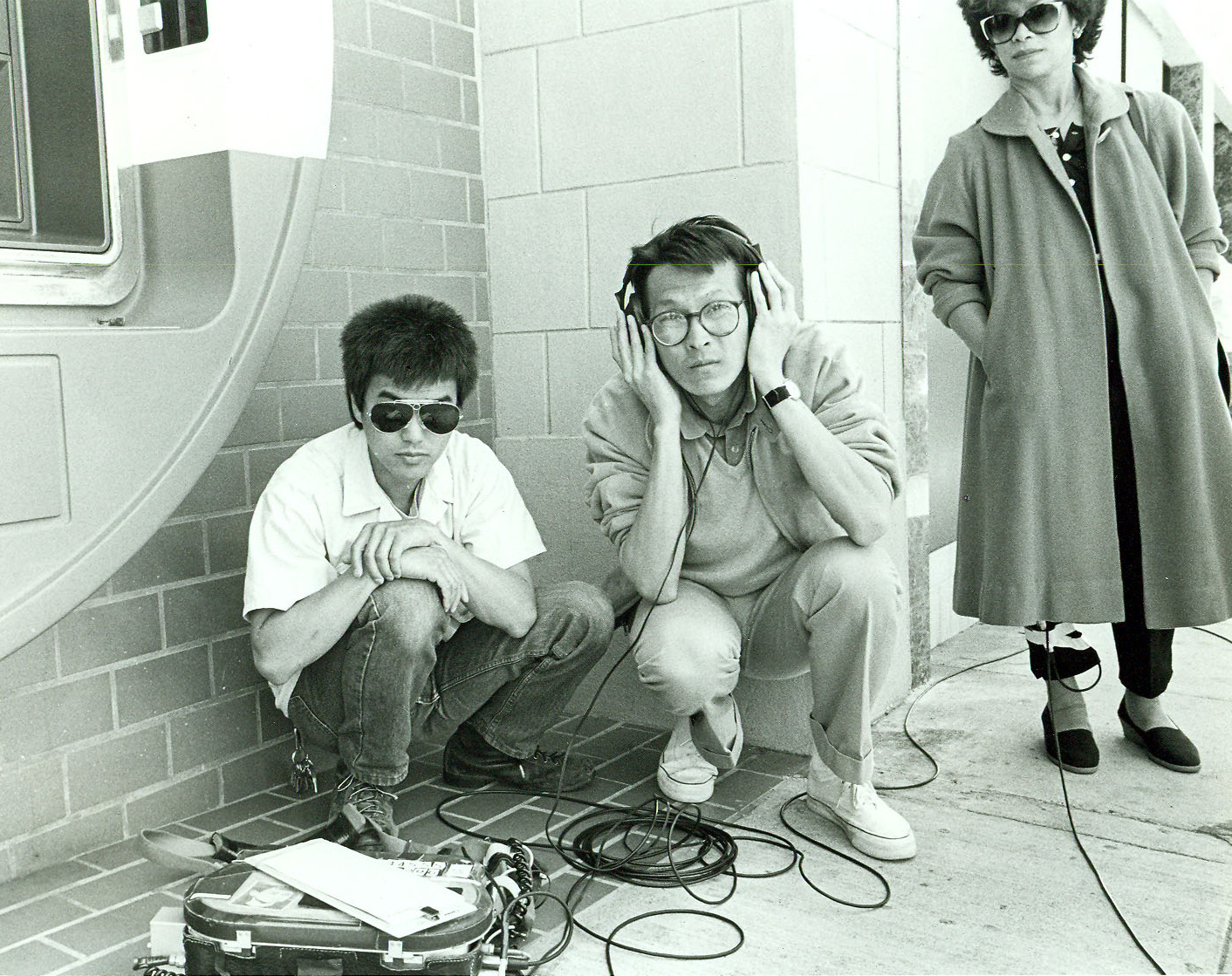
Also called location sound mixers, they record synchronized sound during production and non-synchronized atmospheric sounds. The sound should be as clear and problem-free as possible, and this is difficult to do. Sound recordists report to the director.
Boom Operator

The person who is responsible for holding the boom pole that secures the microphone is known as the boom operator. They maintain the optimum position for capturing clear audio. Care must be taken to avoid being in the shot and that the cables remain out of the way of the cast and crew during a take. Smaller productions often have one person acting as boom operator and sound recordist, though it is preferable to separate these roles to ensure better audio quality, as trying to focus on both responsibilities can lead to less than stellar audio recordings.
Editor
The editor works closely with the director and should be cataloging and assembling the various takes every day during shooting. They meet with the director every day to inspect the footage that has been shot (also known as dailies). Historically these are also called rushes, as raw footage that had just been filmed was placed in circular film cans and a runner would rush them over to the editing room.


Close up
Editing Workflow: Here is a typical editing workflow during postproduction:
- Housekeeping: ingesting and logging all the shots, putting them into logical order inside the software, e.g., Avid, Final Cut, Adobe Premiere, etc.
- Assemble edit: shots are loosely inserted onto the timeline to gauge each scene.
- Rough cut: film is strung in sequence loose dialogue; there can be dozens of rough cuts.
- Fine cut: film is finely tuned, without music. The composer starts spotting for music.
- Picture lock: no further image cutting will be done so sound sweetening can be performed.
- SFX: special effects are created immediately after picture lock.
- Color grading and correction: once the picture is locked, the colorist will add the stylistic mood that aligns with the director’s artistic vision.
- Sound sweetening: sound editor takes over perfecting audio, sound effects, and atmos.
- Music: composer delivers finished musical tracks.
Sound Editor
The sound editor builds up the soundtrack and conducts sound sweetening by removing problematic dialogue or sound (for example, pops, hisses, and breaths) and ensures amplitude levels are correct depending on what should be heard for the audience. When no further edits can be done, they perform an audio mixdown for a fully integrated audio track.
Composer
The composer looks at the fine cut of the film and decides where music is to be inserted, known as spotting for music. The composer liaises with the director, producer, editor, and sound editor.

Foley Walker
This term is named after Jack Foley, who worked in the silent film era. With the advent of sound in 1927, Foley was tasked with adding composite music and an effects track to be added to a silent film, Showboat, 1929,[10],[11] and so the first Foley session was born. Today, Foley walkers are sound effects specialists who create sounds to accompany the action on screen, often using creative means (such as by walking on varied materials or substances).

Production Assistant
This position is more commonly known by the acronym PA, and there can be one or many production assistants on a production. They usually carry out administrative tasks and work in the production office. They help the production manager and can double up as a runner during the shoot. They also take care of obtaining the consents from extras during the shoot.

Runner
Without a runner, a production can quickly fall apart. Also called a go-fer, runners help load and unload equipment, assist all other members of the crew, drive cars, and vans, and help with catering if necessary. The role requires stamina and strength and is extremely useful training. Often an entry-level position, this first step, if you do it well, can lead to more employment.

Location Manager
In charge of researching and visiting suitable locations with the director and producer, the location manager is responsible for securing permission to film in chosen locations. They must ensure (along with the production manager) that everyone knows how to get to each location, where the crew should put their belongings, park their cars, find the restrooms, set up dressing rooms, etc. The location manager is also responsible for ensuring at the end of the shoot that locations are left in the same—or better—condition as before. They should not have to clean up after everyone, but rather they ensure everyone cleans up after themselves and that the location is locked up at the end of the day.
Combining Roles
For a student production, there are often not enough people to take on all these roles. However, the following are recommended pairings:
- Producer and director
- Production manager and first assistant director
- Director of photography and camera operator
- Clapperboard operator and script supervisor
- Gaffer and best boy
- Key grip and grip
- Production assistant and runner
Sound recordists and boom operators should not double up with any other role, as clear sound is of the utmost importance. Similarly, location managers have so much responsibility and are often out scouting locations (also known as recce), so it is preferable to not have them take more than one role on set unless they have completed their work already in pre-production. Learn more about this role in the additional resource, The Recce, in Student Resources at the end of the chapter.
Chapter Review
Roles and Responsibilities Drag & Drop Activity
Chapter 1 Student Resources
| Resource Title | Link to document | Alternate format (if applicable) |
|---|---|---|
| Rules for Dismissal | ||
| Movie Budget Template | Google Doc (this link will prompt you to make a copy) | Google Doc (view only) |
| Intimacy Coordination Guide | Source | |
| Safety Checklist Template | Google Doc (this link will prompt you to make a copy) | Google Doc (view only) |
| Production Call Sheet Template | Google Sheet (this link will prompt you to make a copy) | Google Sheet (view only) |
| Simple Call Sheet Template | Google Doc (this link will prompt you to make a copy) | Google Doc (view only) |
| Breaking Down the Script PPT | Google Slide (view) | |
| How to Slate PPT | Google Slide (view) | |
| The Recce PPT | Google Slide (view) |
Media Attributions
- Military Precision © Ros Smith
- Above the Line © Sam Mackintosh-Smith
- Below the Line © Sam Mackintosh-Smith is licensed under a CC BY (Attribution) license
- EP Word is Sometimes Law © Ros Smith
- Director © Nicholas Smith
- Dorothy Arzner with Clara Bow in The Wild Party 1929 is licensed under a Public Domain license
- Juggling © Scragz is licensed under a CC BY (Attribution) license
- Edit Media: Introducing Intimacy Coordination is licensed under a Public Domain license
- Safety Checklist © Ros Smith
- Snapshot Example of a Day Out of Days (DOODs) © Ros Smith
- Surrounded by Crew © Carl Aldinger, Student Senior, SUNY Fredonia 2022
- Cinematographer © Roslin Smith
- On Set is licensed under a CC0 (Creative Commons Zero) license
- Cecil B Demille 1923 is licensed under a Public Domain license
- Grip © Sean Devine is licensed under a CC BY-SA (Attribution ShareAlike) license
- Dolly and Track with Grips © Vancouver Film School is licensed under a CC BY (Attribution) license
- Woman Camera Operator is licensed under a Public Domain license
- Vintage Camera Operator
- Clapper Board Example © Ros Smith
- Script Supervisor and Director is licensed under a CC BY (Attribution) license
- Sound Recordist Curtis Choy © Nancy Wong is licensed under a CC BY-SA (Attribution ShareAlike) license
- Boom Operator and Recordist © KRK FILM is licensed under a CC BY-SA (Attribution ShareAlike) license
- Film Stock and Can DRs Kulturarvsprojekt from Copenhagen, Danmark is licensed under a CC BY-SA (Attribution ShareAlike) license
- Sound Editor © Vancouver Film School is licensed under a CC BY (Attribution) license
- Ennio Morricone © Peter Tea is licensed under a CC BY-ND (Attribution NoDerivatives) license
- Showboat Lobby Card is licensed under a Public Domain license
- Fig. 1.27 Runners Braden Collum
- Pexels, Legal Simplicity © Ron Lach




- The Washington Times. [volume] (Washington, D.C.) 1902-1939, April 11, 1936, page 8, Image 30 News about Chronicling America RSSS. Accessed July 4, 2024. https://lccn.loc.gov/sn84026749 1.01: Lighting Roles and Responsibilities#return-footnote-26-1
- The Rock, Directed by Michael Bay, Hollywood Pictures, Don Simpson/Jerry Bruckheimer Films. Buena Vista Pictures Distribution, 1996. 1.01: Lighting Roles and Responsibilities#return-footnote-26-2
- One flew over the Cuckoo's Nest. Directed by Miloš Forman. United Artists, Warner Bros. Home Entertainment, 1975. 1.01: Lighting Roles and Responsibilities#return-footnote-26-3
- Hoad, Phil. “Michael Douglas: How We Made One Flew over the Cuckoo’s Nest.” The Guardian, Guardian News and Media, 11 Apr. 2017. www.theguardian.com/film/2017/apr/11/michael-douglas-and-louise-fletcher-how-we-made-one-flew-over-the-cuckoos-nest-interview. 1.01: Lighting Roles and Responsibilities#return-footnote-26-4
- Gregory’s Girl, Directed by Bill Forsyth, Scottish Television National Film Finance Corporation, ITC Entertainment (UK), 1980. 1.01: Lighting Roles and Responsibilities#return-footnote-26-5
- Local Hero. Directed by Bill Forsyth, Enigma Productions, Goldcrest Films International, 1983. 1.01: Lighting Roles and Responsibilities#return-footnote-26-6
- Comfort and Joy, Directed by Bill Forsyth, STV Central Limited, Lumiere Pictures and Television, 1984. 1.01: Lighting Roles and Responsibilities#return-footnote-26-7
- Melville, Jonathan. “Interview: Bill Paterson on When Bill Paterson Met Bill Forsyth.” Interview: Bill Paterson on When Bill Paterson Met Bill Forsyth, ReelScotland, 1 Mar. 2011. Accessed June 2nd, 2024. reelscotland.substack.com/p/interview-bill-paterson-on-when-bill-paterson-met-bill-forsyth. 1.01: Lighting Roles and Responsibilities#return-footnote-26-8
- Ibid. 1.01: Lighting Roles and Responsibilities#return-footnote-26-9
- Showboat. Directed by Harry A Pollard. Universal Studios and Universal Pictures, Lowe’s Inc. April 17th, 1929. 1.01: Lighting Roles and Responsibilities#return-footnote-26-10
- Humanities, National Endowment for the. “The Washington Times. [Volume] (Washington [D.C.]) 1902-1939, April 11, 1936, Page 8, Image 30.” News about Chronicling America RSS, Times Pub. Co. Accessed 4 Oct. 2024. 1.01: Lighting Roles and Responsibilities#return-footnote-26-11
This page titled Chapter 1: Lighting Roles and Responsibilities was last modified on Mon, 26 Oct 2026 17:17:01 GMT and is shared under a CC BY 4.0 license and was authored, remixed, and/or curated by Roslin Smith via source content that was edited to the style and standards of the LibreTexts platform.
The book could not be loaded just now.