Opening the book…
Vocabulario: La salud (Health)
| El cuerpo | The Body |
|---|---|
| la boca | mouth |
| el brazo | arm |
| la cabeza | head |
| el corazón | heart |
| el cuello | neck |
| el cuerpo | body |
| el dedo | finger |
| el dedo del pie | toe |
| el estómago | stomach |
| la garganta | throat |
| el hueso | bone |
| la nariz | nose |
| el oído | inner ear / hearing |
| el ojo | eye |
| la oreja | outer ear |
| el pie | foot |
| la pierna | leg |
| los pulmones | lungs |
| la rodilla | knee |
| el tobillo | ankle |
| Note: Other words for stomach: la panza, la tripa, la guata, la barriga | |
¡Inténtalo!
| La salud | Health |
|---|---|
| el accidente | accident |
| el antibiótico | antibiotic |
| la aspirina | aspirin |
| la clínica | clinic |
| el consultorio | doctor’s office |
| el / la dentista | dentist |
| el / la doctor (a) | doctor |
| el / la enfermero (a) | nurse |
| el examen médico | physical exam |
| la farmacia | pharmacy |
| el hospital | hospital |
| la infección | infection |
| la medicamento | medication |
| la medicina | medicine |
| la operación | operation |
| el / la paciente | patient |
| la pastilla | pill |
| la radiografía | X-ray |
| la receta | prescription |
| la sala de emergencia | emergency room |
| la salud | health |
| la sangre | blood |
| el síntoma | symptom |
¡Inténtalo!
| Verbos | Verbs |
|---|---|
| caerse | to fall (down) |
| darse con | to bump into |
| doler | to hurt |
| enfermarse | to get sick |
| estar enfermo (a) | to be sick |
| lastimarse | to injure |
| poner una inyección | to give an injection |
| recetar | to prescribe |
| romperse; quebrarse | to break |
| sacarse un diente (una muela) | to have a tooth removed |
| sufrir una enfermedad | to suffer an illness |
| tener dolor | to have pain |
| tener fiebre | to have a fever |
| torcerse (el tobillo) | to sprain (one’s ankle) |
| toser | to cough |
¡Inténtalo!
| Los síntomas | Symptoms |
|---|---|
| con TENER | with to have |
| (la) tos | a cough |
| (la) fiebre | a fever |
| (una) infección | an infection |
| (la) gripe | the flu |
| alergía a | allergies |
| dolor de cabeza | a headache |
| dolor de espalda | back pain |
| dolor de garganta | a sore throat |
| (un) resfriado; catarro | a cold |
| la nariz tapada | a stuffy nose |
| los oídos tapados | plugged ears |
| náuseas | upset stomach |
| mala salud | bad health |
| con ESTAR | with to be |
| enfermo (a) | sick |
| embarazada | pregnant |
| mareado (a) | dizzy |
| adolorido (a) | sore |
| resfriado | “I have a cold” |
| en buena forma | in good shape |
¡Inténtalo!
| Medicinas comunes | Common Medicines |
|---|---|
| el antiobiótico | antibiotic |
| la aspirina | aspirin |
| el calmante | tranquilizer |
| la curita; tirita | Band-Aid |
| gotas para (los ojos) | eye drops |
| guardar cama | stay in bed |
| el jarabe | cough syrup |
| la inyección | injection |
| hacer gárgaras | to gargle |
| el medicamento | medication |
| la pastilla | pill; lozenge |
| la receta | prescription |
| el té de manzanilla | chamomile tea |
¡Inténtalo!
| Adjetivos | Adjectives |
|---|---|
| saludable | healthy |
| sano (a) | healthy |
| Sugerencias y remedios médicos | Medical Advice and Remedies |
|---|---|
| dejar de fumar | to quit smoking |
| guardar cama | to stay in bed |
| hacer una cita | to make an appointment |
| mejorarse | to get better; well |
| operar | to operate |
| respirar | to breath |
| tomarse la presión | to take one’s blood pressure |
| la temperatura | temperature |
¡Inténtalo!
| ¡Espero que te sientas mejor! I hope you feel better! |
|---|
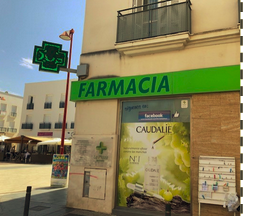
En el consultorio médico. Listen to the following dialogue between Alicia García and Doctor Smith. Mrs. García does not feel well.
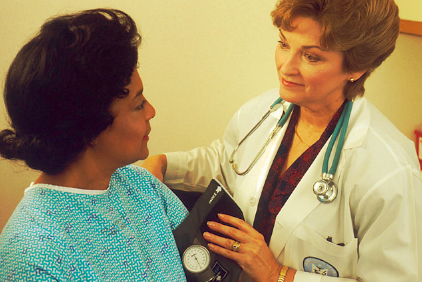
Doctora: ¿Usted habla inglés?
Alicia: Muy poco. Lo siento.
Doctora: No hay problema. ¿Cómo se siente? ¿Dónde le duele?
Alicia: Me duele la garganta y tengo la nariz tapada.
Doctora: ¿Tiene tos?
Alicia: Sí, un poco.
Doctora: ¿Es usted alérgica a alguna medicina?
Alicia: No, no soy alérgica a los antibióticos, pero sufro de presión alta.
Doctora: Voy a tomarle la presión ahora.
Alicia: Está bien.
Doctora: Sus síntomas son de un resfriado. Necesita tomar muchos líquidos, descansar y tomar un jarabe para la tos.
Alicia: Muchas gracias, doctora. ¡Hasta luego!
Doctora: ¡Hasta luego! Y espero que se sienta mejor.
 Comprensión. Based on the dialogue, indicate if the following statements are true (VERDADERO) or false (FALSO). If false, write the correct information.
- La señora García tiene síntomas de la gripe. V F
- La doctora Smith le recomienda a Alicia tomar líquidos y descansar. V F
- Alicia es alérgica a la penicilina. V F
Actividad # 1
¿QUÉ LE DUELE…? (What does it hurt…?) Look at the following pictures and describe what it hurts. Use the following:
| Le duele el / la parte del cuerpo Ejemplo: Le duele LA CABEZA Le duelen los / las parte del cuerpo Ejemplo: Le duelen LOS PIES |
|---|
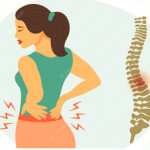 A ella __________________________.
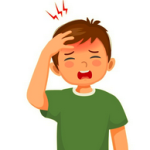 Al chico_________________________.
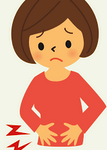
A la señora _________________________.
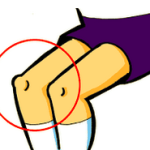 Al señor___________________________.
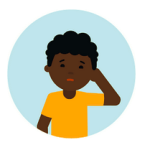 Al niño_____________________________.
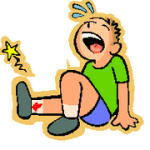 A Pedrito____________________________.
¡Inténtalo!
Actividad # 2
Asociaciones. What part (s) of the body do you associate with…
- Un resfriado ________________________________.
- La presión alta ______________________________.
- Una fiebre _________________________________.
- Las alergias ________________________________.
- La tos ____________________________________.
- El dolor ___________________________________.
Actividad # 3
¿Qué medicina necesito tomar? With a partner, take turns playing the following roles:
Estudiante 1: Will talk about experiencing some symptoms (síntomas).
Estudiante 2: Will advise on what to take or do. You may use words from our vocabulary, name brands, or remedios caseros – home remedies.
Ejemplo:
E1: Tengo dolor de garganta.
E2: Necesitas hacer gárgaras con agua tibia (lukewarm) y sal.
- Tengo tos.
- Tengo fiebre.
- Me duele la espalda.
- Tengo una infección de oído.
- Estoy mareado (a).
- Estoy resfriado (a).
- Tengo alergias temporales* (seasonal).
Actividad # 4
Los remedios caseros. Does your family have any home remedies that you like to use? Write three sentences about how you take care of yourself without taking medicine.
___________________________________________________________________.
___________________________________________________________________.
___________________________________________________________________.
Actividad # 5
Preguntas personales. Practice the following questions about your health with a partner.
Estudiante A
- ¿Vas al doctor cada año para un examen médico?
- ¿Te duele la cabeza a menudo (often)?
- ¿Qué tomas cuando tienes un resfriado?
- ¿Tienes buena salud?
Estudiante B
- ¿Eres alérgico(a) a algo? ¿A qué?
- ¿Te resfrías con frecuencia?
- ¿Con qué frecuencia visitas al médico?
- ¿Cuándo tomas antibióticos?
This page titled 10.2: Vocabulario- La salud (Health) was last modified on Thu, 22 Oct 2026 17:25:31 GMT and is shared under a CC BY-NC 4.0 license and was authored, remixed, and/or curated by Maria Y. Martell via source content that was edited to the style and standards of the LibreTexts platform.
The book could not be loaded just now.