Opening the book…
8.2 Gramática: Ordering Events: Infinitives after Prepositions
| Sequencing Words | |
|---|---|
| primero | first |
| luego | then |
| después | afterward |
| más tarde | later on |
| antes | before |
| finalmente | finally |
| por último | at last |
Los lunes, primero me levanto a las 7 de la mañana. Luego me cepillo los dientes y me lavo la cara. Después, preparo el desayuno. Más tarde voy al trabajo hasta las 5 de la tarde. Llego a mi casa a las 5:30 de la tarde. A las 6:00 preparo la cena. Después de cenar, me lavo los dientes y me preparo para ir a la cama. Por último, me acuesto a las 10 de la noche.
In Spanish, after any preposition, the infinitive of verbs is used. English uses the -ing form instead of the infinitive.
después de infinitive:
Después de levantarme, me lavo la cara. (After getting up, I wash my face.)
antes de infinitive:
Antes de desayunar, me ducho. (Before eating breakfast, I take a shower.)
Actividad # 1
 Actividad # 2
La rutina diaria del cantante panameño, Rubén Blades.
Paso 1. Read the following paragraph and underline los verbos reflexivos.
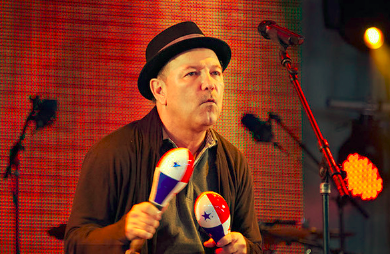
Rubén Blades es un cantante panameño, pero ahora vive en Nueva York con su familia. Su vida es muy activa. Primero, se levanta a las seis de la mañana y reza. Después, toma su café mientras lee el periódico. Luego, se ducha, se seca y se afeita. Se viste con ropa cómoda y se pone su sombrero. A él le encanta usar sombreros. Por la tarde, él va a su estudio para tocar la guitarra y escribir canciones. Él se pone muy contento cuando puede escribir una canción en un día. Por la noche, regresa a su casa y cena con su esposa. Después de cenar, ellos miran una película. Por último, él se acuesta a las once de la noche.
Paso 2. ¿Cómo es la rutina de Blades? Answer the following questions about Blade’s daily routine.
- ¿Dónde vive?
________________________________________ - ¿Se levanta temprano o tarde?
________________________________________ - ¿Qué hace después de ducharse, secarse y afeitarse?
________________________________________ - ¿Cómo se siente cuando escribe una canción en un día?
________________________________________ - ¿Cuál es la última actividad que él hace?
________________________________________
Actividad # 3
La rutina diaria de la profesora.
Paso 1. Listen to the instructor´s Sunday routine. Then, answer the questions below.
Paso 2. Answer the following questions based on what you understood.
- ¿A qué hora se levanta la profesora?
- ¿Ella se ducha por la mañana o por la noche?
- ¿Qué hace ella a las nueve de la mañana?
- ¿Qué hace después de cenar?
- ¿A qué hora se duerme?
This page titled 8.5: Gramática- Ordering Events-Infinitives after Prepositions was last modified on Thu, 22 Oct 2026 17:25:34 GMT and is shared under a CC BY-NC 4.0 license and was authored, remixed, and/or curated by Maria Y. Martell via source content that was edited to the style and standards of the LibreTexts platform.
The book could not be loaded just now.