Opening the book…
From a very “high level” perspective, the years between about 1000 CE – 1300 CE were relatively good ones for Europe. The medieval agricultural revolution sparked an expansion of population, urbanization, and economics, advances in education and scholarship paid off in higher literacy rates and a more sophisticated intellectual life, and Europe was free of large-scale invasions. A better diet allowed people to be healthier and live longer, while producing and supporting more children. However, this rate of population growth could not be maintained. After three centuries of dramatic growth, Europe was seriously overpopulated with estimates ranging from 80 to 100 million. In some parts of Europe population would not reach this same level until the late 18th century. Opportunities began to dwindle, famine, war, and epidemics proliferated, all of which brought changes in trade and commerce. Starting in the mid-thirteenth century in Eastern Europe, and spreading to Western Europe in the fourteenth century, a series of crises undermined European prosperity, security, and population levels. Historians refer to these events as the “crises of the Middle Ages.”
Crises of Medieval Europe
The “Little Ice Age” 1300-1700
In the 13th century, pack ice began advancing southwards in the North Atlantic, as did glaciers in Greenland. Anecdotal evidence suggests glaciers expanding worldwide at this point. Data based on radiocarbon dating of roughly 150 samples of dead plant material, collected from beneath ice caps on Baffin Island and Iceland, suggest that cold summers and ice growth began abruptly between 1275 and 1300, followed by “a substantial intensification” from 1430 to 1455. The drop in temperature, around 3 degrees Fahrenheit, was enough to bring about several crop failures. In general wet and cold weather repeatedly ruined crops in much of northern Europe. Food stocks were quickly exhausted, and mass starvation followed. People died so quickly, English chroniclers reported, that survivors could not keep up with the burials. At Ypres, in Flanders, 2800 (about 10% of the population) died in just six months. And shortages continued. The most severe years of the famine were 1315-1317, known as the Great Famine. There were reported cases of people eating horses, dogs, and even of cannibalism. And the famine, decrease of temperature, and consequences of overpopulation, were all only made much worse by the outbreak of Bubonic plague, otherwise known as the Black Death discussed later in the chapter.


During the “Little Ice Age” the Baltic Sea froze over twice, in 1303 and 1306–1307, and years followed of “unseasonable cold, storms and rains, and a rise in the level of the Caspian Sea”. The Little Ice Age brought colder winters to large parts of Europe and North America. Farms and villages in the Swiss Alps were destroyed by encroaching glaciers during the mid-17th century. Canals and rivers in Great Britain and the Netherlands were frequently frozen deeply enough to support ice skating and winter festivals.
Prolonged cold, dry periods brought drought upon many European communities and resulted in poor crop growth, poor livestock survival, and increased activity of pathogens and disease vectors. Disease intensified under the same conditions that unemployment and economic difficulties arose: prolonged cold, dry seasons. Disease and unemployment generated a lethal positive feedback loop. Although the communities had some contingency plans, such as better crop mixes, emergency grain stocks, and international food trade, they did not always prove effective. Communities often lashed out via violent crimes, including robbery and murder. Europeans sought explanations for the famine, disease, and social unrest that they were experiencing, and they blamed the innocent. Evidence from several studies indicate that increases in violent actions against marginalized groups, which were held responsible for the Little Ice Age, overlap with the years of particularly cold, dry weather.
One example of the violent scapegoating occurring during the Little Ice Age was the resurgence of witchcraft trials. Prior to the Little Ice Age, witchcraft was considered an insignificant crime, and victims (the supposed witches) were rarely accused. But beginning in the 1380s, European populations began to link magic and weather-making. The first systematic witch hunts began in the 1430s, and by the 1480s witches were blamed for direct and indirect consequences of the Little Ice Age: livestock epidemics, cows that gave too little milk, late frosts, and unknown diseases. In general, the number of witchcraft trials rose as the temperature dropped, and trials decreased when temperature increased. The peaks of witchcraft persecutions overlap with the hunger crises that occurred in 1570 and 1580, the latter lasting a decade. The trials targeted primarily poor women, many of them widows.
Jewish populations were also blamed for climatic deterioration during the Little Ice Age. The Western European states experienced waves of anti-Semitism, directed against the main religious minority in their otherwise Christian societies. There was no direct link made between Jews and the weather; they were blamed only for indirect consequences such as disease. Some populations blamed the cold periods and the resulting famine and disease during the Little Ice Age on a general divine displeasure. Particular groups took the brunt of the burden in attempts to cure it. In Germany, regulations were imposed upon activities such as gambling and drinking alcohol, which disproportionately affected the lower class. Other regulations affected the wider population, such as prohibiting dancing, sexual activities and moderating food and drink intake.
The Black Death
Historians have now arrived at a consensus that the deadliest epidemic in medieval and early-modern history began in the Mongol khanates and spread west along trade routes: the Black Death, or simply “the plague,” of the fourteenth century. The plague devastated the areas it affected, none more so than Europe. That devastation was in large part due to the vulnerability of the European population to disease thanks both to poor harvests and the lack of practical medical knowledge. A series of bad harvests led to periods of famine in Europe starting in the early fourteenth century. Conditions in some regions were so desperate that peasants reportedly resorted to cannibalism on occasion. When harvests were poor, Europeans not only died outright from famine, but those who survived were left even more vulnerable to epidemics because of weakened immune systems. By the time the plague arrived in 1348, generations of people were malnourished and all the more susceptible to infection as a result.
Medicine was completely ineffective in holding the plague in check. Europeans did not understand contagion – they knew that disease spread, but they had absolutely no idea how to prevent that spread. The prevailing medical theory was that disease was spread by clouds of foul-smelling gasses called “miasmas,” like those produced by stagnant water and decay. Thus, people sincerely believed that if one could avoid the miasmas (which of course never actually existed), they could avoid sickness. Over the centuries, doctors advocated various techniques that were meant to dispel the miasmas by introducing other odors, including leaving piles of onions on the streets of plague-stricken neighborhoods and, starting in the seventeenth century, wearing masks that resembled the heads of birds, with the “beaks” stuffed with flower petals.
Not surprisingly, given the dearth of medical knowledge, epidemics of all kinds regularly swept across Europe. When harvests failed, the poor often went to the cities in search of some kind of respite, either work or church-based charity. In 1330, for instance, the official population of the northern Italian city of Florence was 100,000, but a full 20,000 were paupers, most of whom had come from the countryside seeking relief. The cities became incubators for epidemics that were even more intense than those that affected the countryside.
Thus, a vulnerable and, in terms of medicine, ignorant population fell victim to the virulence of the Black Death from 1348 to 1351. Historians still debate as to exactly which (identifiable with contemporary medical knowledge) disease or diseases the Black Death consisted of, but the prevailing theory is that it was bubonic plague. Bubonic plague is transmitted by fleas, both those carried by rats and transmitted to humans, and on fleas exclusive to humans. In the unsanitary conditions of medieval Europe, there were both rats and fleas everywhere. In turn, many victims of bubonic plague developed the “pneumonic” form of the disease, spread by coughing, which made it both incredibly virulent and lethal (about 90% of those who developed pneumonic plague died).
The theory that the Black Death was the bubonic plague runs into the problem that modern outbreaks of bubonic plague do not seem to travel as quickly as did the Black Death, although that almost certainly has much to do with the vastly more effective sanitation and treatment available in the modern era as compared to the medieval setting of the Black Death. One hypothesis is that those with bubonic plague may have caught pneumonia as a secondary infection, and that pneumonia was thus another lethal component of the Black Death. Regardless of whatever disease or combination of diseases the Black Death really was, the effects were devastating.
The plague exploded across Europe starting at the end of the 1340s. All of Southern Europe was affected in 1348; it spread to Central Europe and England by 1349 and Eastern Europe and Scandinavia by 1350. It went on to spread even further and continued to fester until 1351, when it had killed so many people that the survivors had developed a resistance to it. The death toll was astonishing: in the end, the Black Death killed about one-third of the population of Europe in just three years (that is a conservative estimate – some present-day historians have calculated that it was closer to half). Some cities lost over half of their population; there are even cases of villages where there was only a single survivor. This was an enormous demographic shift in a very short amount of time that had lasting consequences for European society, thanks mostly to the labor shortage that it introduced.

Searching for Meaning and the Cause
The only somewhat effective response to the Black Death was the implementation of quarantines (quarantine comes from the Italian word quaranta or forty as most quarantines of ships or individuals lasted forty days). The more fast-acting city governments of Europe locked those who had plague symptoms in their homes, often for more than a month, and sometimes whole neighborhoods or districts were placed under quarantine. In the countryside, people refused to travel to larger cities and towns out of fear of infection. Even though quarantines slowed the spread of the plague in some cases, overall they did little but delay it. Following medical ideas held since ancient Greece, most believed that bad odors or “miasmas” caused disease. Therefore, another more scientific method to attack the spread of the disease was to clean the excrement filled streets of European cities. While largely ineffective at the time, these efforts eventually helped to lead to safer and cleaner cities.
More common than practical measures like quarantines, however, was prayer and the search for scapegoats to blame for the devastation. The spiritual reaction to the plague was, among Christian Europeans, to implore God for relief, beg for forgiveness, and to look for outsiders to blame. Building on the murderous anti-Semitism that had begun in earnest during the period of the crusades, Jews were often the victims of this phenomenon. There was a huge spike in anti-Semitic riots during plague outbreaks, as Jews were blamed for somehow bringing the plague (a frequent accusation was that Jews had poisoned wells), and thousands of Jews were massacred as a result.
Religious movements also emerged in response to the plague, like the Flagellants: groups of penitents who roamed the countryside, villages, and towns whipping themselves and begging God for forgiveness. The Flagellants, among others, sincerely believed that the plague was God’s punishment for the Catholic Church’s rampant sins; from simony to possessing exorbitant wealth to the papal crisis. When priests began to refuse to conduct last rites out of fear of contagion (though they would not have been able to describe it as such) while the church inherited hundreds of estates as entire families perished, cries against the institution surged. Many people sincerely believed that the Black Death was the opening salvo of the End Times, since the history of Europe in the fourteenth century so clearly involved both famine and pestilence – two of the four “horsemen” that were to accompany the end times according to the Bible (the others, war and death, were ever-present as well).
And just as Europe could begin to contemplate recovery, the plague returned in 1360, and again in 1372. On average, it returned every eleven years. And Medieval Europe was not prepared for the onslaught of the disease. Lacking an understanding of either contagion or infection, 14th century doctors depended on traditional theories inherited from the Greeks, especially the work of Galen, to treat the plague. In Galenic medicine good health depended on the proper balance of bodily and environmental forces, which could be upset by corrupt air, the movement of planets, and even a violent shift in the emotions or humors.
But it was actually the Black plague that began to make people realize the rhythms of the infestations; and some officials and governments even began to perceive the infectious nature of disease and began to institute or at least try to institute quarantines and embargoes to restrict the movement of goods and people from areas where the plague was raging. Other officials focused on trying to clean up cities in the hopes that a more cleanly environment would stop the spread, for example decrees were issued to keep dung and mud out of the same space where raw meat was being sold.
Unintended Consequences of the Plague
The Black Death ended in 1351, but the plague returned roughly every twenty years in some form. Some cases were as devastating, at least in limited areas, as the Black Death had been in its first iteration. The plague did not stop entirely until the early eighteenth century – to this day it is not clear what brought an end to large-scale plague outbreaks, although one theory is that a species of brown rat that was not as vulnerable to the plague overwhelmed the older black rats that had infested Europe.
Ironically, the immediate economic effects of the plague after it ended were largely positive for the survivors. The demographic consequences of the Black Death, namely its enormous death toll, resulted in a labor shortage across all of Europe. One immediate effect was that despite the death toll, lords tried to keep their peasants from fleeing the land while also keeping wages at the same low levels as before the plague, sparking various peasant uprisings. Even though those uprisings were violently put down, the overall trend was that laborers had to be paid more; their labor was simply more valuable. In the decades that followed, then, many peasants benefited from higher wages for their labor and prices for their crops. The result was the beginning of the end of serfdom across most of Europe and the growth of wage labor.
For those who left the farms or manors, they found new opportunities in recently de-populated cities. With millions perishing, there were now hundreds if not thousands of openings from doctors to lawyers to merchants. With a new demand for many skilled professions, new universities emerged across Europe, while traditional institutions expanded (like Cambridge England and the Universities of Bologna and Florence in Italy). For the peasant survivors of the plague new economic, social, and educational opportunities abounded.
Another group that benefited was women. For roughly a century after the plague, women had more legal rights in terms of property ownership, the right to participate in commerce, and land ownership, than they had enjoyed before the plague’s outbreak. Women were even able to join certain craft guilds for a time, something that was almost unheard of earlier. The reason for this temporary improvement in the legal and economic status of women was precisely the same as that of peasants: the labor shortage.
The plague also ushered in a cultural change that came about because of the prevalence of death in the fourteenth century. Europeans became so used to death that they often depicted it graphically and quite terribly in art. Paintings, stories, and theatrical performances emerged having to do with the “dance of death,” a depiction of the futility of worldly possessions and status vis-à-vis the inevitability of death. Likewise, graves and mausoleums came to be decorated with statues of grotesque skeletons and writhing bodies. When people were dying, their families and friends were supposed to come and view them, inoculating everyone present against the temptation to enjoy life too much and encouraging them to greater focus on preparing their souls for the afterlife. Within the “dance of death” that depicted real, daily life in 14th century Europe, we also see the kernels of Renaissance art, in particular the new focus on real people, including their emotions.


The Hundreds’ Years’ War
The plague happened near the beginning of the conflict between England and France remembered as the Hundred Years’ War, which lasted from 1337 – 1453. That conflict was not really one war, but instead consisted of a series of battles and shorter wars between the crowns of England and France interrupted by (sometimes fairly long) periods of peace.
The war began because of simmering resentments and dynastic politics. The root of the problem was that the English kings were descendants of William the Conqueror, the Norman king who had sailed across the English Channel in 1066 and defeated the Anglo-Saxon kings who then ruled England. From that point on, the royal and noble lines of England and France were intertwined, and as marriage between both nobles and royalty often took place across French – English lines, the inheritance of lands and titles in both countries was often a point of contention. The culture of nobility in both countries was so similar that the “English” nobles generally spoke French instead of English in day-to-day life.
This confusion very much extended to the kings themselves. The English royal line (the Plantagenets) often enjoyed pledges of fealty from numerous “French” nobles, and “English” kings often thought of themselves as being as much French as English – the English King Richard the Lion-Hearted, for instance, spent most of his career in France battling for control of more French territory. Likewise, a large region in southwestern France, Aquitaine, was formally the property of the English royal line, with the awkward caveat that, while a given English king might be sovereign in England, his lordship of Aquitaine technically made him the vassal of whoever the French king happened to be. Thus, hundreds of years after William’s conquest, the royal and noble lines of England and France were often hard to distinguish from one another.
The war began in the aftermath of the death of the French King Charles IV in 1328. The king of England, Edward III, was next in line for succession, but powerful members of the French nobility rejected his claim and instead pledged to give the crown to a French noble of the royal line named Philip VI. When Philip began passing judgments to do with the English-controlled territory of Aquitaine, Edward went to war, sparking the Hundred Years’ War.
The war itself consisted of a series of raids and invasions by English forces punctuated by the occasional large battle. English kings and knights kept the war going because it was a way to enrich themselves – they would arrive in France with a moderately-sized force of armed men to loot and pillage. English forces tended to be better organized than were their French counterparts, so even France’s much greater wealth and size did prevent major English victories. The most famous of those victories was the Battle of Agincourt in 1415, in which a smaller English force decimated the elite French cavalry through effective use of longbows, a weapon that could transform an English peasant into more than the equal of a mounted French knight. The aftermath of Agincourt saw most of the French nobility accept the English king, Henry V, as the king of France. Henry V promptly died, however, and the conflict exploded into a series of alliances and counter-alliances between rival factions of English and French nobles (one French territory, Burgundy, even declared its independence from France and became a staunch English ally for a time).
Decades into the war, the French received an unexpected boost in their fortunes thanks to the intervention of one of the future patron saints of France itself: Joan of Arc. Joan of Arc’s story begins in the small village of Domrémy. Following an English cattle raid in 1425, Joan received a vision of the Archangel Michael and Saints Catherine of Alexandria and Margaret of Antioch. Joan stated these voices instructed her to go to the French court to speak to Robert de Baudricourt. The voices said that Baudricourt would allow Joan to speak with the king. Baudricourt initially denied her request to meet with the Dauphin (king to be) twice before allowing her passage. Escorted by a knight, a squire, and four servants, Joan of Arc reached Chinon and requested to see Charles, Dauphin.


Skeptical of Joan’s divine visions, the Dauphin disguised himself as a commoner within his court. However, upon her arrival, Joan immediately identified the King, shocking him and his counsel. The King tasked theologians to prove her faith and to ensure she was not a witch or heretic. After proving herself a Good Christian, meaning a virgin, the Dauphin granted her an army and sent her to the frontline at the Siege of Orleans. There, she famously dictated a letter to the English, stating to return the cities they had seized and that “If you do not believe the news written of God and the Maid, then in whatever place we may find you, we will soon see who has the better right, God, or you.”
Joan’s presence on the battlefield quickly shifted the Siege of Orleans, leading to a French victory in just four days. The French saw continued victories with Joan leading the charge, including battles at Meung, Beaugency, Jargeau, and Patay. Following Joan’s victory at Patay, she led Charles Dauphin to Reims, where he was crowned King of France on July 17th, 1429. Despite Joan urging now crowned King Charles VII to continue fighting against the British and to reclaim Paris, he opted to negotiate peace with the Duke of Burgundy. King Charles VII ennobled her family and exempted her home village of Domrémy from taxation.
While this peace negotiation should have ended Joan’s service, her leadership was requested to help lift a siege at Compiègne in May of 1430. Unfortunately, this battle led to the capture of Joan of Arc, as her troops attempted to surprise the Burgundian and English armies, only to be ambushed themselves. Following her capture, she was sold to the English, where she was tried for heresy, witchcraft, and wearing men’s clothes. On May 30th, 1431, Joan was led to the stake at Vieux-Marché in Rouen, where she was burned for her crimes. Despite her tragic end, Joan became a martyr to the French cause and, eventually, one of the most significant French nationalist symbols. And by 1453 the French forces finally ended the English threat and the 100s Years War.
While Joan of Arc’s story came to a tragic end, she was an outlier within Medieval History, both as a woman and in terms of sources. Between letters and her trial records, she is one of the most well-documented individuals of the fifteenth century. Furthermore, she remains relevant in historical and medical histories as scholars try to decipher if her visions and spiritual guidance were divine intervention or mental illness. Regardless, her youth and ferocity on the battlefield express her title as Saint of France, as the Catholic Church officially canonized her in 1920.
Primary Source: Letter to the King of England, 1429:
King of England, if you do not do these things, I am the commander of the military; and in whatever place I shall find your men in France, I will make them flee the country, whether they wish to or not; and if they will not obey, the Maid will have them all killed. She comes sent by the King of Heaven, body for body, to take you out of France, and the Maid promises and certifies to you that if you do not leave France she and her troops will raise a mighty outcry as has not been heard in France in a thousand years. And believe that the King of Heaven has sent her so much power that you will not be able to harm her or her brave army.
Source: Joan of Arc. “Letter to the King of England,” 1429. Internet Medieval Sourcebook. https://origin-rh.web.fordham.edu/halsall/source/joanofarc.asp.
But the war had a devastating effect on France. Between the fighting and the plague, its population declined by half. Many French regions suffered economically as luxury trades shut down and whole regions were devastated by the fighting. The French crown introduced new taxes, such as the Gabelle (a tax on salt) and the Taille (a household tax) that further burdened commoners. On the cultural front, the English monarchy and nobility severed their ties with France and high English culture began to self-consciously reshape itself as distinctly English rather than French, leading among other things to the use of the English language as the language of state and the law for the first time.
The Hundred Years’ War was also a time of rapid military evolution. Weapons, tactics, army structure and the social meaning of war all changed, partly in response to the war’s costs, partly through advancement in technology and partly through lessons that warfare taught. Before the Hundred Years’ War, heavy cavalry was considered the most powerful unit in an army, but by the war’s end, this belief had shifted. The heavy horse was increasingly negated by the use of the longbow (and, later, another long-distance weapon: firearms). Edward III was famous for dismounting his men-at-arms and having them and his archers stand in closely integrated battle lines; the horses only being used for transport or pursuit.
By the end of the Hundred Years’ War, these various factors caused the decline of the expensively outfitted, highly trained heavy cavalry and the eventual end of the armoured knight as a military force and of the nobility as a political one. In 1445 the first regular standing army since Roman times was organized in France partly as a solution to marauding free companies. The mercenary companies were given a choice of either joining the Royal army on a permanent basis, or being hunted down and destroyed if they refused. France gained a total standing army of around 6,000 men, and these were sent out to gradually eliminate the remaining mercenaries who insisted on operating on their own. The new standing army had a more disciplined and professional approach to warfare than its predecessors.
The war also, significantly, stimulated nationalistic sentiment. It devastated France as a land, but it awakened French nationalism. The Hundred Years’ War accelerated the process of transforming France from a feudal monarchy to a centralized state, the first in European history.
The Babylonian Captivity and the Great Western Schism
Even as the French and English were at each other’s throats, the Roman Catholic Church fell into a state of disunity, sometimes even chaos. The cause was one of the most peculiar episodes in late medieval European history: the “Babylonian Captivity” of the popes in the fourteenth century. The term originally referred to the Biblical story of the Jews’ enslavement by the Babylonian Empire in the sixth century BCE, but the late-medieval Babylonian Captivity refers instead to the period during which the popes no longer lived in their traditional residence in Rome, but instead in Avignon, France.
The context for this strange event was the state of the Roman Church as of the early fourteenth century. The church was a very diverse, and somewhat diffuse, institution. Due to the simple geographical distance between Rome and the kingdoms of Europe, the popes did not exercise much practical authority over the various national churches, and high-level churchmen in European kingdoms were often more closely associated with their respective kings than with Rome. Likewise, there were many times during the Middle Ages when individual popes were weak and ineffectual and could not even command obedience within the church hierarchy itself.
Over the centuries the papacy struggled, and often failed, to assert its control over the church as an institution and to hold the pretensions of kings in check. Those weaknesses were reflected in a simple fact: there had been a number of times over the centuries in which there were rival popes, generally appointed by compliant church officials who answered to kings. Obviously, having rival popes undermined the central claim of the papacy to complete authority over the church itself and over Christian doctrine in the process (let alone the occasional insistence by popes that their authority superseded that of kings).
The Babylonian Captivity began when Pope Boniface VIII issued a papal bull (formal commandment) in 1303 to the effect that all kings had to acknowledge his authority over even their own kingdoms, a challenge he issued in response to the taxes kings levied on church property. Unfortunately for Boniface, he lacked both influence with the monarchs of Europe and the ability to defend himself. Infuriated, the French king, Philip IV, promptly had the pope arrested and thrown in prison; he was released months later to be transferred to Paris to stand trial, but died either en route or still in Rome after a possible beating depending upon the source.
 Portrait of Pope Boniface VIII by Cristofano dell’Altissimo, commissioned 1552 https://upload.wikimedia.org/wikiped...%2C_Uffizi.jpg

Philip supported the election of a new pope, Clement V, in 1305. Clement was a Frenchman with strong ties to the French nobility. At the time, Rome was a very dangerous city, with rival noble families literally fighting in the streets over various feuds, so Clement moved himself and the papal office to the French city of Avignon, which was much more peaceful. This created enormous concern among non-French church officials (most of them Italian), who feared that the French king, then the most powerful ruler in Europe, would have undue influence over the papacy. Their fears seemed confirmed when Clement started appointing new cardinals, a pattern that saw 113 French cardinals instated out of the 134 who were appointed in the following decades.
From 1305 to 1378, the popes continued to live and work in Avignon (despite the English invasions of the 100 Years’ War). They were not directly controlled by the French king, as their opponents had feared, but they were definitely influenced by French politics. They also came to accept bribes and kickbacks for the appointment of priests and bishops, along with suspicious schemes with church lands. This situation was soon described as a new Babylonian Captivity by clerics and laypeople alike (especially in Italy), comparing the presence of the papacy in France to the enslavement of the ancient Jews in Babylon.
-

A map of Rome, showing an allegorical figure of Rome as a widow in black mourning the Avignon Papacy, 1447 https://upload.wikimedia.org/wikiped...._Fol._18r.jpg

While Italians struggled with the Pope ruling from French territory, for the popes in question the exile from Rome was not an uncomfortable one. For example, Clement’s successor, Pope John XXII celebrated the marriage of his grandniece in 1324 with a feast during which the numerous guests consumed 4,012 loaves of bread, 8 and ¾ oxen, 55 and ¼ sheep, 8 pigs, 4 boars, and vast quantities of fish, partridges, rabbits, ducks, and chickens. The guest washed down the feast with about 450 liters of wine. The papacy and its new residence in Avignon became a major religious, diplomatic, and commercial center, with its court growing exponentially in the 14th century.

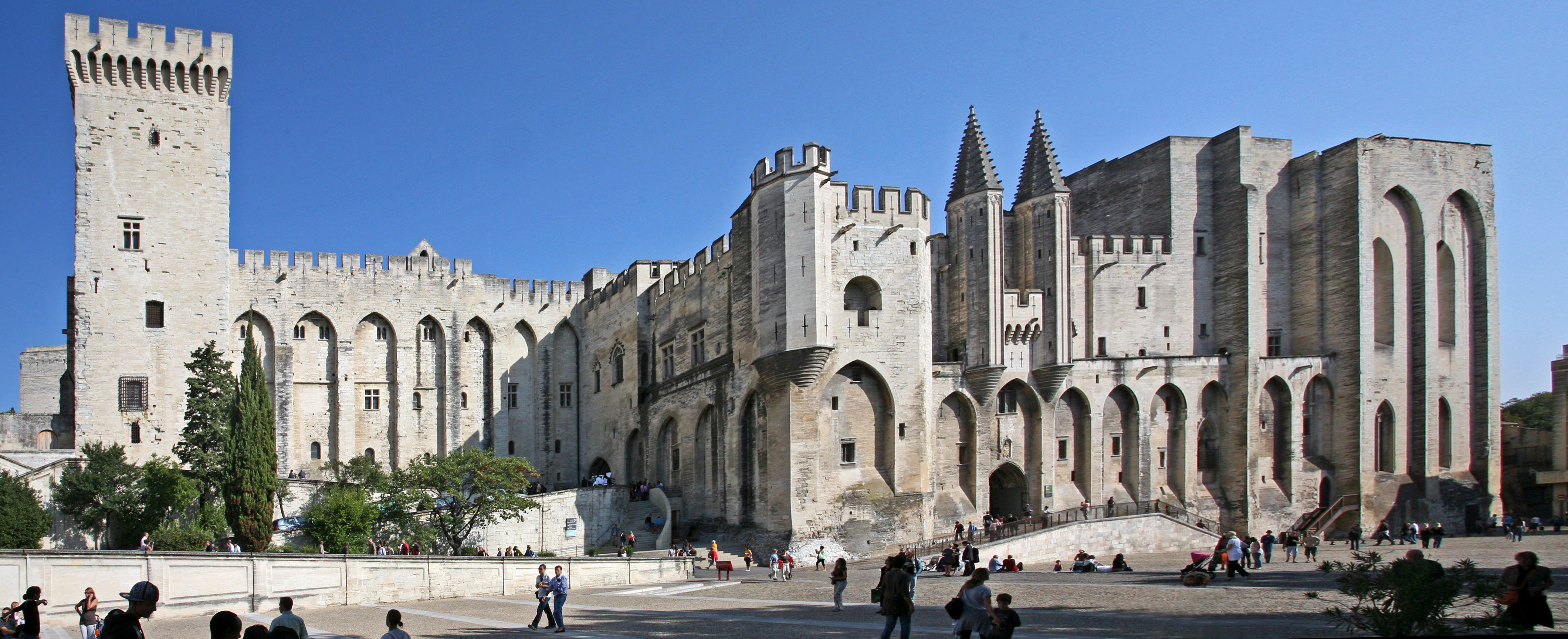
In 1378, the new pope, Urban VI, announced his intention to move the papacy back to Rome. As rival factions developed within the upper levels of the church hierarchy, a group of French cardinals elected another, French, pope (Clement VII), and Europe thus was split between two rival popes, both of whom excommunicated each other as a heretic and impostor (the term used at the time was “antipope.”) This led to the Great Western Schism, a period from 1378 to 1417 during which there were as many as three rival popes vying for power. For almost forty years, the church was a battlefield between rival popes and their respective followers, and laypeople and monarchs alike were generally able to go about their business with little fear of papal intervention. But the issue and uncertainty was untenable for the Church.
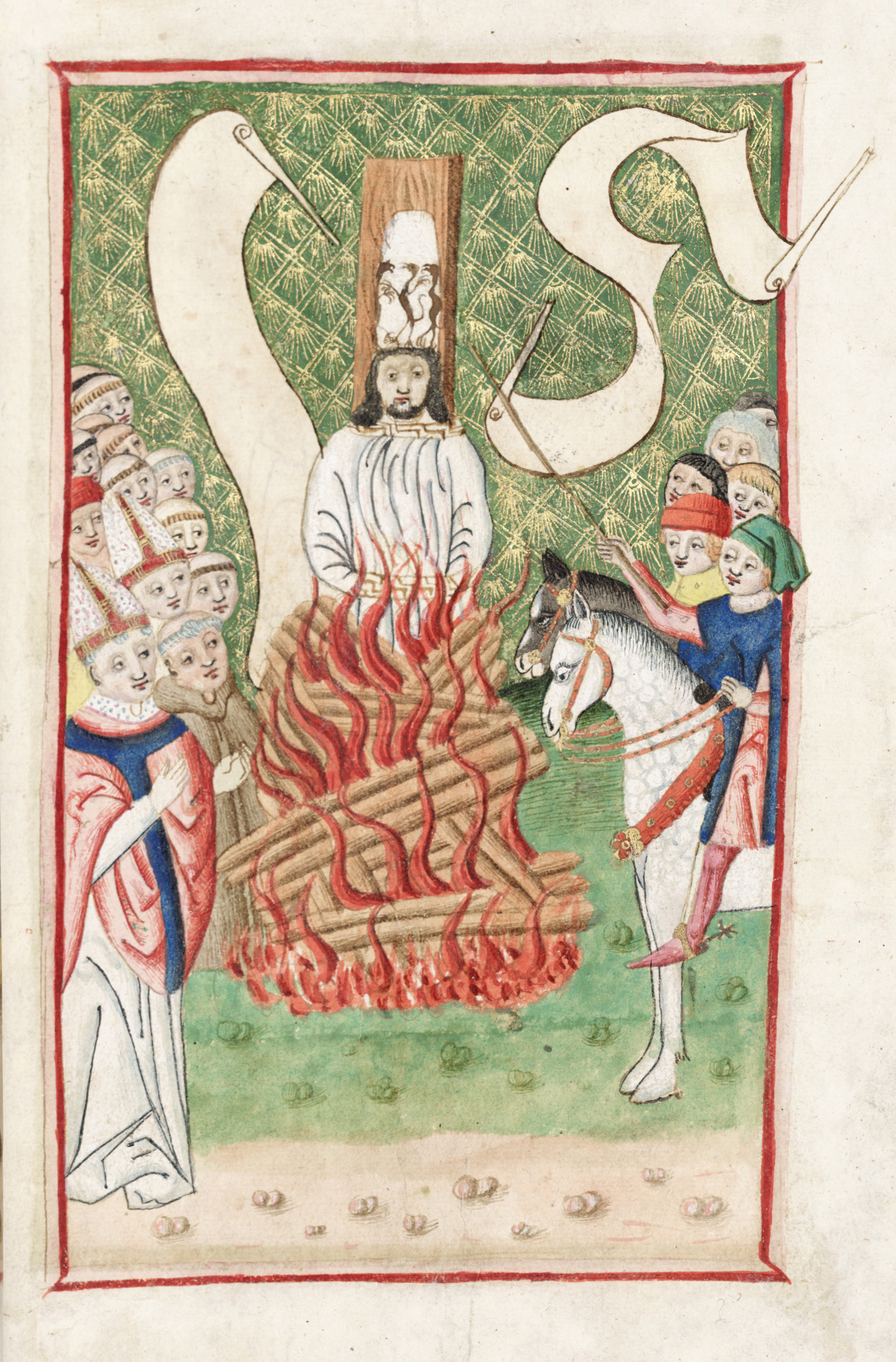
The Great Western Schism finally ended after a series of church councils, the Conciliar Movement (which also sought general church reform and the reconciliation of current heresies), succeeded in establishing the authority of a single pope in 1417 at the end of a multi-year meeting. In 1414 the Emperor of the Holy Roman Empire, Sigismund forced the calling of a general church council. The council, known as the Council of Constance, met from 1414-1417 in the German imperial city of Constance. Sigismund truly believed that a council could help him heal the deep religious and civil divisions within the Catholic Church at large, and particularly within his home of Prague where a religious reformer named Jan Hus was causing quite a stir.
Jan Hus was a Czech theologian and philosopher who became a Church reformer and an early inspiration of Hussitism, a key predecessor to the Protestant Reformation. After being ordained as a Catholic priest, Hus began to preach in Prague. He opposed many aspects of the Catholic Church in Bohemia, such as its views on simony, the Eucharist, celibacy, poverty of the clergy, and other theological and moral topics. He was also a follower of Wycliffe, who advocated for the publication of vernacular bibles, thus making theological writings available to larger populations. Eventually, he became one of the first religious leaders to criticize the selling of indulgences, something advocated by one of the rival popes John XXIII.
When the Council of Constance assembled, Hus was asked to be there and present his views on the dissension within the Church. Sigismund hoped that the papal hierarchy and Hus could come to a compromise at the council. But this was not to be. Instead upon his arrival Hus was ordered to recant all his beliefs. He refused. The council condemned him as a heretic and burned him at the stake on July 6, 1415. But this did not end the conflict. Followers of Hus continued to demand reform in the church and remained a bastion of religious dissidence until the Protestant Reformation while the Catholic Church refused to meaningfully address any Hussite criticisms or ideas. This opportunity for reform from within was lost. All services would still be conducted only in Latin and all Bibles would only be written in Latin. The hierarchy would be maintained.

The movement, however, did elect a new pope, Martin V, and made the claim that church councils could and should hold the ultimate authority over papal appointments – this concept was known as the via consilii, the existence of a great council with binding powers over the church’s leadership. This, however, undermined the very concept of what the papacy was: the “Doctrine of the Keys” held that the pope’s authority was passed down directly from Christ, and that even if councils could play a role in the practical maintenance of the church, the pope’s authority was not based on their approval. Ultimately, a powerful pope, Eugene IV, reconfirmed the absolute power of the papacy in 1431. Thus, this attempt at reform failed in the end, inadvertently setting the stage for more radical criticisms of papal power in the future.
Regarding the other goals of the council, it did succeed on one count. They did agree on one pope. Shortly after the convening of the council Pope Gregory XII realized he had lost most of his supporters and agreed to resign as Pope of Rome. But, Benedict III, the French Pope refused to resign, so he was forcibly deposed. Finally in 1417, the council elected a Roman nobleman as Pope Martin V. The council also once and for all determined that the pope could no longer expect to remain unchallenged if they made any claims of absolute dominion, and ecclesiastical rights and jurisdictions were increasingly matters of negotiation. But this negotiation and spreading of leadership would remain in the circle of Cardinals, so firmly still within the Catholic Church elite. Also left out were secular leaders who had sought to have more power over the churches within their states. These issues would all soon be raised again by Martin Luther.
The most important consequence of the Babylonian Captivity and the Great Western Schism was simple: the moral and spiritual authority of the church hierarchy was seriously undermined. While no one (yet) envisioned rejecting the authority of the church altogether, many people regarded the church’s leadership as just another political institution.
Some of the trends, patterns, and phenomena that were to take shape during the Renaissance era, beginning around 1300, actually began in the midst of the crises of the Middle Ages. France and England emerged from the 100 Years War to become stronger, more centralized states. The labor shortage in the aftermath of the Black Death spurred a period of modest economic growth. And, while European culture may have become more pessimistic and xenophobic as a whole, one region was rising to wealth and prominence precisely because of its long-distance trade and cultural connections: Northern Italy. It was there that the Renaissance began.
This page titled Chapter 14: Death, Dirt, and Disease in Medieval Europe was last modified on Sun, 04 Oct 2026 05:56:51 GMT and is shared under a CC BY-NC-SA 4.0 license and was authored, remixed, and/or curated by Erin Stone via source content that was edited to the style and standards of the LibreTexts platform.
The book could not be loaded just now.