Opening the book…
- to describe functional groups and explain why they are useful in the study of organic chemistry.
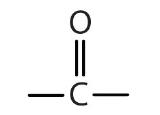
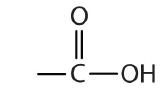
Previously, we considered several kinds of hydrocarbons. Now we examine some of the many organic compounds that contain functional groups. We first introduced the idea of the functional group, a specific structural arrangement of atoms or bonds that imparts a characteristic chemical reactivity to the molecule. If you understand the behavior of a particular functional group, you will know a great deal about the general properties of that class of compounds. In this chapter, we make a brief yet systematic study of some of organic compound families. Each family is based on a common, simple functional group that contains an oxygen atom or a nitrogen atom. Some common functional groups are listed in Table \(\PageIndex{1}\).
| Name of Family | General Formula | Functional Group | Suffix* |
|---|---|---|---|
| alkane | RH | none | -ane |
| alkene | R2C=CR2 | 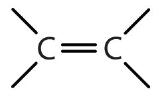 |
-ene |
| alkyne | RC≡CR | –C≡C– | -yne |
| alcohol | ROH | –OH | -ol |
| thiol | RSH | –SH | -thiol |
| ether | ROR | –O– | ether |
| aldehyde | 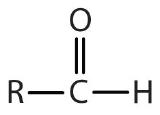 |
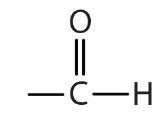 |
-al |
| ketone | 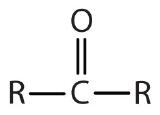 |
 |
-one |
| carboxylic acid | 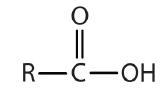 |
 |
-oic acid |
| *Ethers do not have a suffix in their common name; all ethers end with the word ether. | |||
Summary
The functional group, a structural arrangement of atoms and/or bonds, is largely responsible for the properties of organic compound families.
This page titled 13.2: Organic Compounds with Functional Groups was last modified on Fri, 19 Sep 2025 20:46:16 GMT and is shared under a CC BY-NC 4.0 license and was authored, remixed, and/or curated by Staff via source content that was edited to the style and standards of the LibreTexts platform.
The book could not be loaded just now.