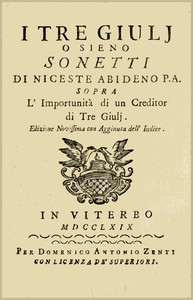
I Tre Giulj
o sieno Sonetti di Niceste Abideno sopra l'Importunità di un Creditor di Tre Giulj
Human-made only is on in this browser, so Project Gutenberg's machine summaries are left out. Settings.
"I Tre Giulj" by Giovanni Battista Casti is a collection of humorous sonnets written in the late 18th century. This work reflects on the author's experiences with the persistent demands of a creditor for the repayment of a small debt—a theme that resonates with the struggles of financial obligation and social interaction. The sonnets creatively blend personal anecdotes with broader philosophical musings, capturing both the frustrations and irony of indebtedness. The opening of "I Tre Giulj" sets the stage for a witty exploration of the author's plight as he grapples with the relentless requests from a friend named Crisofilo for three Giulj he has borrowed. Casti's tone is both playful and reflective, using the creditor as a catalyst for a series of poetic expressions that delve into the nature of debt, the human experience of burden, and the various ways people cope with such pressures. Through humorous comparisons and clever insights, the author engages the reader in a dialogue about financial woes, reflecting a deep connection to common struggles with humor and elegance.
AI-generated Summary written by Project Gutenberg, by machine.
- Language
- Italian (Italiano)
- On Project Gutenberg since
- 9 August 2020
- Read in the last 30 days
- 286 times at Project Gutenberg
More from the shelf “IT Poesia”
See all: More from the shelf “IT Poesia”
La Divina Commedia di Dante
La Divina Commedia di Dante: Complete
Isaotta Guttadàuro ed altre poesie
Le tragedie, gl'inni sacri e le odi di Alessandro Manzoni

Divina Commedia di Dante: Inferno
Il Quadriregio
Orlando Furioso
Distruzione: Poema Futurista
La Divina Commedia di Dante: Inferno
Divina Commedia di Dante: Purgatorio
Divina Commedia di Dante: Paradiso
La Divina Commedia di Dante: Paradiso
I Canti
Ahasvero nell'Isola del Diavolo: versi
La Divina Commedia di Dante: Purgatorio
Rinaldo ardito: Frammenti inediti pubblicati sul manoscritto originale
L'aeroplano del papa: Romanzo profetico in versi liberi
Momenti: Liriche
Fatalità