A Treatise Concerning the Principles of Human Knowledge
"A Treatise Concerning the Principles of Human Knowledge" by George Berkeley is a philosophical work published in 1710. Berkeley challenges John Locke's theories about perception and reality, arguing that the external world consists entirely of ideas rather than material objects. He proposes that existence means being perceived, and that "ideas can only resemble ideas." Through this reasoning, Berkeley rejects the notion of unthinking matter and concludes that a divine force—God—gives the world of ideas its order and regularity.
Summary written by Project Gutenberg, by machine.
- Language
- English
- On Project Gutenberg since
- 1 December 2003
- Read in the last 30 days
- 2,274 times at Project Gutenberg
Listen to it

More by George Berkeley
See all: More by George Berkeley
The Works of George Berkeley. Vol. 1 of 4: Philosophical Works, 1705-21

Three Dialogues Between Hylas and Philonous in Opposition to Sceptics and Atheists
An Essay Towards a New Theory of Vision
The Querist

A Proposal for the Better Supplying of Churches in Our Foreign Plantations, and for Converting the Savage Americans to Christianity, By a College to Be Erected in the Summer Islands, Otherwise Called the Isles of Bermuda
More from the shelf “Philosophy”
See all: More from the shelf “Philosophy”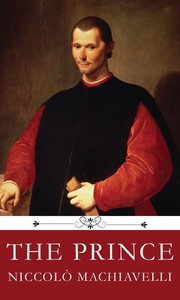
The Prince
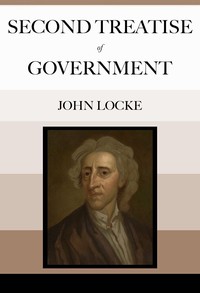
Second Treatise of Government
Thus Spake Zarathustra: A Book for All and None
Beyond Good and Evil
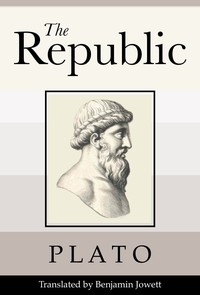
The Republic

On Liberty

Apology
The Nicomachean ethics of Aristotle
The Problems of Philosophy
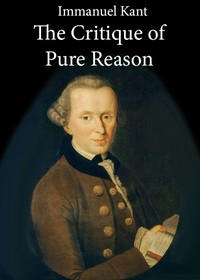
The Critique of Pure Reason

The Communist Manifesto

The Poetics of Aristotle
Ethics
Discourse on the Method of Rightly Conducting One's Reason and of Seeking Truth in the Sciences

Democracy and Education: An Introduction to the Philosophy of Education

Utilitarianism
An Enquiry Concerning Human Understanding
Tractatus Logico-Philosophicus
A System of Logic, Ratiocinative and Inductive