Symbolic Logic
"Symbolic Logic" by Lewis Carroll is a work on logic and reasoning, likely written in the late 19th century. The book serves as an introduction to the principles of symbolic logic, providing readers with a framework to understand logical propositions and arguments through structured methods. Carroll aims to make the study of logic accessible and engaging, attempting to appeal to a youthful audience. The opening of "Symbolic Logic" features an explanation of logical premises using examples, including the construction of syllogisms—logical conclusions derived from two premises. Carroll introduces various terms such as "things" and "attributes," laying groundwork for understanding classes and the process of classification in logic. As he discusses how to combine premises and reach conclusions logically, he sets the stage for the more complex concepts that will follow in the subsequent chapters. The detailed, methodical approach indicates that this work not only aims to teach formal logic but also seeks to engage readers in intellectual exploration.
Summary written by Project Gutenberg, by machine.
- Language
- English
- On Project Gutenberg since
- 5 May 2009
- Read in the last 30 days
- 1,929 times at Project Gutenberg
More by Lewis Carroll
See all: More by Lewis Carroll
Index of the Project Gutenberg Works of Lewis Carroll
Alice in Wonderland
Alice's Adventures in Wonderland
Through the Looking-Glass
Alice's Adventures in Wonderland
Alice's Adventures in Wonderland
The Hunting of the Snark: An Agony in Eight Fits
Alice's Adventures Under Ground
Alice's Abenteuer im Wunderland
The Nursery "Alice"
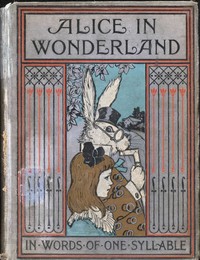
Alice in Wonderland, Retold in Words of One Syllable
The Game of Logic
Sylvie and Bruno
Alice's Adventures in Wonderland
Aventures d'Alice au pays des merveilles
Phantasmagoria and Other Poems
Sylvie and Bruno Concluded (Illustrated)
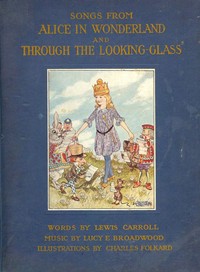
Songs From Alice in Wonderland and Through the Looking-Glass
A Tangled Tale
Le avventure d'Alice nel paese delle meraviglie
More from the shelf “Philosophy”
See all: More from the shelf “Philosophy”
The Prince
Second Treatise of Government
Thus Spake Zarathustra: A Book for All and None
Beyond Good and Evil
The Republic
On Liberty
Apology
The Nicomachean ethics of Aristotle
The Problems of Philosophy
The Critique of Pure Reason
The Communist Manifesto

The Poetics of Aristotle
Ethics
Discourse on the Method of Rightly Conducting One's Reason and of Seeking Truth in the Sciences
Democracy and Education: An Introduction to the Philosophy of Education
Utilitarianism
An Enquiry Concerning Human Understanding
Tractatus Logico-Philosophicus
A System of Logic, Ratiocinative and Inductive