Paradise Lost
by John Milton
The fall of Satan, the temptation of Adam and Eve, and humanity's expulsion from Eden. The greatest epic poem in the English language.
"Paradise Lost" by John Milton is an epic poem published in 1667. It retells the biblical story of humanity's fall: Satan's rebellion against God, his banishment to Hell, and his vengeful plot to corrupt God's newest creation—mankind. Through the temptation of Adam and Eve in the Garden of Eden, Milton explores themes of free will, obedience, and moral consequence. The poem features one of literature's most complex villains and ends with humanity's expulsion from Paradise, yet offers hope for redemption.
Summary written by Project Gutenberg, by machine.
- Language
- English
- On Project Gutenberg since
- 1 February 1992
- Read in the last 30 days
- 12,923 times at Project Gutenberg
More by John Milton
See all: More by John Milton
The Poetical Works of John Milton
An Introduction to the Prose and Poetical Works of John Milton
Poemata : Latin, Greek and Italian Poems by John Milton
Milton: Minor Poems
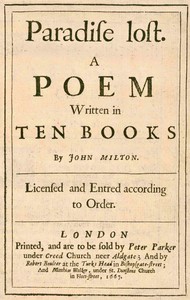
Paradise Lost
El paraíso perdido
Areopagitica
Paradise Regained
Milton's Comus
L'Allegro, Il Penseroso, Comus, and Lycidas
Le Paradis Perdu
On the morning of Christ's nativity