
Apology, Crito, and Phaedo of Socrates
by Plato
Notes by Edward Brooks · Translated by Henry Cary
"Apology, Crito, and Phaedo of Socrates" by Plato is a collection of philosophical dialogues written in the early 4th century BC. This significant work captures the essence of Socratic thought through three primary discussions surrounding the trial, moral obligations, and the nature of the soul and immortality, focusing on the key character of Socrates, who defies conventional norms as he confronts his death. At the start of the text, the introduction lays the groundwork for understanding the historical context of Plato's works and highlights his importance in philosophy. The opening dialogue, "Apology," details Socrates’ defense during his trial, where he stands resolutely against accusations of impiety and corruption of youth. Socrates engages with the Athenian jury using logic and rhetorical questioning, stressing the value of wisdom over popular opinion and laying the groundwork for his philosophical principles. The beginning shows Socrates contemplating his wisdom in light of the oracle's declaration, establishing his commitment to the pursuit of truth and justice, setting the stage for the deeper themes explored in the subsequent dialogues.
Summary written by Project Gutenberg, by machine.
- Language
- English
- On Project Gutenberg since
- 12 October 2004
- Read in the last 30 days
- 3,826 times at Project Gutenberg
More by Plato
See all: More by Plato
The Republic of Plato
The works of Plato (Vol. 2 of 6)
The dialogues of Plato in five volumes, Vol. 2 (of 5)
The Project Gutenberg Works of Plato: An Index

De republiek van Plato
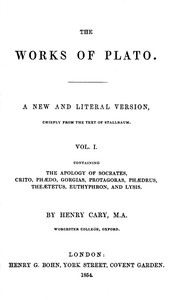
The works of Plato (Vol. 1 of 6)

Crito: Een dialoog van Plato
The Republic

Apology

Symposium
Phaedrus

Phaedo

Gorgias

Euthyphro

Meno

Theaetetus
Laws

Timaeus

Ion

Protagoras
More from the shelf “Harvard Classics”
See all: More from the shelf “Harvard Classics”
Pride and Prejudice
The Odyssey

Crime and Punishment
Meditations

The Prince

History of Tom Jones, a Foundling

The Confessions of St. Augustine
Leviathan
The Legend of Sleepy Hollow

Autobiography of Benjamin Franklin
On the Origin of Species By Means of Natural Selection
Don Quixote

An Inquiry into the Nature and Causes of the Wealth of Nations

Anna Karenina

The Sorrows of Young Werther
Apology

David Copperfield

Don Quijote

Essays by Ralph Waldo Emerson