Burke
by John Morley
"Burke" by John Morley is a biographical account written in the late 19th century, specifically published in 1888 and reprinted several times thereafter. The book delves into the life and contributions of Edmund Burke, a significant political thinker and statesman of the 18th century, exploring his impact on political philosophy, his writings, and the turbulent political landscape of his time. It illustrates not just Burke's political journey but also the historical and ideological context in which he operated. The opening of the narrative provides a comprehensive overview of the complexities surrounding Burke's legacy, highlighting the differing opinions on his role in politics, from being regarded as a champion of European stability to being vilified for his apparent betrayal of the Whig party. Morley discusses Burke's early life, educational background, and formative influences, such as his first schoolmaster, Abraham Shackleton. He gives readers insight into Burke's intellectual curiosity and philosophical explorations, leading up to his prominence in political affairs and literature. The text sets the stage for an in-depth exploration of Burke's principles and the profound moral and political questions he grappled with throughout his career, emphasizing the enduring relevance of his thought.
Summary written by Project Gutenberg, by machine.
- Language
- English
- On Project Gutenberg since
- 17 July 2004
- Read in the last 30 days
- 490 times at Project Gutenberg
More by John Morley
See all: More by John Morley
Diderot and the Encyclopædists (Vol. 2 of 2)
Rousseau (Volume 1 and 2)

The Life of William Ewart Gladstone, Vol. 1 (of 3)

The Life of William Ewart Gladstone, Vol. 3 (of 3)
Diderot and the Encyclopædists (Vol. 1 of 2)

The Life of William Ewart Gladstone, Vol. 2 (of 3)
Critical Miscellanies (Vol. 2 of 3), Essay 2: Turgot
Critical Miscellanies, Vol. 1, Essay 5: Emerson
Voltaire
Critical Miscellanies, (Vol. 3 of 3), Essay 2: The Death of Mr Mill; Essay 3: Mr Mill's Autobiography
Critical Miscellanies (Vol. 3 of 3), Essay 4: The Life of George Eliot
Critical Miscellanies (Vol. 3 of 3), Essay 5: On Pattison's Memoirs

On Compromise
The Life of William Ewart Gladstone: Index
Critical Miscellanies (Vol. 3 of 3), Essay 6: Harriet Martineau
Critical Miscellanies, Vol. 1, Essay 2: Carlyle
Critical Miscellanies (Vol. 3 of 3), Essay 1: On Popular Culture
Indian speeches (1907-1909)
Critical Miscellanies (Vol. 2 of 3), Essay 4: Joseph de Maistre
Critical Miscellanies (Vol. 3 of 3), Essay 10: Auguste Comte
More from the shelf “Philosophy”
See all: More from the shelf “Philosophy”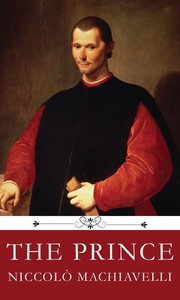
The Prince
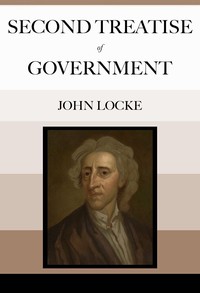
Second Treatise of Government
Thus Spake Zarathustra: A Book for All and None
Beyond Good and Evil
The Republic
On Liberty
Apology
The Nicomachean ethics of Aristotle
The Problems of Philosophy
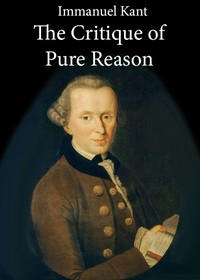
The Critique of Pure Reason
The Communist Manifesto

The Poetics of Aristotle
Ethics
Discourse on the Method of Rightly Conducting One's Reason and of Seeking Truth in the Sciences
Democracy and Education: An Introduction to the Philosophy of Education
Utilitarianism
An Enquiry Concerning Human Understanding
Tractatus Logico-Philosophicus
A System of Logic, Ratiocinative and Inductive