Autobiography
"Autobiography" by John Stuart Mill is a personal account written in the mid-19th century that reflects on the life and philosophical development of one of the greatest thinkers of the time. The narrative begins with his unconventional early education under the rigorous guidance of his father, James Mill, and explores the profound intellectual influences that shaped his views on politics, ethics, and society. Mill emphasizes the remarkable depth of learning he experienced during his formative years, which often included studying classical texts in Greek and Latin as well as engaging in discussions on topics ranging from history to mathematics. The opening of the autobiography details Mill's childhood and educational experiences from birth to around age fourteen. He recounts the heavy emphasis his father placed on rigorous intellectual training and the remarkable curriculum that he was subjected to, which included Greek at a very young age and a wide range of historical literature. Mill also reflects on the moral and intellectual influences of his father's philosophy, particularly his rejection of conventional religious belief and advocacy for utilitarian principles. This early exposure, coupled with enriching conversations with influential figures such as Jeremy Bentham and David Ricardo, ultimately fostered Mill's own philosophical outlook and commitment to societal reform. Each chapter of Mill's life hints at the broader social and political context of his work, making it clear that his theoretical inquiries are deeply connected to his lived experiences and the vibrant discussions occurring in his intellectual milieu.
Summary written by Project Gutenberg, by machine.
- Language
- English
- On Project Gutenberg since
- 1 December 2003
- Read in the last 30 days
- 2,854 times at Project Gutenberg
Listen to it

More by John Stuart Mill
See all: More by John Stuart Mill
Index of the Project Gutenberg Works of John Stuart Mill
On Liberty

Utilitarianism
A System of Logic, Ratiocinative and Inductive
The Subjection of Women

Considerations on Representative Government
Principles of Political Economy
A System of Logic, Ratiocinative and Inductive (Vol. 1 of 2)
A System of Logic: Ratiocinative and Inductive, 7th Edition, Vol. I
Auguste Comte and Positivism

Socialism

A System of Logic: Ratiocinative and Inductive, 7th Edition, Vol. II
Essays on some unsettled Questions of Political Economy

The Contest in America
La libertà
Om Tanke- och Yttrandefrihet

Vapaudesta
More from the shelf “Philosophy”
See all: More from the shelf “Philosophy”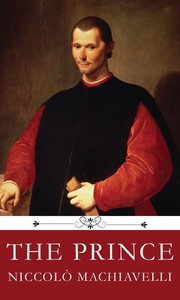
The Prince
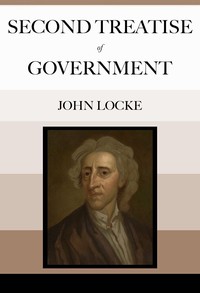
Second Treatise of Government
Thus Spake Zarathustra: A Book for All and None
Beyond Good and Evil
The Republic
On Liberty

Apology
The Nicomachean ethics of Aristotle

The Problems of Philosophy
The Critique of Pure Reason

The Communist Manifesto

The Poetics of Aristotle

Ethics
Discourse on the Method of Rightly Conducting One's Reason and of Seeking Truth in the Sciences

Democracy and Education: An Introduction to the Philosophy of Education
Utilitarianism
An Enquiry Concerning Human Understanding

Tractatus Logico-Philosophicus
A System of Logic, Ratiocinative and Inductive