Window mode follows your eyes with your camera, in this browser only: no picture or position leaves your device.
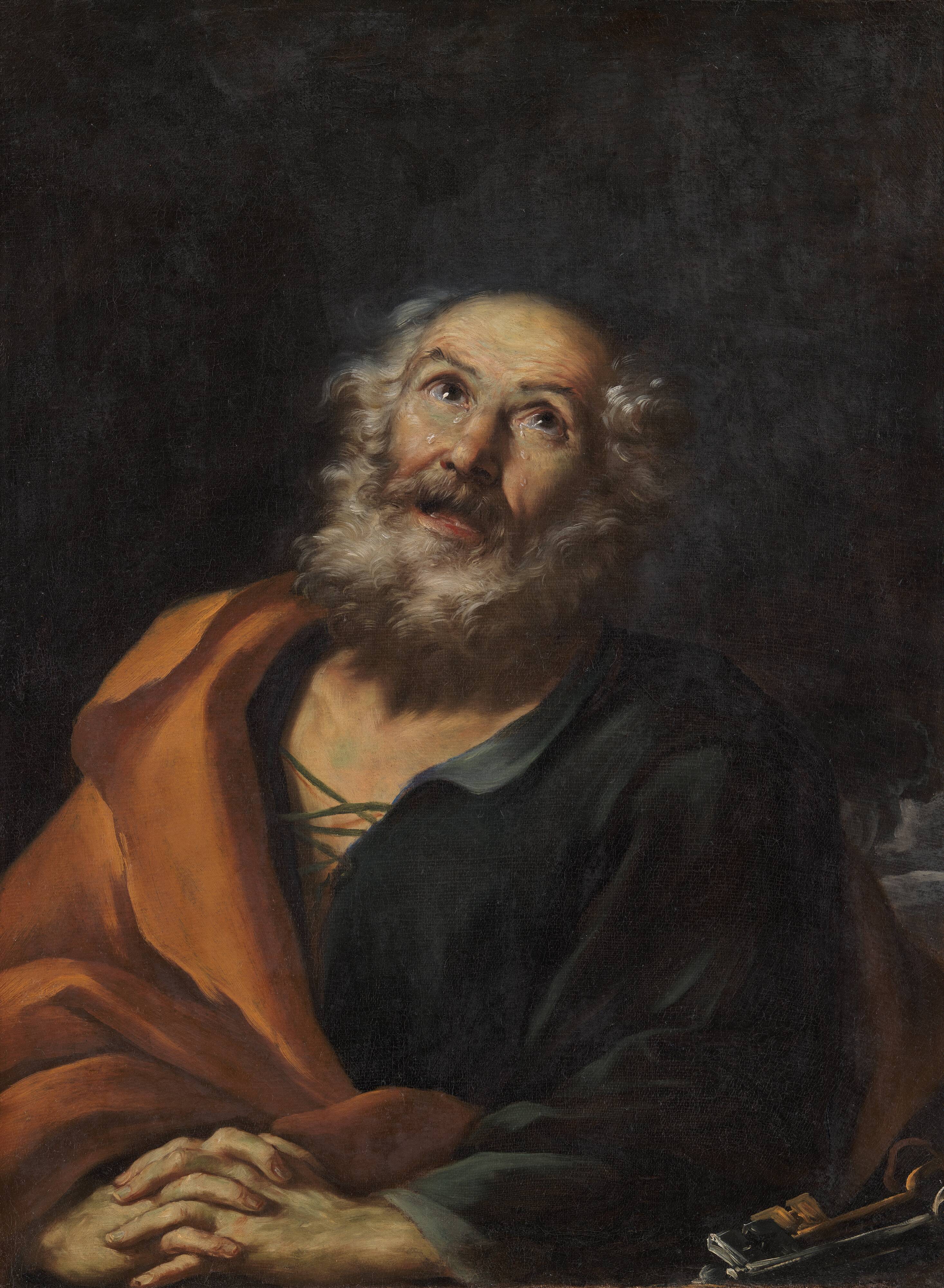
Saint Peter Penitent
Girolamo Troppa (Italian, 1637–1708)
1665-1668
- Medium
- Oil on canvas
- Classification
- Painting
- Dimensions
- height 98 cm, width 72.5 cm, height 121.5 cm, width 96 cm
- Culture
- Italian
- Museum
- SMK – National Gallery of Denmark
- Rights
- Public Domain Mark: SMK waives its rights in this photograph, as the museum states it.
- Who can see it
- Tweens profiles and older: its subjects are known and suit older children. How works are placed
View at the SMK – National Gallery of Denmark
About this work
Sheltered by an outcrop of rock, overlooking the restless sea, we see Saint Peter wringing his hands, eyes turned heavenwards – an iconography typical of this era’s depictions of ‘Saint Peter Penitent’. The literary source of the scene appears in all four gospels of the New Testament, which give almost identical accounts of an episode from the Passion in which a fearful Peter betrays Christ three times in the gateway and courtyard of Pilate’s house. When Peter realises that Jesus’s prediction, ‘this very night, before the rooster crows, you will deny me three times’, has just come true, he cries tears of despair and repentance. The weeping Saint Peter was not just a model image of remorse and penitence within the Catholic church. During the Danish Baroque era, particularly under the reign of Frederik III, the teachings of Lutheran orthodoxy were closely associated with the concept of ‘pønitense’. The road to salvation was paved with penance and atonement, remorse and conversion.