Window mode follows your eyes with your camera, in this browser only: no picture or position leaves your device.
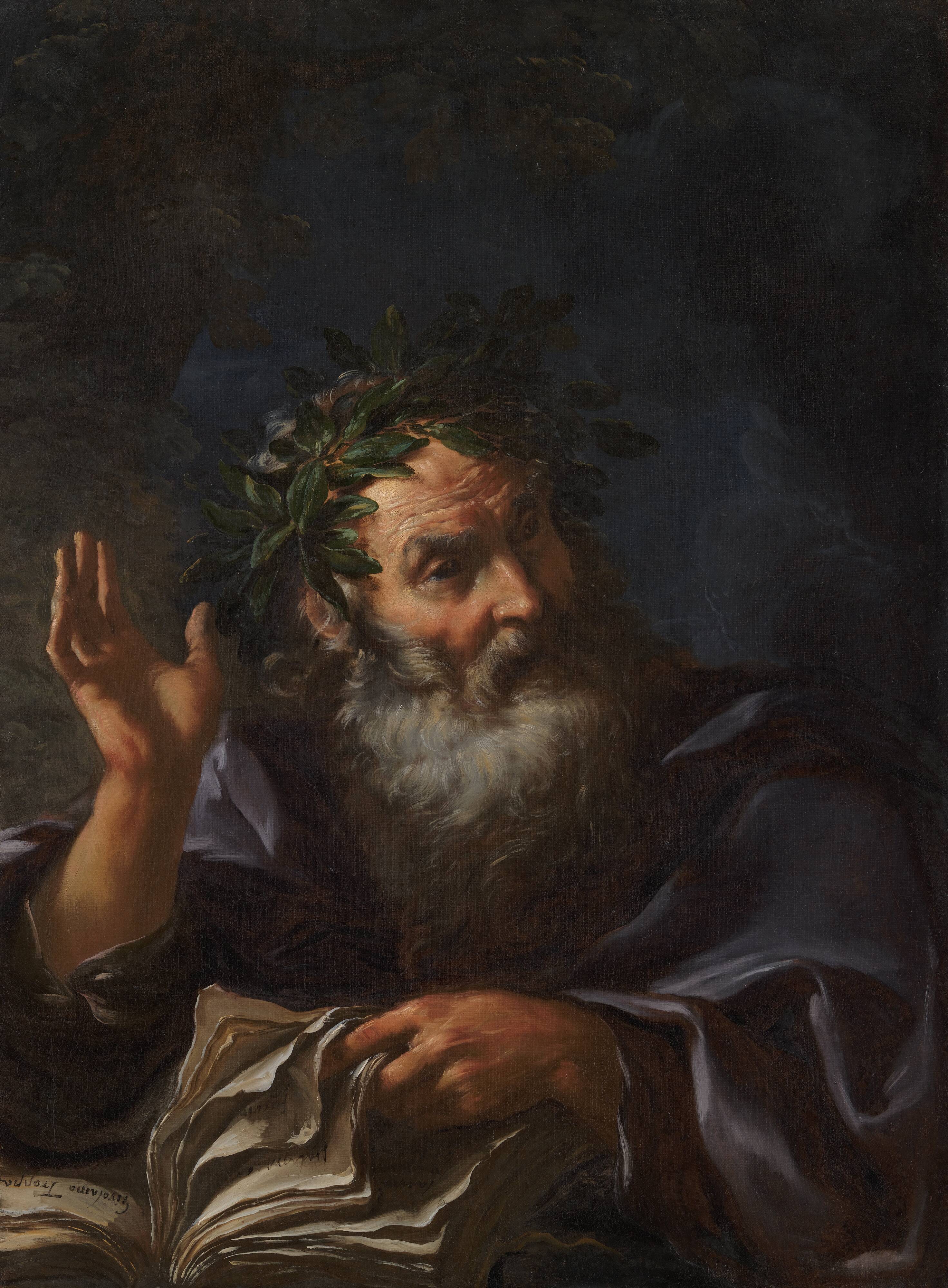
Homer
Girolamo Troppa (Italian, 1637–1708)
1665-1668
- Medium
- Oil on canvas
- Classification
- Painting
- Dimensions
- height 98 cm, width 72 cm, height 121.5 cm, width 96 cm
- Culture
- Italian
- Museum
- SMK – National Gallery of Denmark
- Rights
- Public Domain Mark: SMK waives its rights in this photograph, as the museum states it.
- Who can see it
- Teens profiles and older: its museum says too little about what it shows to place it for younger viewers. How works are placed
View at the SMK – National Gallery of Denmark
About this work
Ever since antiquity, Homer has been regarded as the author of the two epic poems the Iliad and the Odyssey, the first of their kind in European literature. Troppa has painted the fabled Greek poet looking into the darkness with his famously blind eyes, their corneas dull and milky white. Struck by divine inspiration Homer raises up his right hand while his left hand maintains order in the pages of the book he has before him. The book is opened on a page where Troppa’s signature can be read upside-down, pretending to be part of the book’s contents. Homer wears a laurel wreath, as does Virgil. The laurels of glory, honour and eternal fame. In his portrayal of the two poets, Troppa appears to have observed a commonplace iconography for depictions of poet-philosophers; an iconography whose written basis may be Horace’s statements about the appearance of genius. In Ars Poetica Horace states with thinly veiled satire: ‘Because Democritus thinks natural talent (ingenium) is a greater blessing than wretched art and bans sane poets from Helicon, a good many don’t bother to cut their nails or beards, but seek solitary places and avoid baths’.