Window mode follows your eyes with your camera, in this browser only: no picture or position leaves your device.
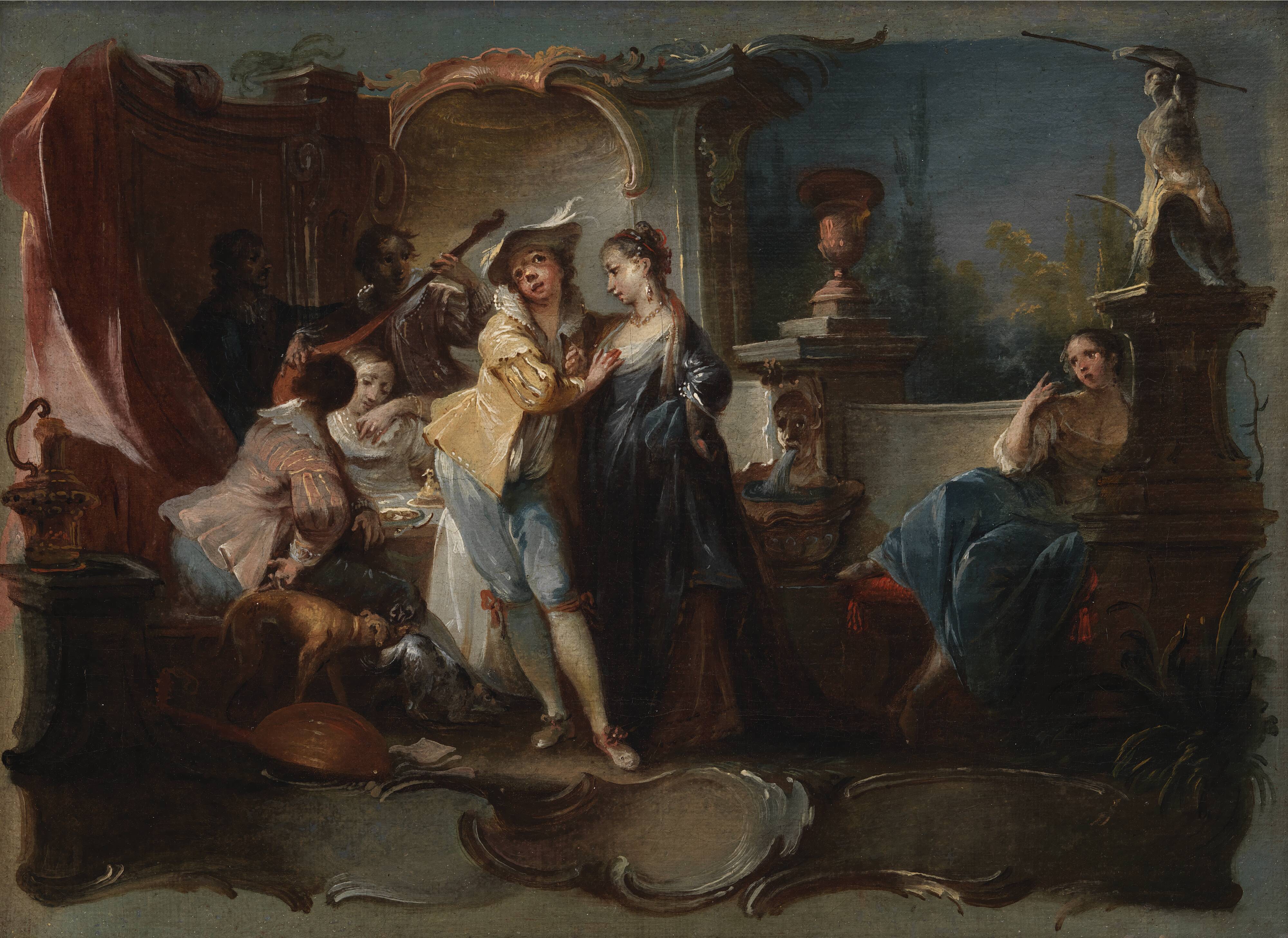
The Prodigal Son Living with Harlots
Johann Wolfgang Baumgartner (German, 1712–1761)
1724-1761
- Medium
- Oil on canvas
- Classification
- Painting
- Dimensions
- height 27.8 cm, width 38 cm
- Culture
- German
- Museum
- SMK – National Gallery of Denmark
- Rights
- Public Domain Mark: SMK waives its rights in this photograph, as the museum states it.
- Who can see it
- Teens profiles and older: its museum says too little about what it shows to place it for younger viewers. How works are placed
View at the SMK – National Gallery of Denmark
About this work
In Baumgartners painting depicting the biblical tale, the Prodigal Son does not yet know that he is lost. Engrossed with the charms of women, wine, and music he pays no heed to the dark side of debauchery. In his small oil painting depicting the biblical tale about the prodigal son Baumgartner not only used the rocaille as a frame, but as a motif in itself. The rocaille, a type of ornament typical of the Rococo, winds its way into the architectural setting of the scene, dissolving stone niches and intermingling with the food of the balustrade. As a child of the waves, sister to the seashell and twin to the corals the rocaille feels right at home within Baumgartner’s pastel-hued universe where the prodigal son does not yet know that he is lost. Engrossed with the charms of women, wine, and music he pays no heed to the dark side of debauchery. Johann Wolfgang Baumgartner’s career was nothing if not versatile. First he was apprenticed as a blacksmith, then as a glass painter and a muralist. Posterity knows him as a creator of large-scale decorative work for churches where frescoes merge seamlessly with the Rococo architecture of the altarpieces. Baumgartner was also a prolific…