Window mode follows your eyes with your camera, in this browser only: no picture or position leaves your device.
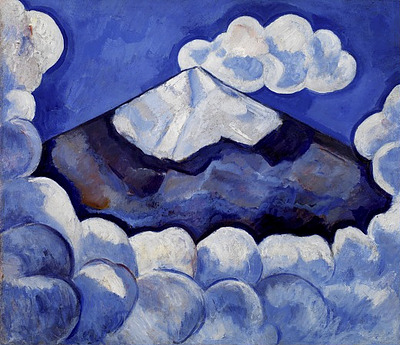
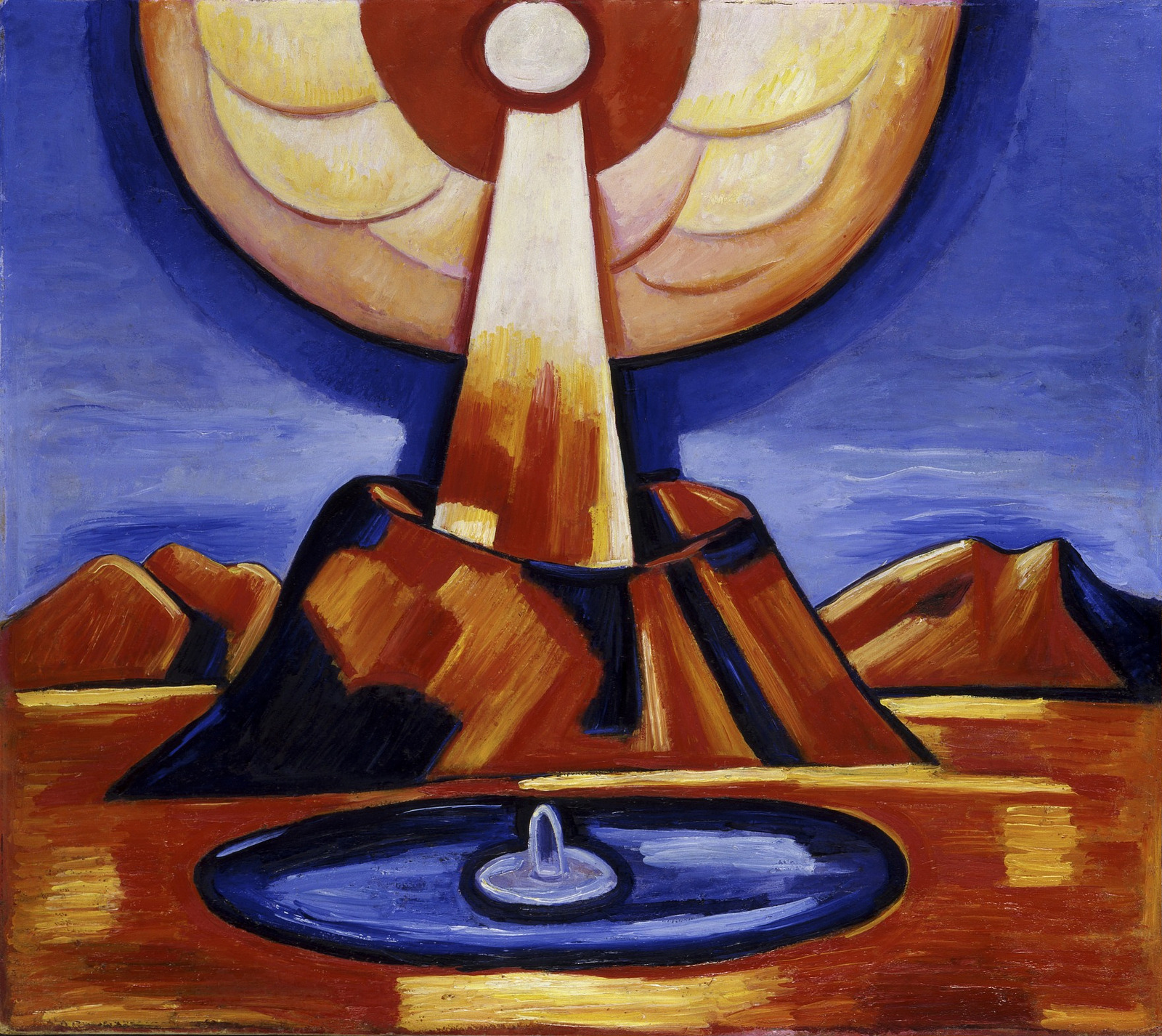
Yliaster (Paracelsus)
Marsden Hartley (born Lewiston, ME 1877-died Ellsworth, ME 1943)
1932
- Medium
- oil on paperboard mounted on particleboard
- Classification
- Paintings
- Dimensions
- 25 1/4 x 28 1/2 in. (64.1 x 72.4 cm.)
- Culture
- Sun
- Museum
- Smithsonian Institution, Smithsonian American Art Museum, Painting and Sculpture
- Credit line
- Smithsonian American Art Museum, Museum purchase made possible by the Smithsonian Institution Collections Acquisition Program and by George Frederick Watts and Mrs. James Lowndes
- Rights
- CC0 (Smithsonian Open Access), as the museum states it.
- Who can see it
- Little Ones profiles and older: it shows gentle subjects for the very young. How works are placed
View at the Smithsonian Institution
About this work
To Americans in the 1930s, Mexico represented an ancient and deeply spiritual civilization much different from the industrial culture to the north. Artists and writers returned to the United States exalted by the myths and rituals that permeated the everyday lives of the Mexican people. Hartley made the trip in 1932 on a Guggenheim Fellowship, absorbing the primeval landscapes and surviving remnants of Aztec art. In a private library in Mexico City, he read that the medieval mystic Paracelsus had given the name yliaster to the base matter from which everything in the universe was made. This painting shows the volcanic peak of Popocatepetl rising from a red plain against the disk of the sun. Fire and earth contend with the intense blues in the sky and lake, completing the four elements of earth, air, fire and water that Paracelsus described.