Window mode follows your eyes with your camera, in this browser only: no picture or position leaves your device.
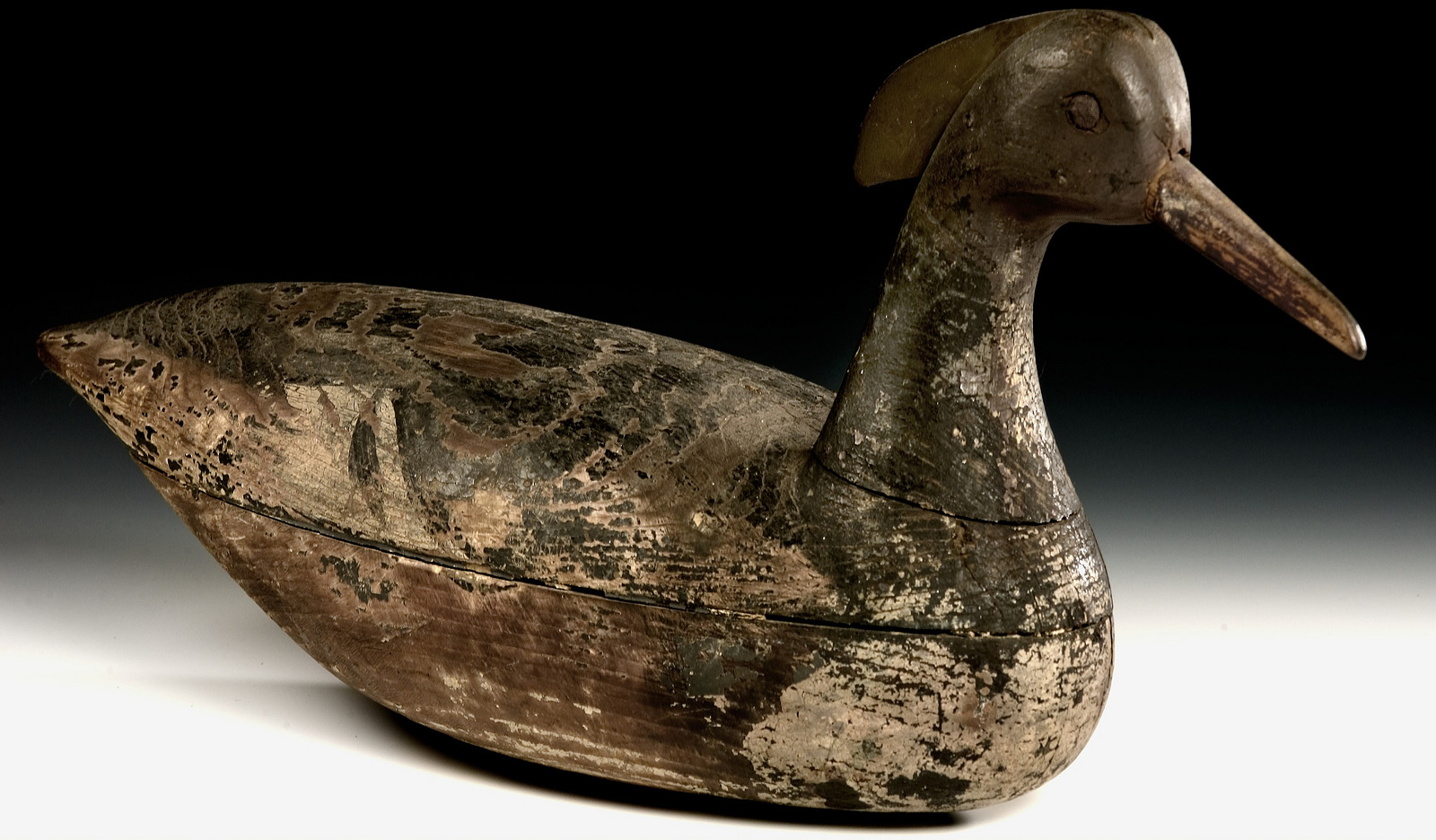
Merganser Decoy
early 20th century
- Medium
- carved and painted cedar and metal
- Classification
- Sculpture
- Dimensions
- 7 3/8 x 17 7/8 x 5 5/8 in. (18.6 x 45.4 x 14.2 cm.)
- Museum
- Smithsonian Institution, Smithsonian American Art Museum, Painting and Sculpture
- Credit line
- Smithsonian American Art Museum, Gift of Herbert Waide Hemphill, Jr. and museum purchase made possible by Ralph Cross Johnson
- Rights
- CC0 (Smithsonian Open Access), as the museum states it.
- Who can see it
- Little Ones profiles and older: it shows gentle subjects for the very young. How works are placed
View at the Smithsonian Institution
About this work
North American hunters have used decoys for centuries. Native Americans made decoys from reeds, clay, and stuffed skins to lure migrating birds within range of their arrows or spears. European pioneers adopted this technique, and by the early nineteenth century both commercial and sport hunters used carved wooden decoys. Craftsmen shape and decorate decoys either to imitate the desired bird’s prey or “trick” them into thinking it is safe to land.