Window mode follows your eyes with your camera, in this browser only: no picture or position leaves your device.
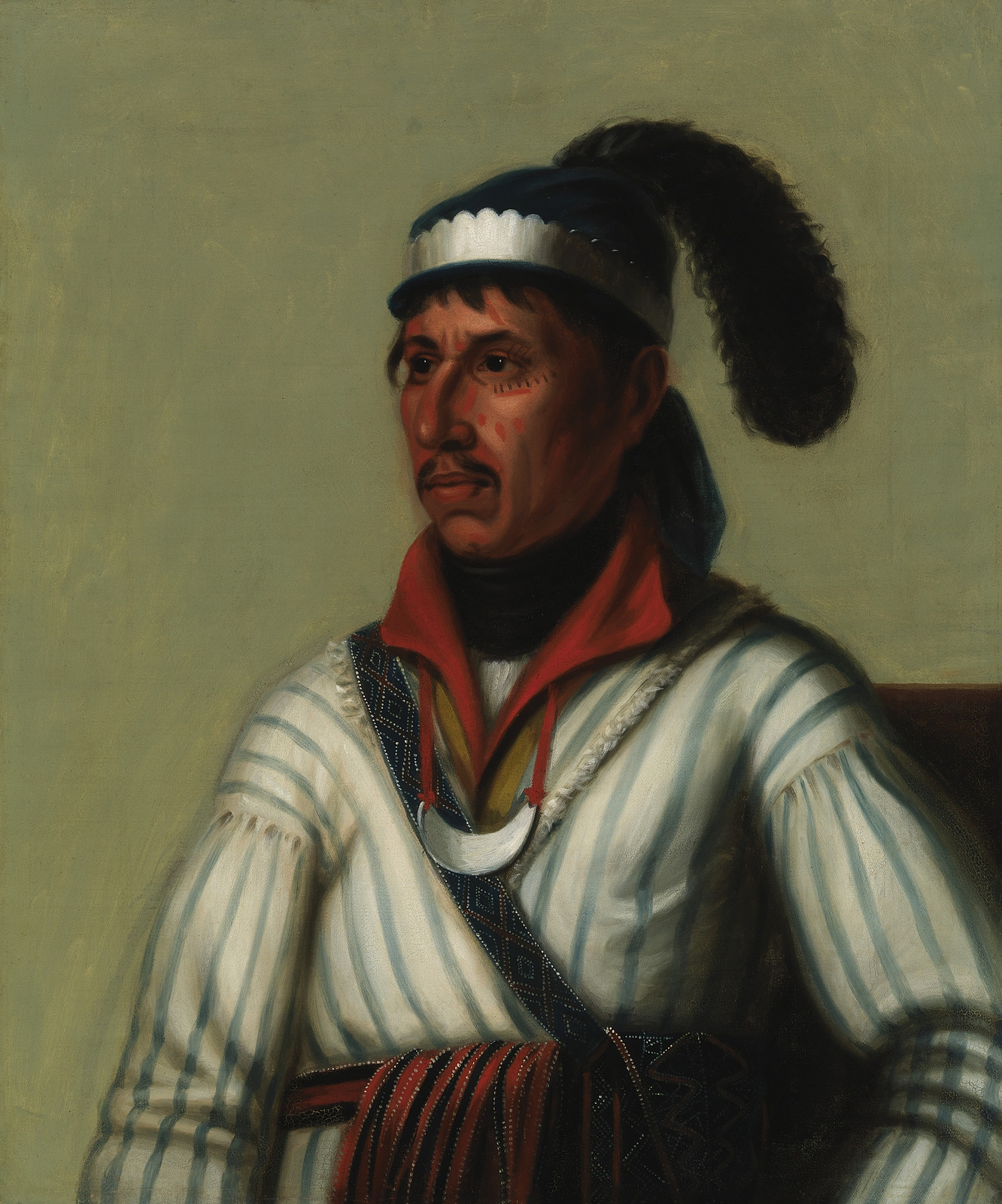
Apauly-Tustennuggee
1825
- Medium
- oil on canvas
- Classification
- Paintings
- Dimensions
- 30 1/2 x 25 3/8 in. (77.5 x 64.3 cm)
- Culture
- Creek Indians
- Museum
- Smithsonian Institution, Smithsonian American Art Museum, Painting and Sculpture
- Credit line
- Smithsonian American Art Museum, Transfer from the National Museum of Natural History, Department of Anthropology, Smithsonian Institution
- Rights
- CC0 (Smithsonian Open Access), as the museum states it.
- Who can see it
- Tweens profiles and older: its subjects are known and suit older children. How works are placed
View at the Smithsonian Institution
About this work
From 1824 to 1830, Thomas McKenney served as US Superintendent of Indian Affairs in Washington, DC, and during his tenure developed a government collection of portraits of prominent Native Americans who visited the city as delegates of their tribes. McKenney commissioned a well-known Washington portraitist, Charles Bird King, to paint the leaders of about twenty Native American tribes. This painting is a copy of King's portrait of Apauly-Tustennuggee, who was a member of the Creek delegation that challenged the validity of the Treaty of Indian Springs of 1825, which demanded the cession of all Creek lands in the state of Georgia in exchange for cash payments. McKenney described Apauly-Tustennuggee as "a chief and a warrior . . . a firm, brave man–and of good sense." (James D. Horan, The McKenney-Hall Portrait Gallery of American Indians, 1972)