Window mode follows your eyes with your camera, in this browser only: no picture or position leaves your device.
Altarpiece
1100-1200
- Medium
- brass, wood, gemstones and leather
- Classification
- Decorative arts
- Dimensions
- height: 20 in. (50.7 cm)
- Museum
- Smithsonian Institution, Smithsonian American Art Museum, Decorative Arts
- Credit line
- Smithsonian American Art Museum, Gift of John Gellatly
- Rights
- CC0 (Smithsonian Open Access), as the museum states it.
- Who can see it
- Tweens profiles and older: its subjects are known and suit older children. How works are placed
View at the Smithsonian Institution
About this work
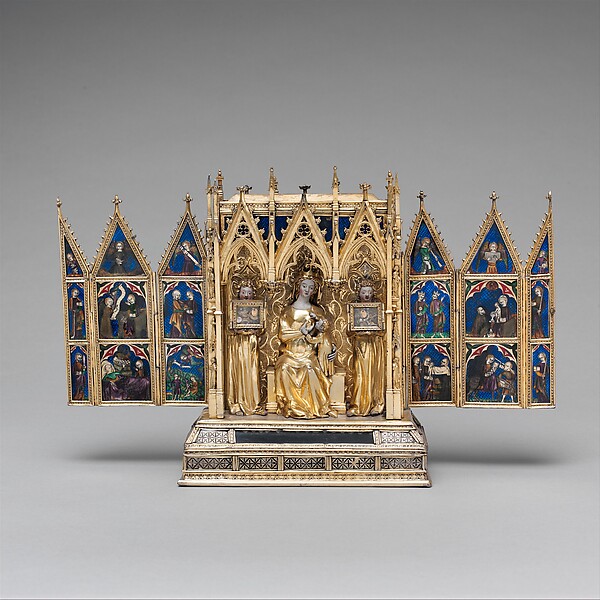
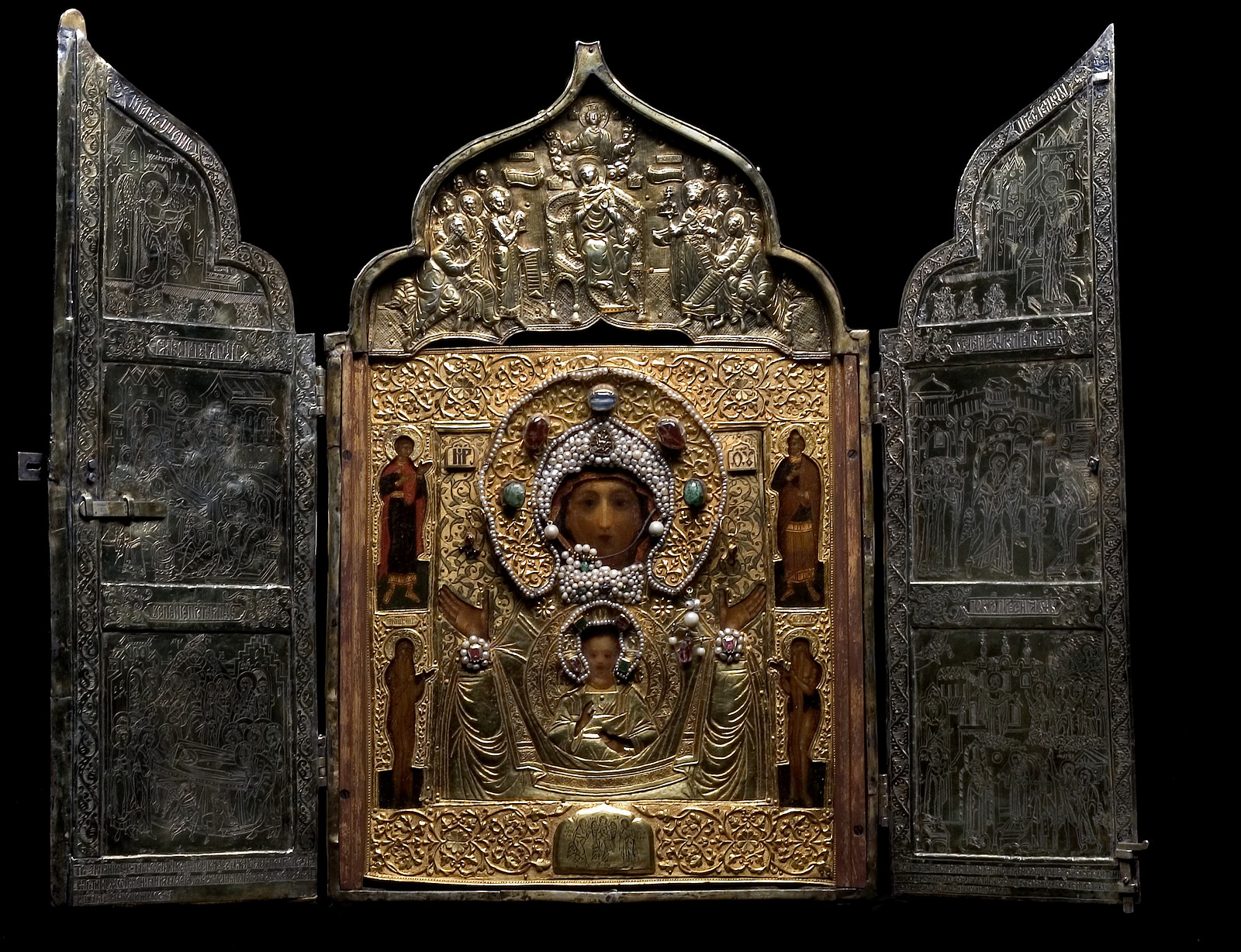
This triptych is a form of Russian icon made during the twelfth century AD. In the tenth century, Russia was converted to Orthodox Christianity under the rule of Prince Vladimir of Kiev. He ordered all pagan images to be destroyed and built many grand churches in an attempt to win his people over to the new religion. To fill these churches, he imported Byzantine icons and furnishings, and Russian artists soon began to copy their rich, ornate forms. This piece was built in three wooden panels, decorated with pearls and precious stones. The intricate topmost layer of gold has been cut away to reveal the paintings on the wood below. The center panel shows the Virgin Mary and Christ, each surrounded by a jewel-encrusted halo. The two side panels depict scenes from the life of Mary and Jesus, edged by a pattern of acanthus leaves. Altarpieces are not used in Orthodox churches, therefore it is likely that this triptych was used for private veneration, in a home, monastic cell or on a wealthy Russian's travels.