Window mode follows your eyes with your camera, in this browser only: no picture or position leaves your device.
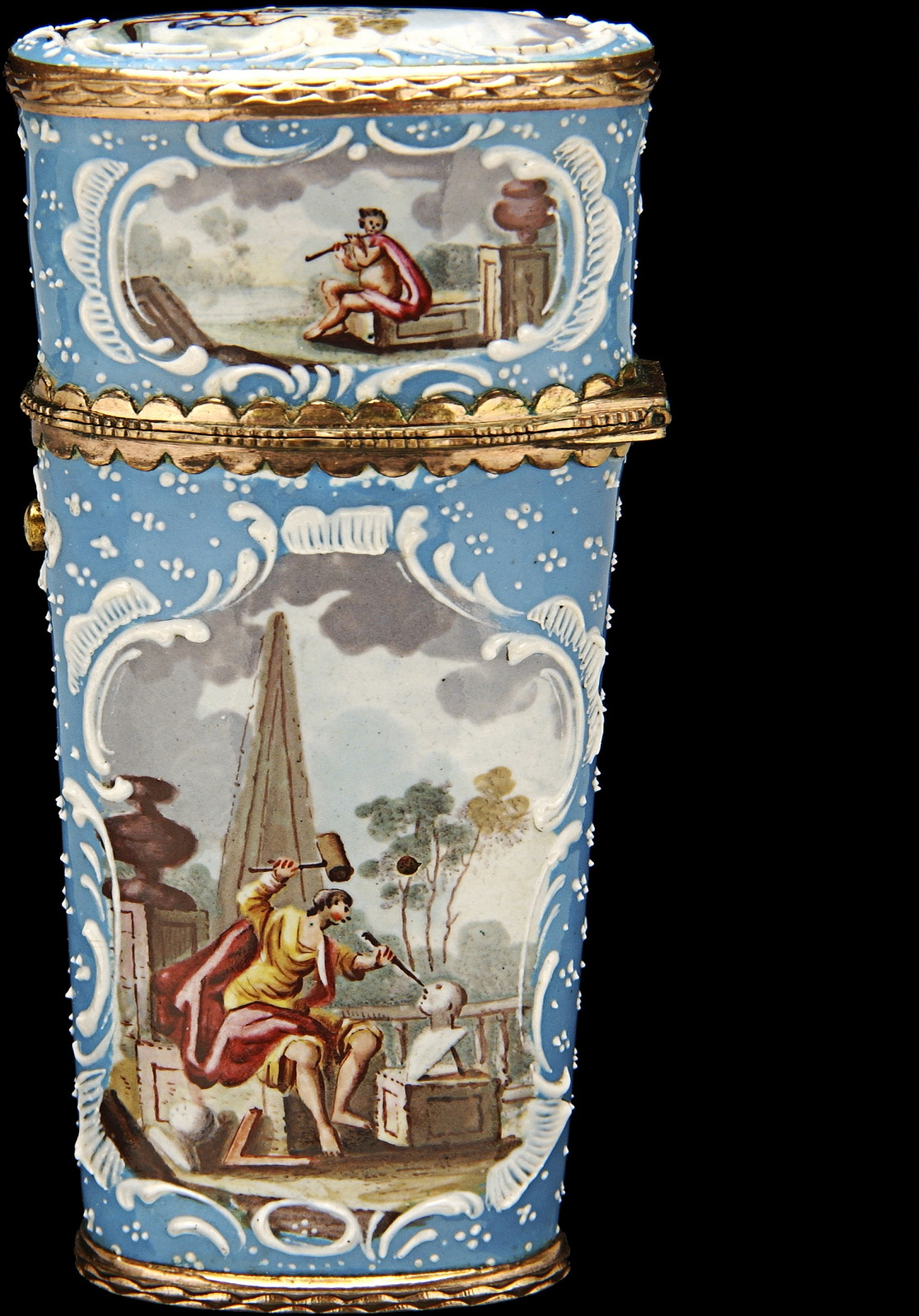
Etui
1750-1800
- Medium
- enamel and gilded metal
- Classification
- Decorative arts
- Dimensions
- height: 3 7/8 in. (9.7 cm)
- Museum
- Smithsonian Institution, Smithsonian American Art Museum, Decorative Arts
- Credit line
- Smithsonian American Art Museum, Gift of John Gellatly
- Rights
- CC0 (Smithsonian Open Access), as the museum states it.
- Who can see it
- Tweens profiles and older: its subjects are known and suit older children. How works are placed
View at the Smithsonian Institution
About this work
The art of painting on enamel flourished in England during the second half of the eighteenth century. A French jeweler, Jean Toutin, had developed a new technique for painting on enamel, in which a gold base was covered first with white enamel, then painted with a design. This craft soon spread to England, where it was adopted by jewelers and goldsmiths. Their intricately painted boxes and curios were fashionable with the wealthy, who often bought them as souvenirs from their travels. Popular items included small boxes, which were used to carry snuff or “patches” (beauty spots); bonbonnieres, which contained sweets; and etuis, which might carry a lady’s scissors, tweezers, or pencil. More functional items were also popular, including watches, candlesticks, and tea caddies.