Window mode follows your eyes with your camera, in this browser only: no picture or position leaves your device.
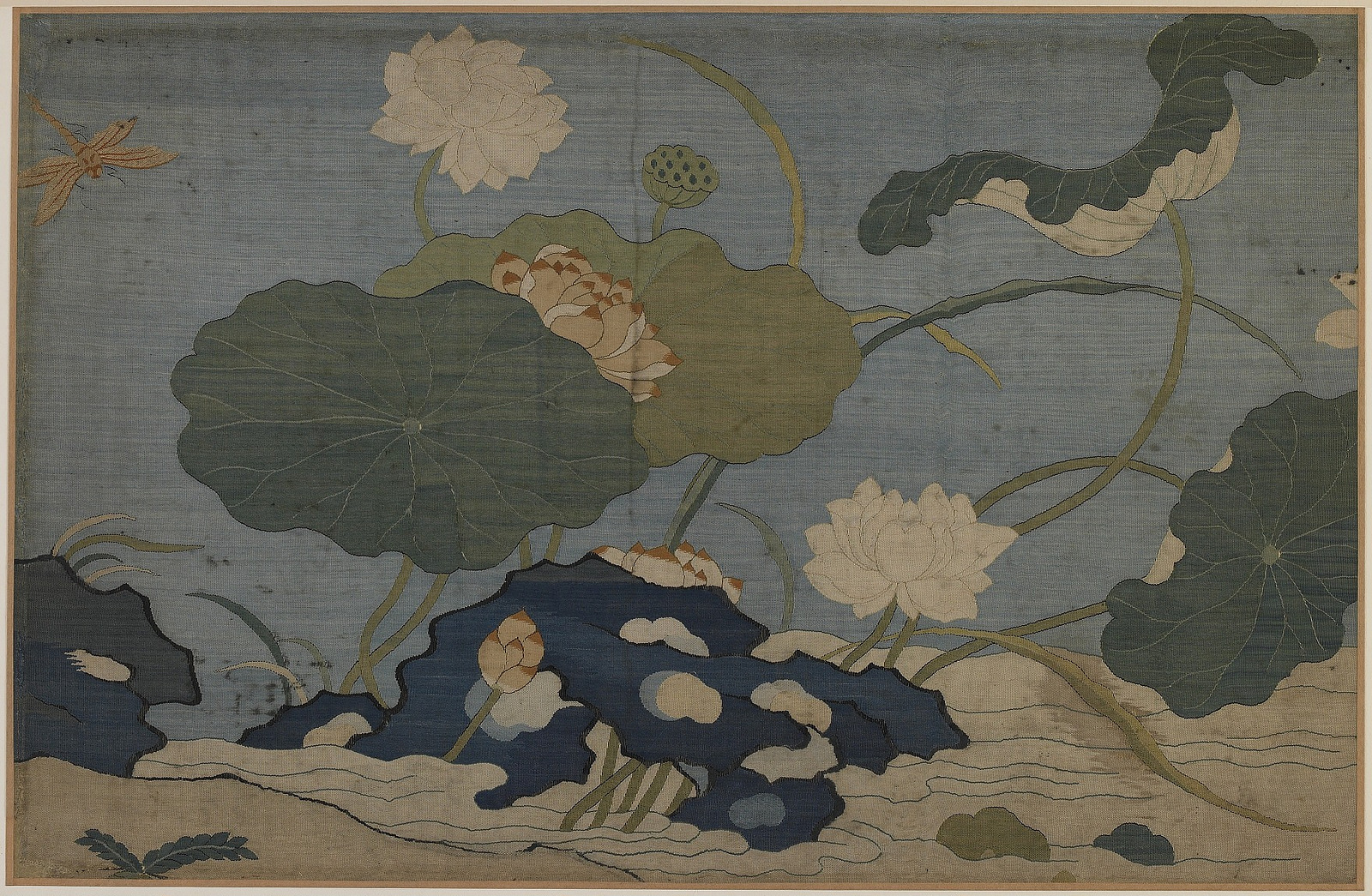
Dragonfly and lotus plants
16th--early 17th century
- Medium
- Silk tapestry (kesi): woven silk threads
- Classification
- Costume
- Dimensions
- H x W (image): 41.9 x 64.8 cm (16 1/2 x 25 1/2 in)
- Culture
- Chinese
- Museum
- Smithsonian Institution, National Museum of Asian Art
- Credit line
- Gift of Charles Lang Freer
- Rights
- CC0 (Smithsonian Open Access), as the museum states it.
- Who can see it
- Teens profiles and older: its subject is for older viewers (war, death, the Passion, drink or the like). How works are placed
View at the Smithsonian Institution
About this work
Strong graphic designs with vibrant colors are among the best tapestries of the Ming dynasty (1368-1644). The use of large blocks of color to create a bold design corresponds to a similar visual effect in fahua ceramics and in cloisonne. This composition of lotuses features one of the most respected and beloved flowers in Chinese lore. Rising fragrant and unsoiled out of muddy water, the lotus symbolizes purity, integrity, and the idea of spiritual transcendence in the Buddhist tradition. It also carries another meaning-peace-based on the pronunciation of "lotus" in Chinese, "he," which sounds like a differently written word that means "peace." The dragonfly (qingting) adds another pun with words for "dragonfly" and "clear" sounding alike. Thus this image suggests clear, peaceful waters, which served as a rebus for the stability of the Ming government.