Window mode follows your eyes with your camera, in this browser only: no picture or position leaves your device.
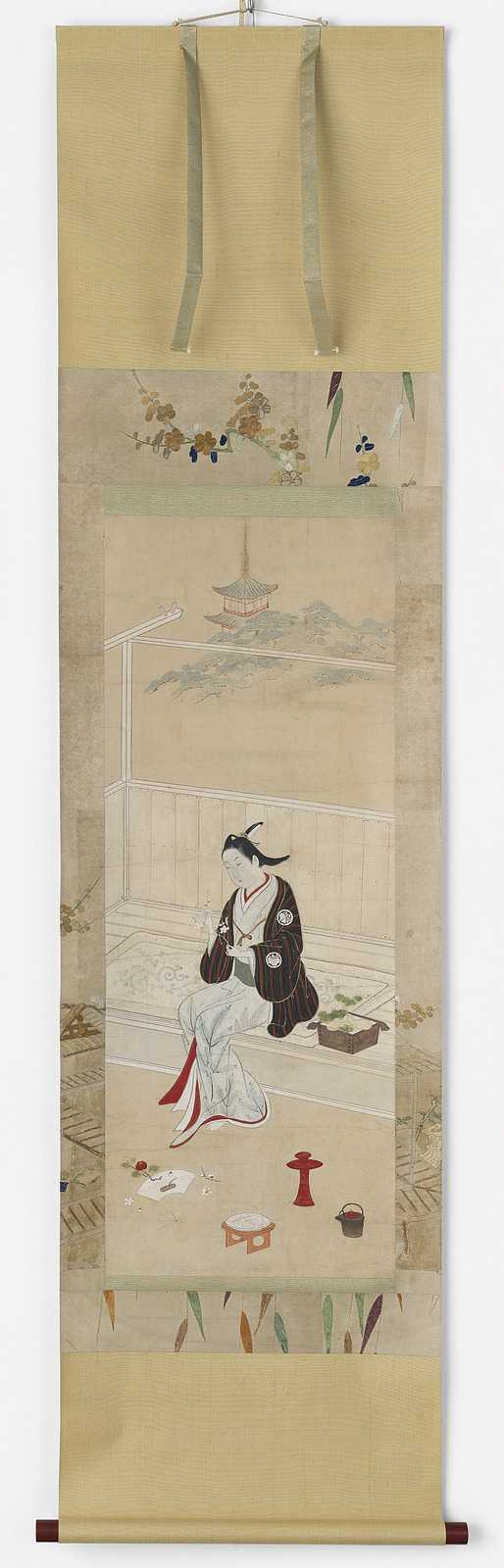
The actor Yoshizawa Ayame I
18th century
- Medium
- Ink, color, and lacquer black on paper
- Classification
- Paintings
- Dimensions
- H x W (image): 88.2 × 33.7 cm (34 3/4 × 13 1/4 in)
- Culture
- Japanese
- Museum
- Smithsonian Institution, National Museum of Asian Art
- Credit line
- Gift of Charles Lang Freer
- Rights
- CC0 (Smithsonian Open Access), as the museum states it.
- Who can see it
- Tweens profiles and older: its subjects are known and suit older children. How works are placed
View at the Smithsonian Institution
About this work
Yoshizawa Ayame I (1673-1729) was one of the most famous onnagata (actors of women's roles) in the history of kabuki. From his debut on stage in the Kamigata (Kyoto-Osaka) theaters, he excelled in the portrayal of women. Later, in Edo, he achieved such perfection in his acting that new superlatives were invented to describe his skill in the annual actors' critiques (Yakusha hyobanki). Ayame once wrote that an onnagata should become as close as possible to a woman in his daily life in order to portray his character more convincingly. Wearing an elegant kimono decorated with a pattern of pine branches, the actor sits on an outdoor bench holding a sprig of blossoming plum. A broken fan and scattered blossoms are strewn at his feet beside a sake cup, an ewer, and a tray of food.