Window mode follows your eyes with your camera, in this browser only: no picture or position leaves your device.
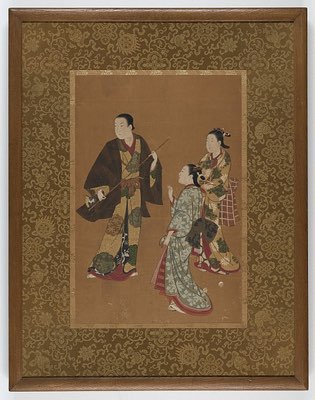
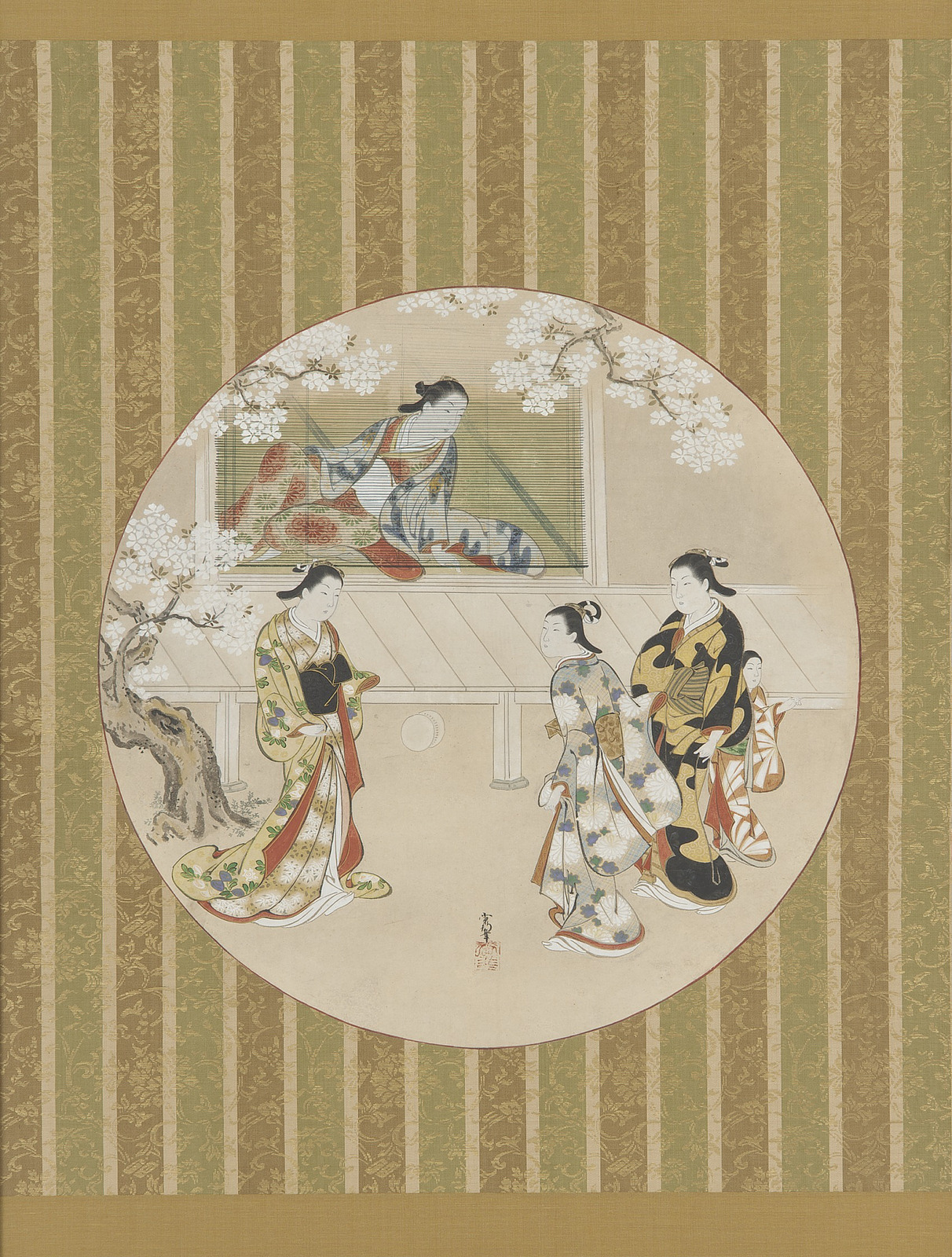
Parody of a scene from <em>The Tale of Genji</em>
Kawamata Tsuneyuki 川又常行 (1676?-1741?)
early 18th century
- Medium
- Ink, color, and gold on paper
- Classification
- Paintings
- Dimensions
- H x W (image): 53.4 × 53.4 cm (21 × 21 in)
- Culture
- Japanese
- Museum
- Smithsonian Institution, National Museum of Asian Art
- Credit line
- Gift of Charles Lang Freer
- Rights
- CC0 (Smithsonian Open Access), as the museum states it.
- Who can see it
- Little Ones profiles and older: it shows gentle subjects for the very young. How works are placed
View at the Smithsonian Institution
About this work
The Tale of Genji, written in the early eleventh century by Murasaki Shikibu, a woman of the imperial court, became widely known during the Edo period (1615-1868) through illustrated printed books. By the eighteenth century, when this painting was created, the conventional elements identifying famous episodes were recognizable, even without text. Here a scene from the thirty-fourth chapter of Genji is transformed into an unexpected contemporary context through a convention known as mitate (often translated as "parody"), a literary and pictorial device that employs an unexpected parallel or comparison between apparently unrelated images.