Window mode follows your eyes with your camera, in this browser only: no picture or position leaves your device.
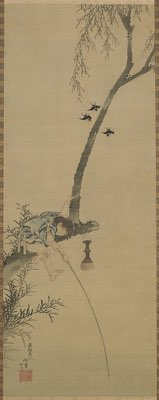
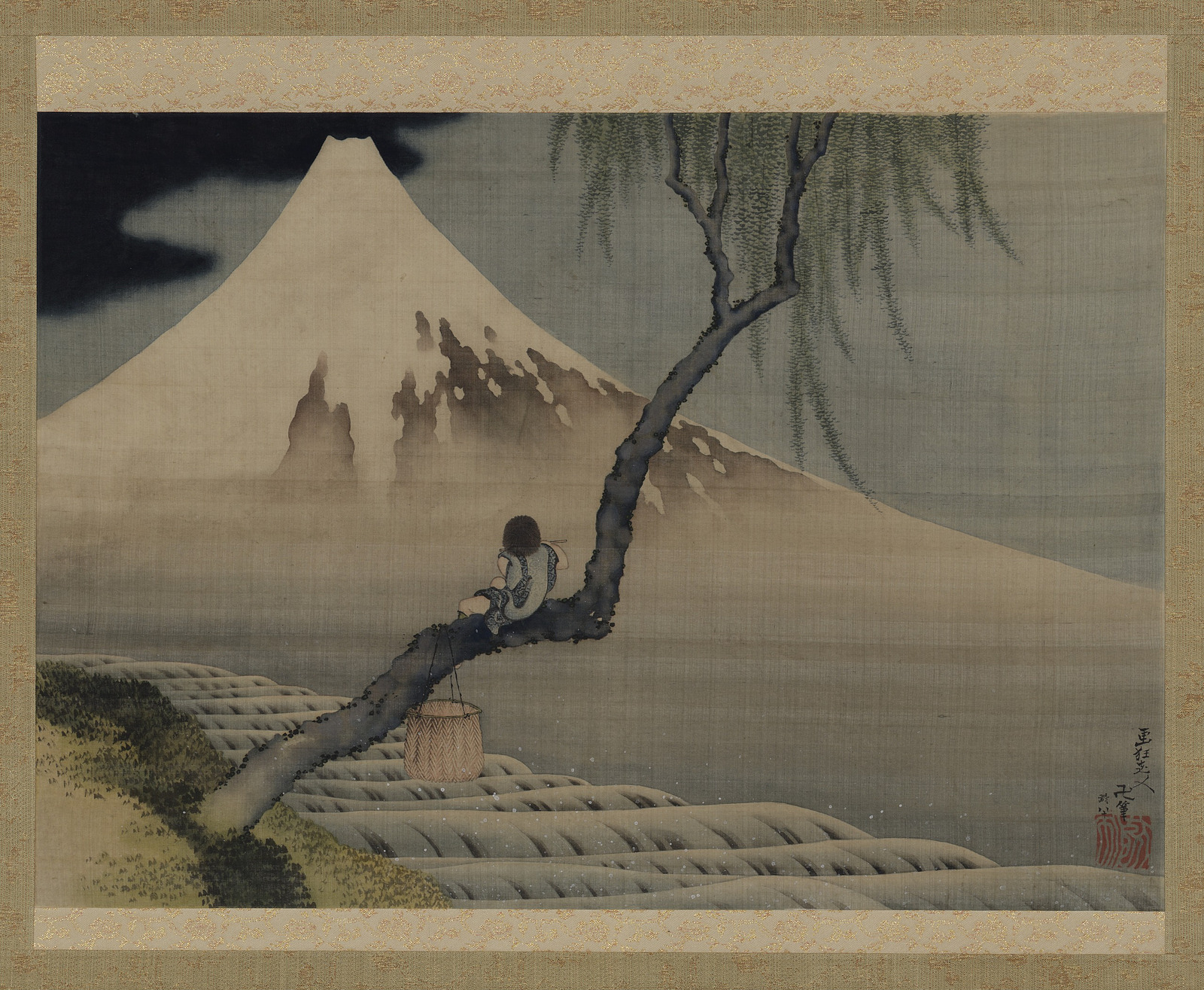
Boy viewing Mount Fuji
Katsushika Hokusai 葛飾北斎 (1760-1849)
1839
- Medium
- Ink and color on silk
- Classification
- Paintings
- Dimensions
- H x W (image): 36.2 x 51.3 cm (14 1/4 x 20 3/16 in)
- Culture
- Japanese
- Museum
- Smithsonian Institution, National Museum of Asian Art
- Credit line
- Gift of Charles Lang Freer
- Rights
- CC0 (Smithsonian Open Access), as the museum states it.
- Who can see it
- Tweens profiles and older: its subjects are known and suit older children. How works are placed
View at the Smithsonian Institution
About this work
Mount Fuji may be the most widely recognized symbol of Japan. The mountain and its name carry many meanings that are conveyed in Japanese by writing "Fuji" with different characters, such as a pair meaning "peerless." The highest mountain in Japan, Fuji's imminent power is contained in its seething volcanic core, hidden beneath its perennial cloak of snow. Regarded as sacred, Mount Fuji has been a site for religious pilgrimage, and ancient stories maintain that an elixir of immortality could be found at its peak. This painting frames the mountain in the bend of a willow that extends over a rushing stream. A young boy nestles in the tree, playing a flute while gazing at the mountain. This tranquil and engaging view of Fuji was one of hundreds produced by Hokusai during his lifetime. Here, at the age of nearly eighty, the artist gives visual form to his quest for long life by portraying a young boy in the thrall of the immortal mountain.