Window mode follows your eyes with your camera, in this browser only: no picture or position leaves your device.
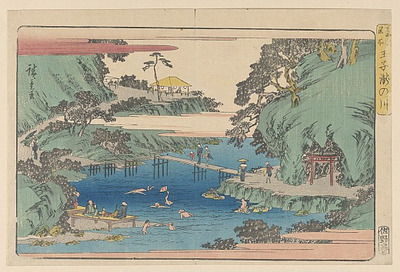
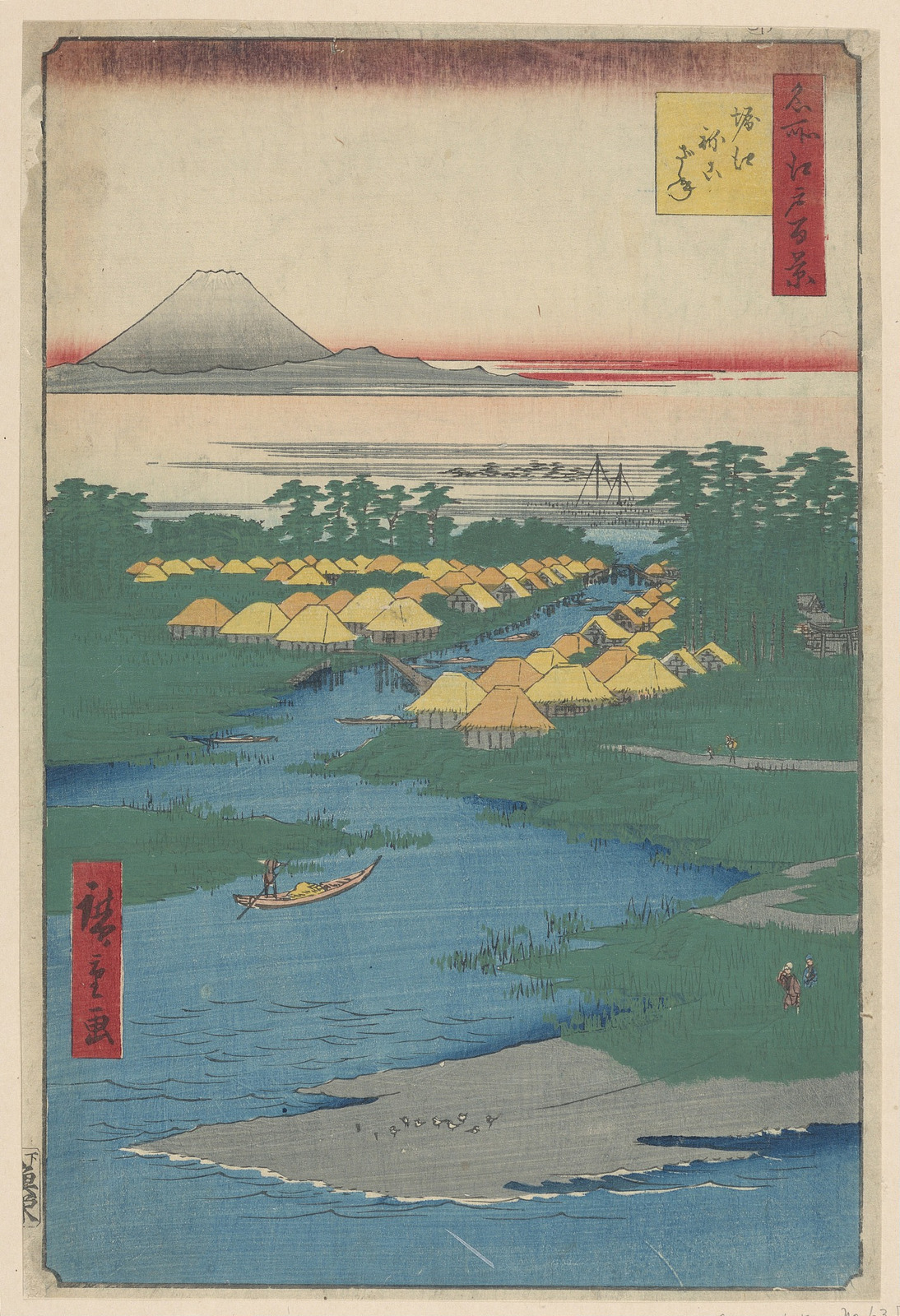
Nekozane at Horikiri Canal No. 96 from One Hundred Famous Views of Edo (Horie, Nekozane)
Ando Hiroshige (Japanese, 1797–1858)
1856
- Medium
- Woodblock print in colored ink on paper
- Classification
- Prints
- Culture
- Japan
- Museum
- Smithsonian Institution, Cooper Hewitt, Smithsonian Design Museum
- Credit line
- Gift of the Estate of Mrs. Robert H. Patterson
- Rights
- CC0 (Smithsonian Open Access), as the museum states it.
- Who can see it
- Little Ones profiles and older: it shows gentle subjects for the very young. How works are placed
View at the Smithsonian Institution
About this work
Two fishing villages, Nekozane on the right side of the river and Horie on the left were both known for shellfish. The river, known as Border River (Sakaigawa) has two bridges, the closer one is named Border Bridge (sakiabashi). In 1889 the two villages merged under the name “Urayasu” which translates to “safe harbor.” Today the southern tip is where Toyko Disneyland is located. The foreground shows a cluster of plovers (daizen) and the background shows Mt. Fuji coming out of low clouds and a red sky.