Window mode follows your eyes with your camera, in this browser only: no picture or position leaves your device.
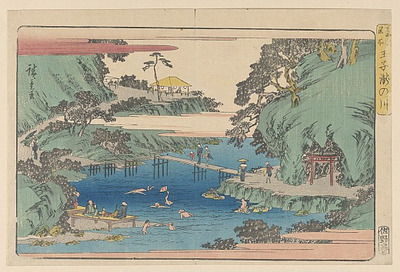
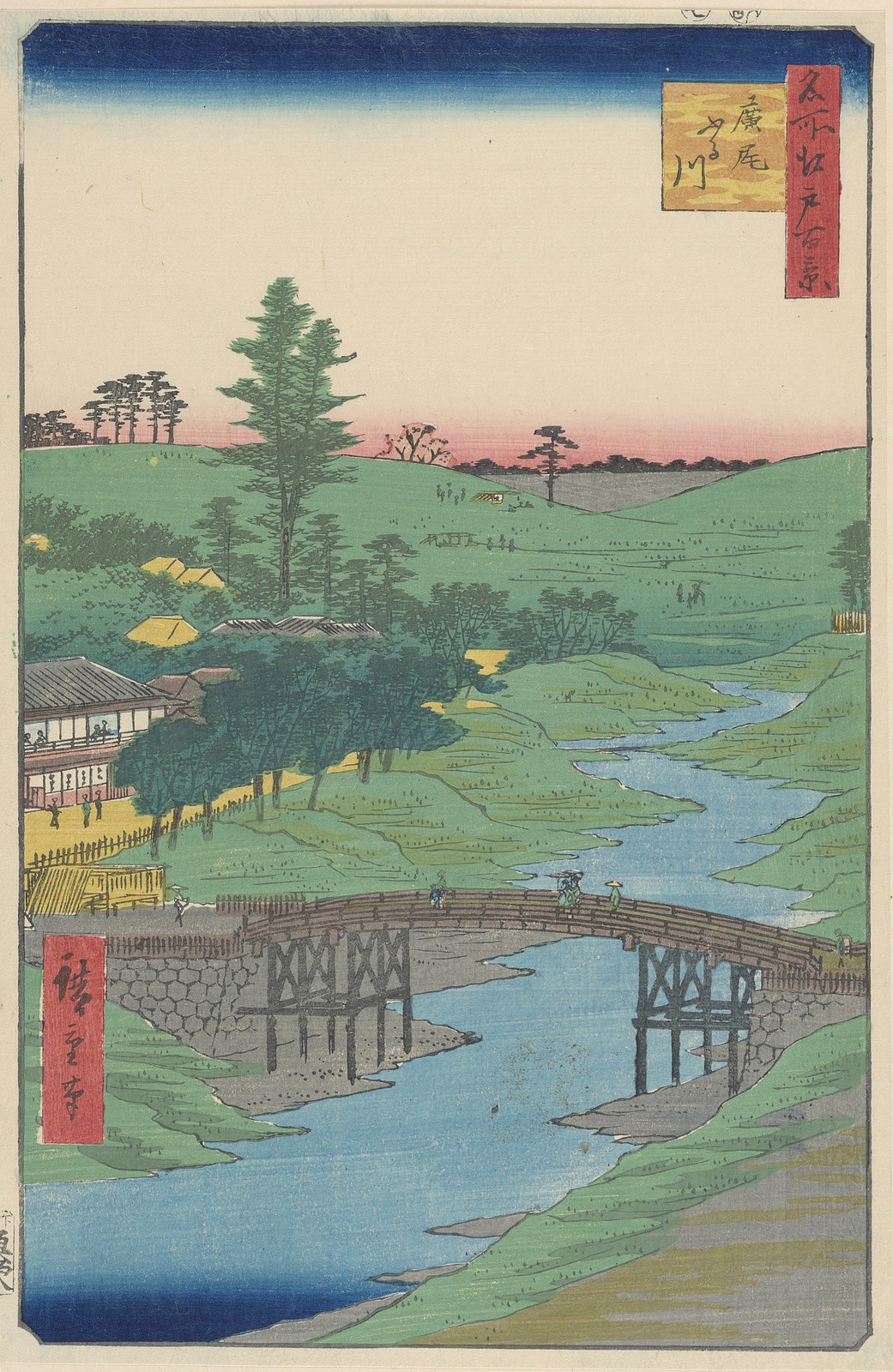
Furukawa River, Hiroo,( Furukawa Hiroo) From the Series One Hundred Famous views of Edo
Ando Hiroshige (Japanese, 1797–1858)
1857
- Medium
- Woodblock print in colored ink on paper
- Classification
- Prints
- Culture
- Japan
- Museum
- Smithsonian Institution, Cooper Hewitt, Smithsonian Design Museum
- Credit line
- Gift of the Estate of Mrs. Robert H. Patterson
- Rights
- CC0 (Smithsonian Open Access), as the museum states it.
- Who can see it
- Little Ones profiles and older: it shows gentle subjects for the very young. How works are placed
View at the Smithsonian Institution
About this work
This birds-eye view of the blue Furukawa River shows the ruggedness of the windy pathway that becomes swallowed up in the green meadow landscape. Throughout the journey, eventually flowing into Edo Bay, its name changes from the Shibuya River to the Akabane River, Shinhori River, and Kanasugi River. There are four significant bridges from Ichi-no-hashi to Shi-no-hashi. Here is a view of the landscape showing travelers crossing one of the bridges and the Fox restaurant (kitsune), which is still known today for its eel (unagi). Many of the scenes from Hiroshige’s One Hundred Famous Views of Edo allude to local specialties (meibutsu). Today Hiroo is part of Tokyo’s bustling city streets, filled with expensive apartments, embassy buildings and of course luxurious restaurants, which feature eel specialties.