Window mode follows your eyes with your camera, in this browser only: no picture or position leaves your device.
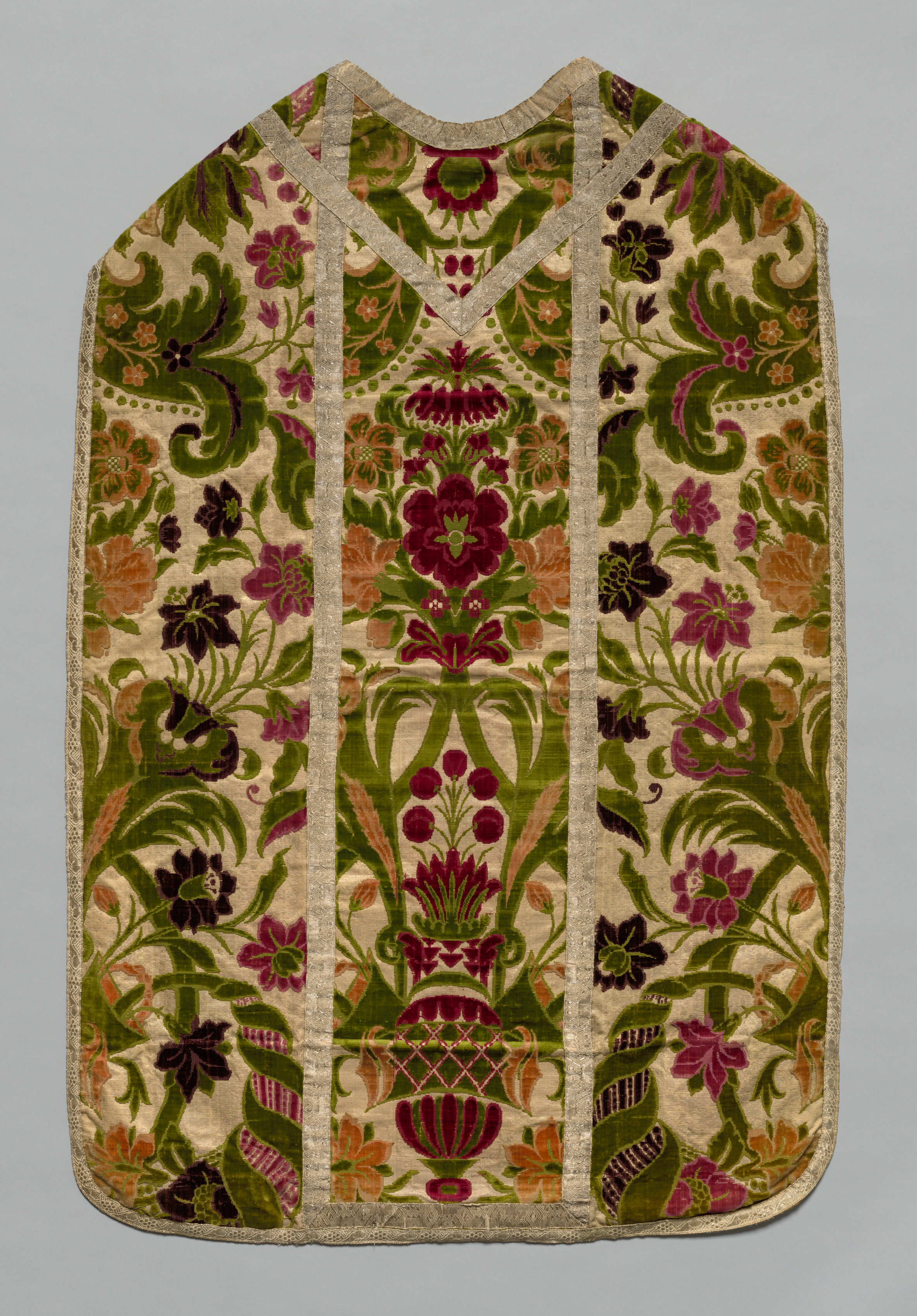
Chasuble
c 1600–1700
- Medium
- Silk and gilt metal threads, woven; cut and uncut velvet
- Classification
- Velvet
- Dimensions
- Overall: 106 x 68.3 cm (41 3/4 x 26 7/8 in.)
- Culture
- Italy, Genoa
- Museum
- Cleveland Museum of Art, Textiles
- Credit line
- Gift of Mr. and Mrs. J. H. Wade
- Rights
- Public domain (CC0), as the museum states it.
- Who can see it
- Tweens profiles and older: its subjects are known and suit older children. How works are placed
View at the Cleveland Museum of Art
About this work
This sumptuous polychrome velvet displays a central vase with abundant flora and exotic leaves flanking curving blossoming fronds on a gilt-metal thread ground. The pattern was created with five colors of cut and uncut (loops) velvet pile. Only the pile warps for the lush green velvet occur across the entire cloth, while each additional color appears in vertical stripes—crimson, peach, rose, and purple. These widely acclaimed velvets from Genoa were the most colorful woven in Europe. Both the long stole and the shorter maniple are insignia of the office of deacons, priests, and the higher clergy. The stole was worn under a chasuble according to the office and the maniple was hung on the left forearm. The burse is a stiff receptacle in which the folded corporal, a white linen cloth on which the sacred bread and chalice are placed during the Mass, is carried to and from the altar. The upper fabric matches the chasuble, the bottom is a plain silk, and the interior has an obligatory linen lining.