Window mode follows your eyes with your camera, in this browser only: no picture or position leaves your device.
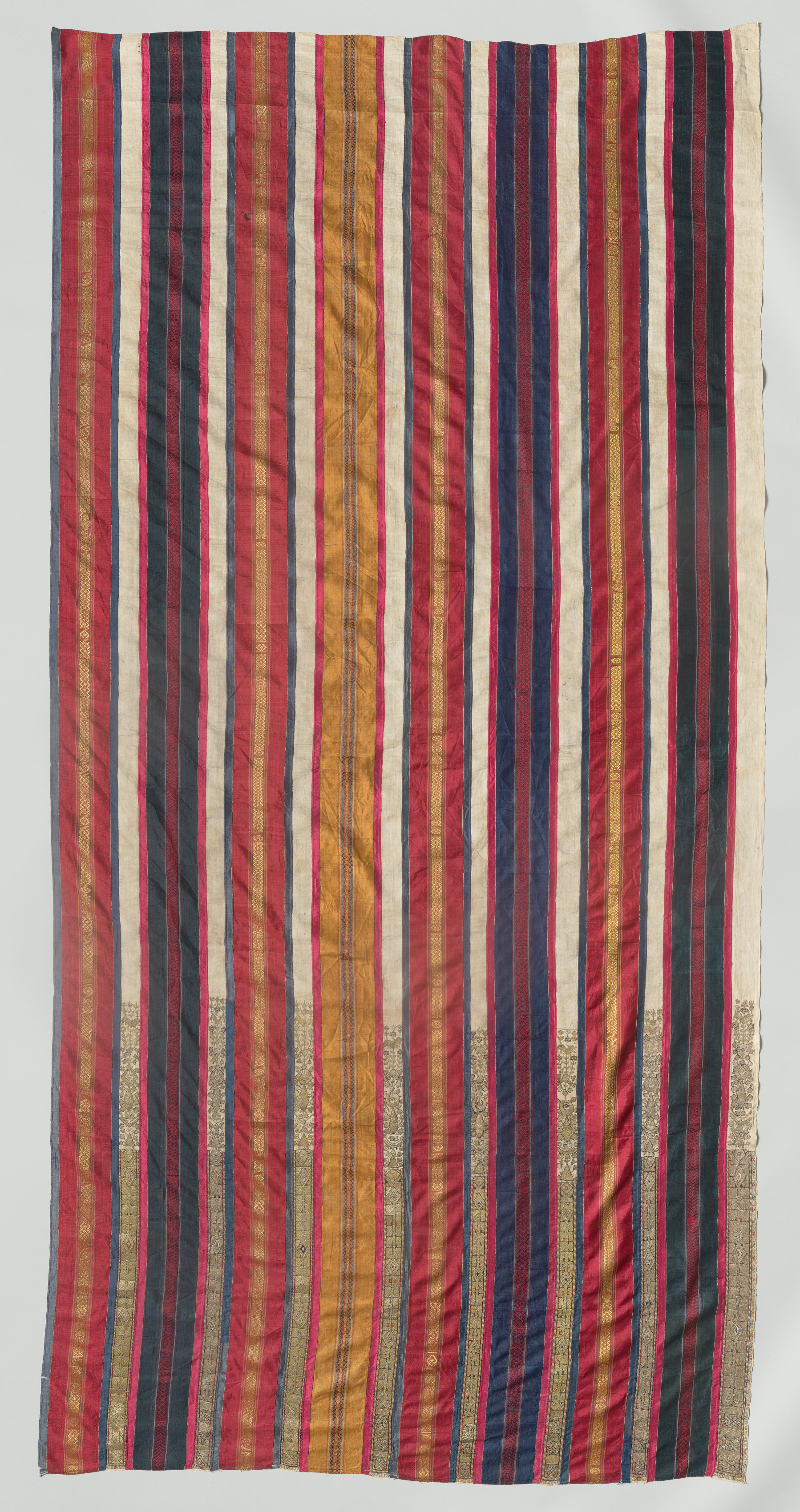
Curtain (one of a pair)
1600s–1700s
- Medium
- Silk, linen, metal, and dye
- Classification
- Embroidery
- Dimensions
- Overall: 276.8 x 136.7 cm (109 x 53 13/16 in.)
- Culture
- Africa, North Africa, Tunisia, Djerba, Tunisian weaver(s) and embroiderer(s)
- Museum
- Cleveland Museum of Art, Textiles
- Credit line
- Gift of Mr. and Mrs. J. H. Wade
- Rights
- Public domain (CC0), as the museum states it.
- Who can see it
- Tweens profiles and older: its subjects are known and suit older children. How works are placed
View at the Cleveland Museum of Art
About this work
One of a pair, this curtain displays colorful silk bands with woven geometric motifs, and cream bands with gold-embroidered plants, birds, six-pointed stars, and the khamsah (خمسة), an open five-fingered hand. Birds and the tree of life were popular good luck or fertility symbols linked to marriage. This curtain’s cosmopolitan motifs would have resonated with Jews, Muslims, and Christians alike, reflecting its creation on multiethnic and multireligious Djerba, an island off the Tunisian coast. There, both goldsmithing and gold thread embroidery were done by Jewish artisans (male and female, respectively). The fine materials suggest this curtain once hung in a wealthy home or for special occasions; interior wall hangings were typically made from rough wool.