Window mode follows your eyes with your camera, in this browser only: no picture or position leaves your device.
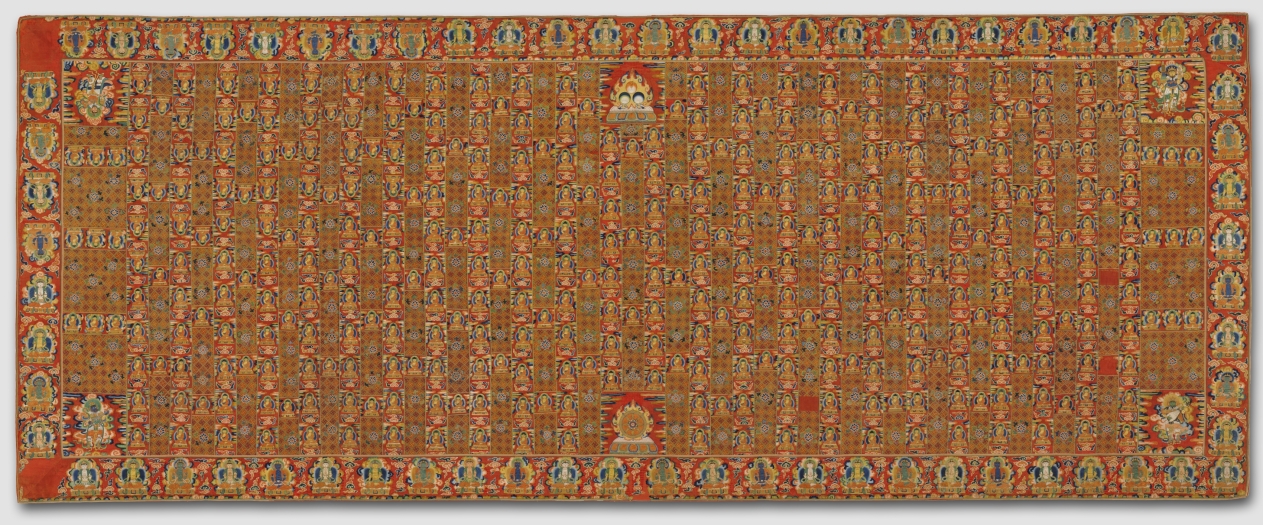
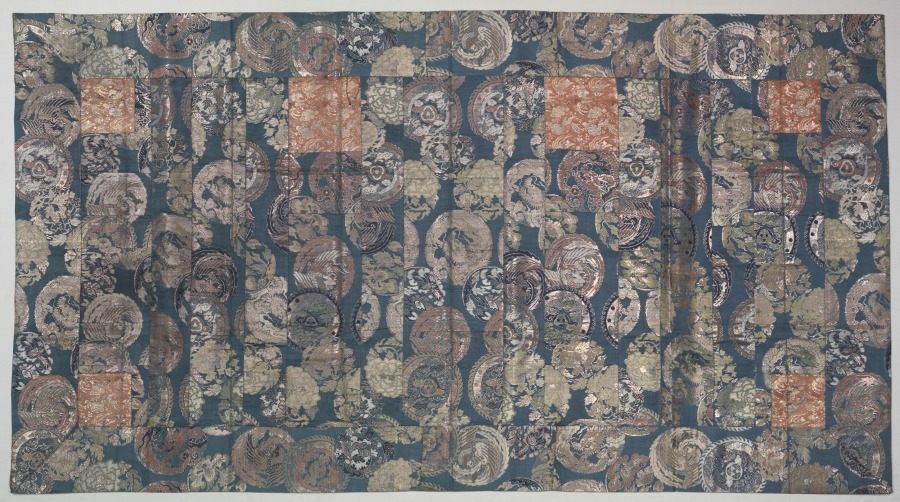
Buddhist Surplice (Kesa)
early 1900s
- Medium
- silk with supplementary weft, brocaded; metal thread
- Classification
- Garment
- Dimensions
- Average: 114.3 x 205.7 cm (45 x 81 in.)
- Culture
- Japan, Meiji period (1868–1912)
- Museum
- Cleveland Museum of Art, Textiles
- Credit line
- Gift of Mr. and Mrs. J. H. Wade
- Rights
- Public domain (CC0), as the museum states it.
- Who can see it
- Tweens profiles and older: its subjects are known and suit older children. How works are placed
View at the Cleveland Museum of Art
About this work
The kesa is a Buddhist monk’s vestment worn folded and draped over one shoulder, and fastened over the chest. In keeping with the austere conditions of monastic life, kesa were traditionally fashioned from remainders of donated garments sewn together into a series of columns. The wider, central column symbolizes the Buddha. The orange squares with a phoenix and flower pattern in each corner represent the deities who guard the four directions, while the two at the top on either side of the central column symbolize attendant bodhisattvas, or the Nio, guardians who protect the Buddhist Law. This kesa is sewn from a textile with bold roundels with dragon and phoenix motifs.