Window mode follows your eyes with your camera, in this browser only: no picture or position leaves your device.
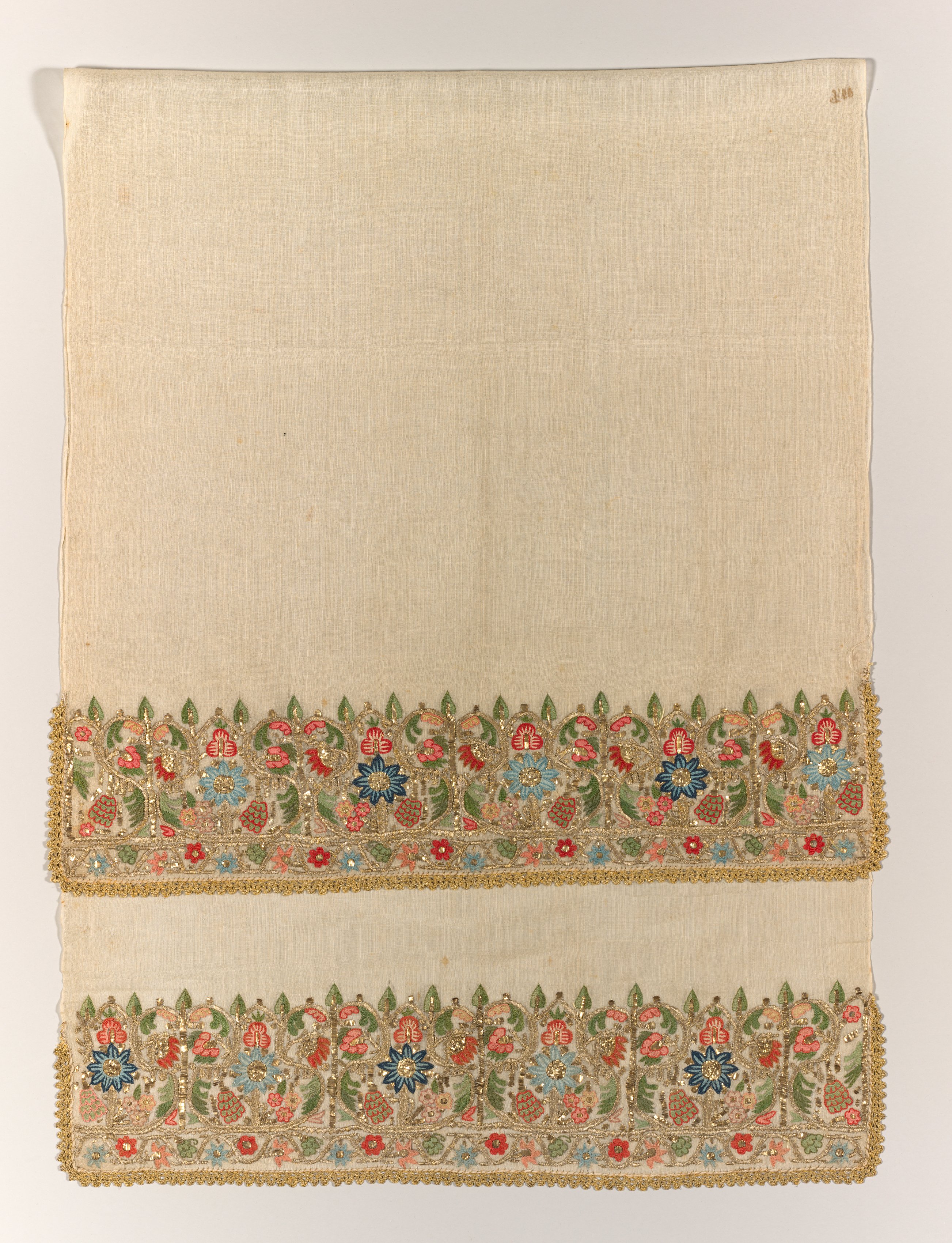
Embroidered towel
1800s
- Medium
- plain weave: linen; embroidery, double-running stitch: silk, gilt-metal strips and thread
- Classification
- Embroidery
- Dimensions
- Average: 129.5 x 55.9 cm (51 x 22 in.)
- Culture
- Turkey
- Museum
- Cleveland Museum of Art, Textiles
- Credit line
- Gift of Mr. and Mrs. J. H. Wade
- Rights
- Public domain (CC0), as the museum states it.
- Who can see it
- Teens profiles and older: its museum says too little about what it shows to place it for younger viewers. How works are placed
View at the Cleveland Museum of Art
About this work
Fine Turkish towels with beautiful floral decoration embroidered across each end are often reversible, and their quality revealed the owner’s wealth and status. A lady was required by Turkish etiquette to use a napkin “daintily over the tips of her fingers,” lest she lose her social standing. Towels were not only essential components of everyday life but also gifts, prizes, and decorations. Embroideries could also depict images of daily life. Colorful tents and buildings in floral landscapes, here enriched with shiny gilt-metal strips, adorn the four sides of a head scarf that was worn either folded or unfolded and fastened beneath the chin. Square embroideries also served to wrap gifts, letters, and objects; the 19th-century English traveler Charles White commented that “no present is made . . . unless folded in a handkerchief, embroidered cloth, or piece of gauze. The more rich the envelope, the higher the compliment to the receiver.”