Window mode follows your eyes with your camera, in this browser only: no picture or position leaves your device.
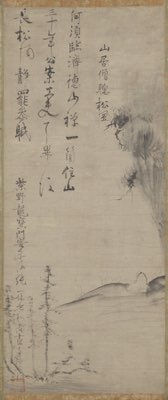
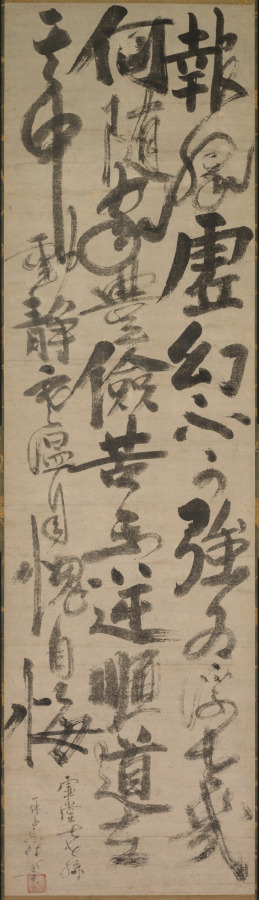
Reflections of Priest Foyen
Ikkyū Sōjun (Japanese, 1394–1481)
1400s
- Medium
- hanging scroll, ink on paper
- Classification
- Painting
- Culture
- Japan, Muromachi period (1392–1573)
- Museum
- Cleveland Museum of Art, Japanese Art
- Credit line
- Gift from the Collection of George Gund III
- Rights
- Public domain (CC0), as the museum states it.
- Who can see it
- Tweens profiles and older: its subjects are known and suit older children. How works are placed
View at the Cleveland Museum of Art
About this work
Left by his mother at a small Zen temple in Kyoto at the age of six, Ikkyu later drew on his early studies and experiences for his writings, which focused on his keen interest in the Chinese classics. Poetry in particular was a favorite subject and images from classical poetry or passages from favorite poems or commentaries frequently provided Ikkyu with the core ideas for his own work. A rare example of his calligraphy, this narrow scroll contains a verse in eight phrases, each comprising four characters. The whole verse is organized in three towering lines of brusque, emphatic calligraphy augmented by Ikkyu's signature-the two lines of running script in the lower left corner. The text refers to a passage included in the Chronicle of the Zen Sect that contains a cautionary reminder attributed to the legendary Chinese monk Foyen Qingyuan (1067-1120), long revered in Japan. The initial phrase begins: "Life is a mirage."