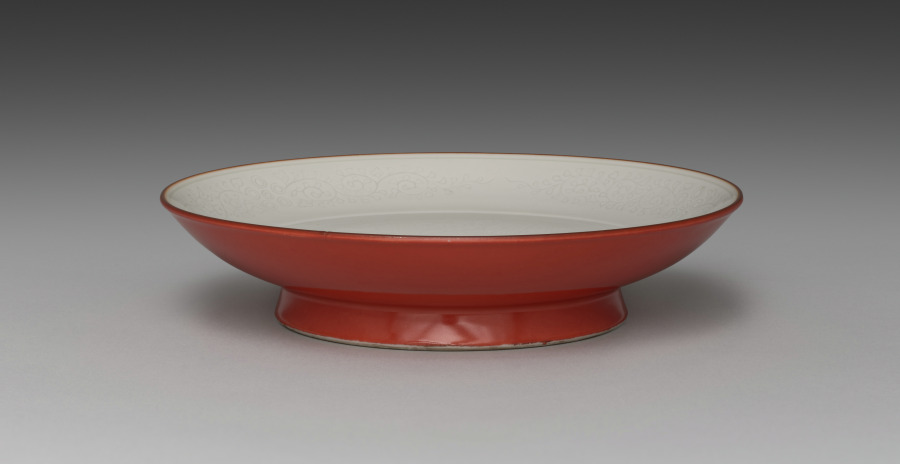
Dish with Carp in Waves
Seifū Yohei III (Japanese, 1851–1914)
1893–1914
- Medium
- Porcelain with incised designs, iron oxide, and red glaze
- Classification
- Ceramic
- Dimensions
- height: 3.5 cm (1 3/8 in.); Diameter: 16 cm (6 5/16 in.)
- Culture
- Japan, Meiji period (1868–1912)
- Museum
- Cleveland Museum of Art, Japanese Art
- Credit line
- Gift of James and Christine Heusinger
- Rights
- Public domain (CC0), as the museum states it.
- Who can see it
- Little Ones profiles and older: it shows gentle subjects for the very young. How works are placed
View at the Cleveland Museum of Art
About this work
The exterior of this low, wide dish with flared foot is covered with a red coral glaze. Its interior is white with incised designs, and the rim is decorated with brown iron oxide. The primary design occupies the flat bottom of the bowl and is bound within a single band. It is of a carp swimming vigorously against roiling waves with frothy crests moving in multiple directions; the water just above the fish’s head is beginning to form a whirlpool. A closer look at the fish’s face reveals that it somewhat resembles that of a dragon. It is possible that the motif is meant to be a carp who jumps over the waterfall and transforms into a dragon, who flies into the sky. The iconography symbolizes the transformative experience of striving to one’s utmost and achieving the impossible against tough odds. Originating in China, the narrative’s visual representation as well as its meaning crossed the ocean to Japan, where it often appeared on items gifted to those celebrating pivotal successes in life, such as obtaining elevated status in one’s work or graduating from an academic program.