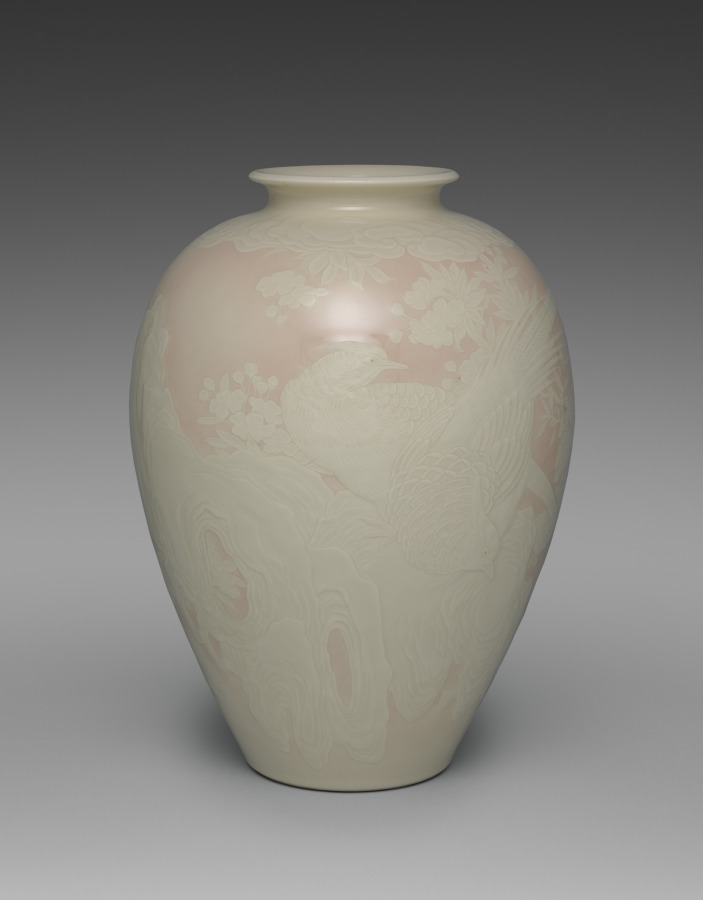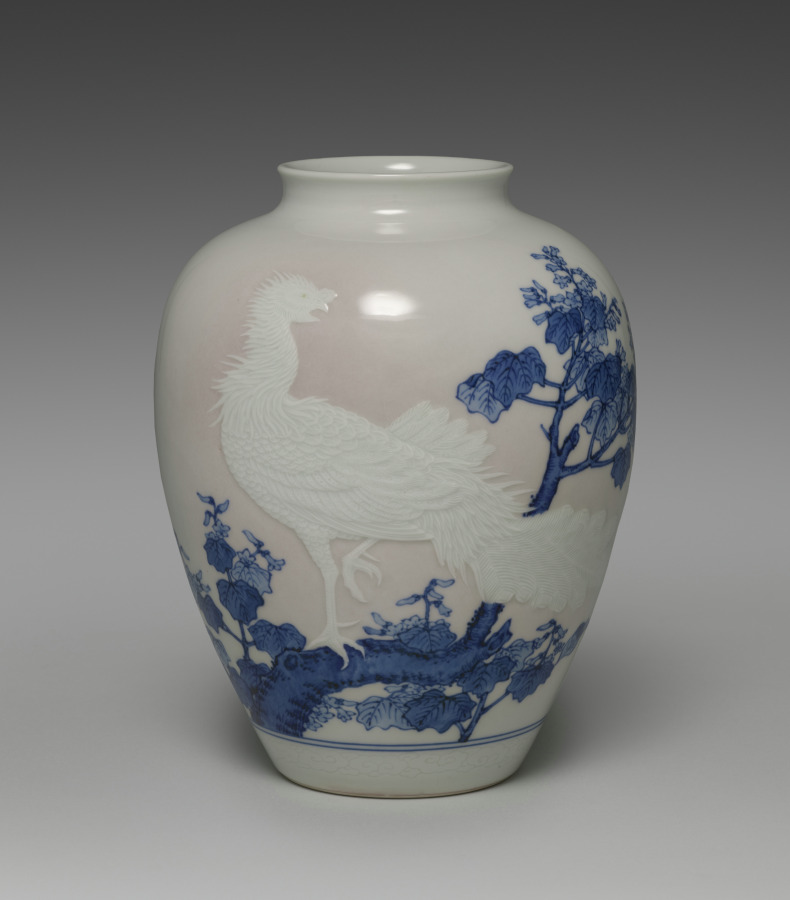
Flower Vase with Phoenix in Paulownia
Seifū Yohei III (Japanese, 1851–1914)
1897–1914
- Medium
- Porcelain with molded and carved design and underglaze color
- Classification
- Ceramic
- Dimensions
- Overall: 20.6 cm (8 1/8 in.); Diameter: 15.9 cm (6 1/4 in.)
- Culture
- Japan, Meiji period (1868–1912)
- Museum
- Cleveland Museum of Art, Japanese Art
- Credit line
- Gift of James and Christine Heusinger
- Rights
- Public domain (CC0), as the museum states it.
- Who can see it
- Little Ones profiles and older: it shows gentle subjects for the very young. How works are placed
View at the Cleveland Museum of Art
About this work
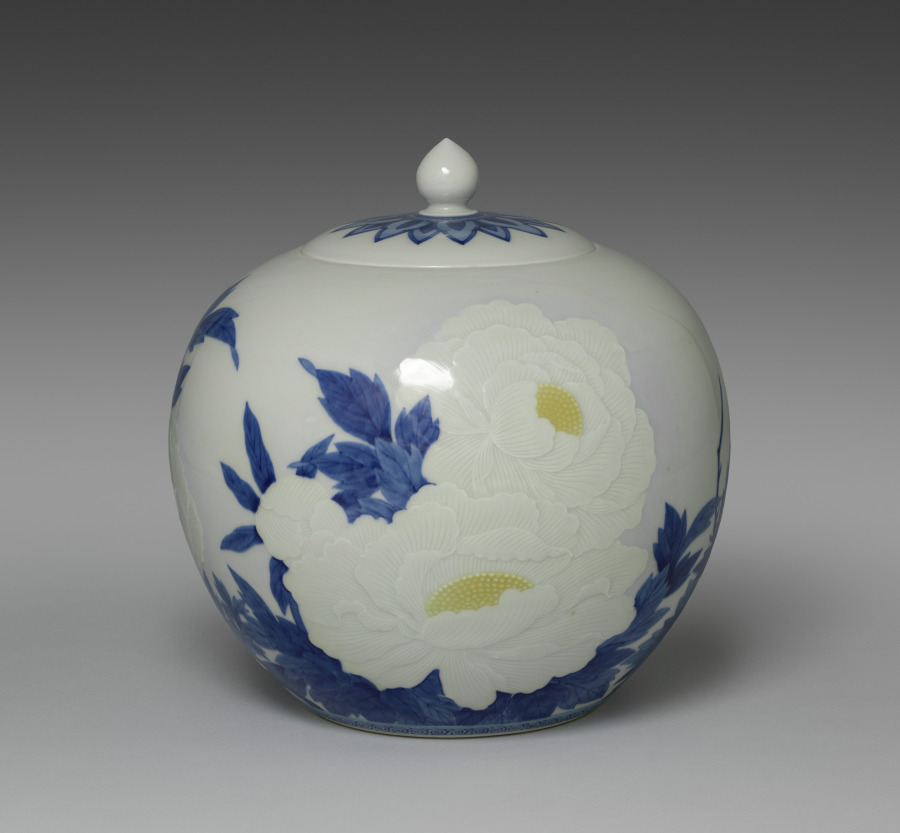
The phoenix’s commanding presence on this vase was created by adding clay to the surface of the white clay body and then intricately molding and carving it. Then cobalt blue was used to paint the paulownia tree upon which the phoenix perches. Yohei III used a masking technique, covering the phoenix with paper before adding pink color to the area surrounding it. Firing with an allover transparent glaze created a glossy surface, with the phoenix standing out boldly from the background. The mythical bird’s long tail sweeps majestically around the vessel so that one must move around it to see the eyespots in its plumes. A symbol of imperial power in both China and Japan, the phoenix is said to alight only in the paulownia tree. Upon close inspection of its face, one can see that the phoenix’s eye is in yellow under the glaze. The scene is set off at the bottom with a double band of underglaze blue above an incised ring of cloud.
Once Yohei III had created his creamy translucent taihakuji glaze, he began applying it over the entire surface of an ivory clay body with motifs in low relief to achieve a creamy white-on-white design. He then began using the combination of gradated pink…