Window mode follows your eyes with your camera, in this browser only: no picture or position leaves your device.
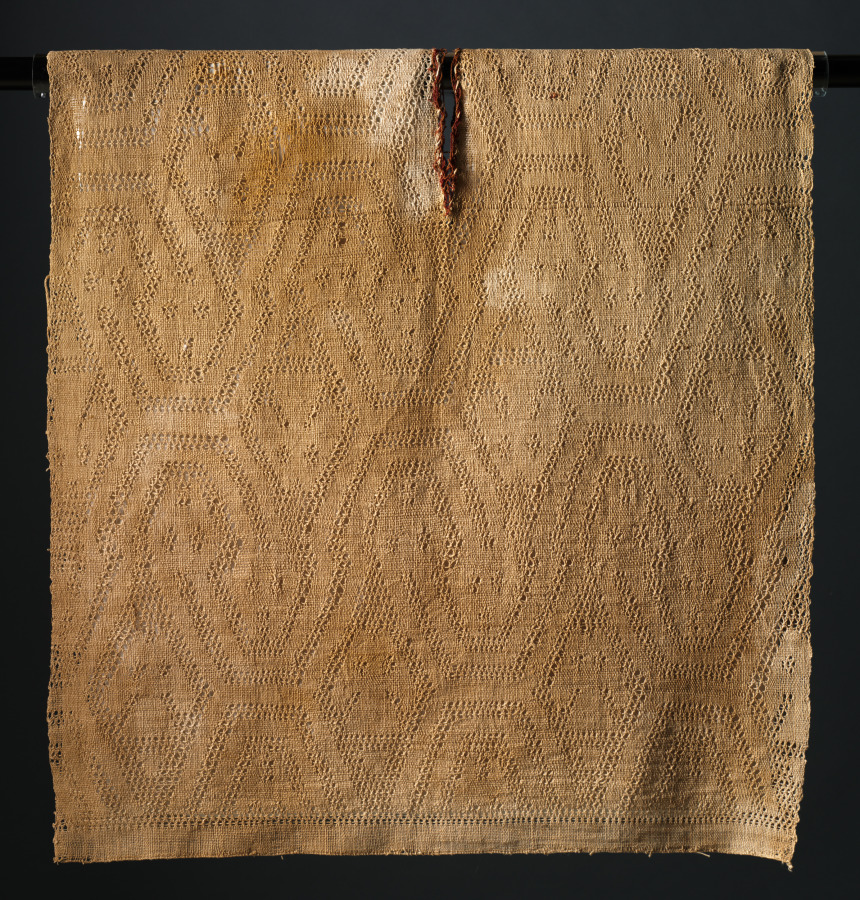
Tunic with Double-headed Serpents
400–200 BCE
- Medium
- cotton; gauze
- Classification
- Textile
- Dimensions
- folded: 68.3 x 65.4 cm (26 7/8 x 25 3/4 in.)
- Culture
- Peru, South Coast, Ica Valley, Ocucaje site?, Paracas people (700 BCE-1 CE)
- Museum
- Cleveland Museum of Art, Textiles
- Credit line
- Dudley P. Allen Fund
- Rights
- Public domain (CC0), as the museum states it.
- Who can see it
- Tweens profiles and older: its subjects are known and suit older children. How works are placed
View at the Cleveland Museum of Art
About this work
Gauze weave was used to pattern this tunic with interlocking, double-headed serpents that may have had mythical or supernatural significance. By manipulating the density of the fabric to create the design, the weaver may have sidestepped a limitation of cotton, which did not readily take dyes.












