Window mode follows your eyes with your camera, in this browser only: no picture or position leaves your device.
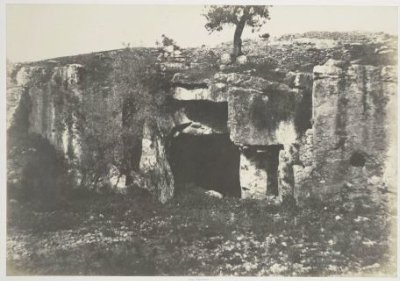
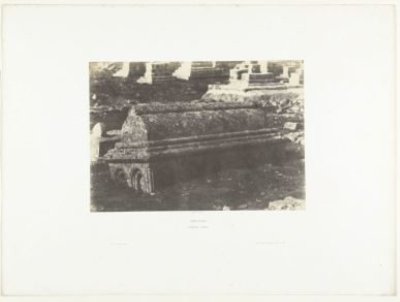
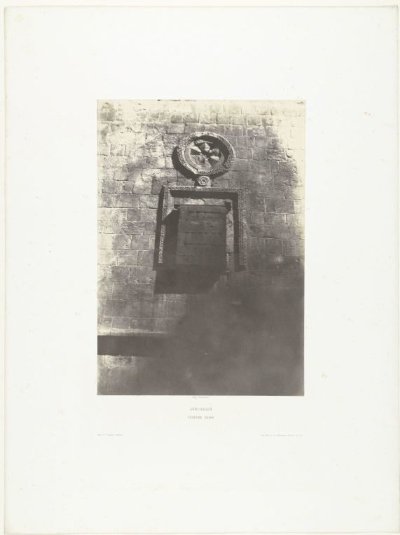
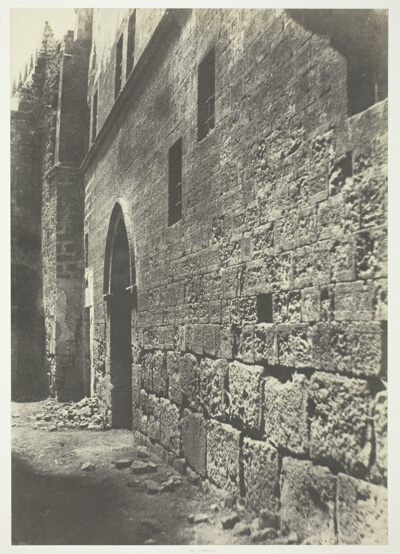
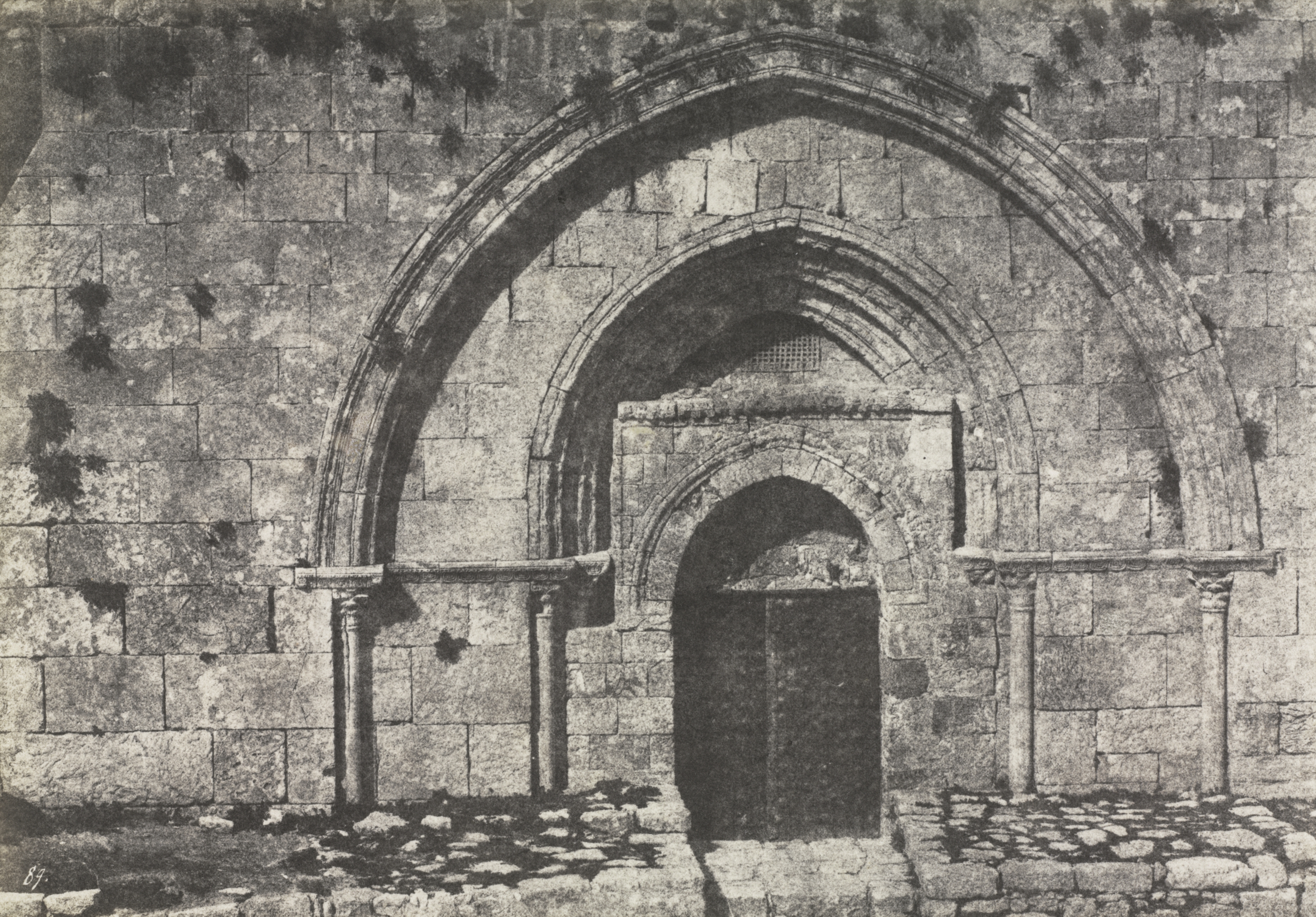
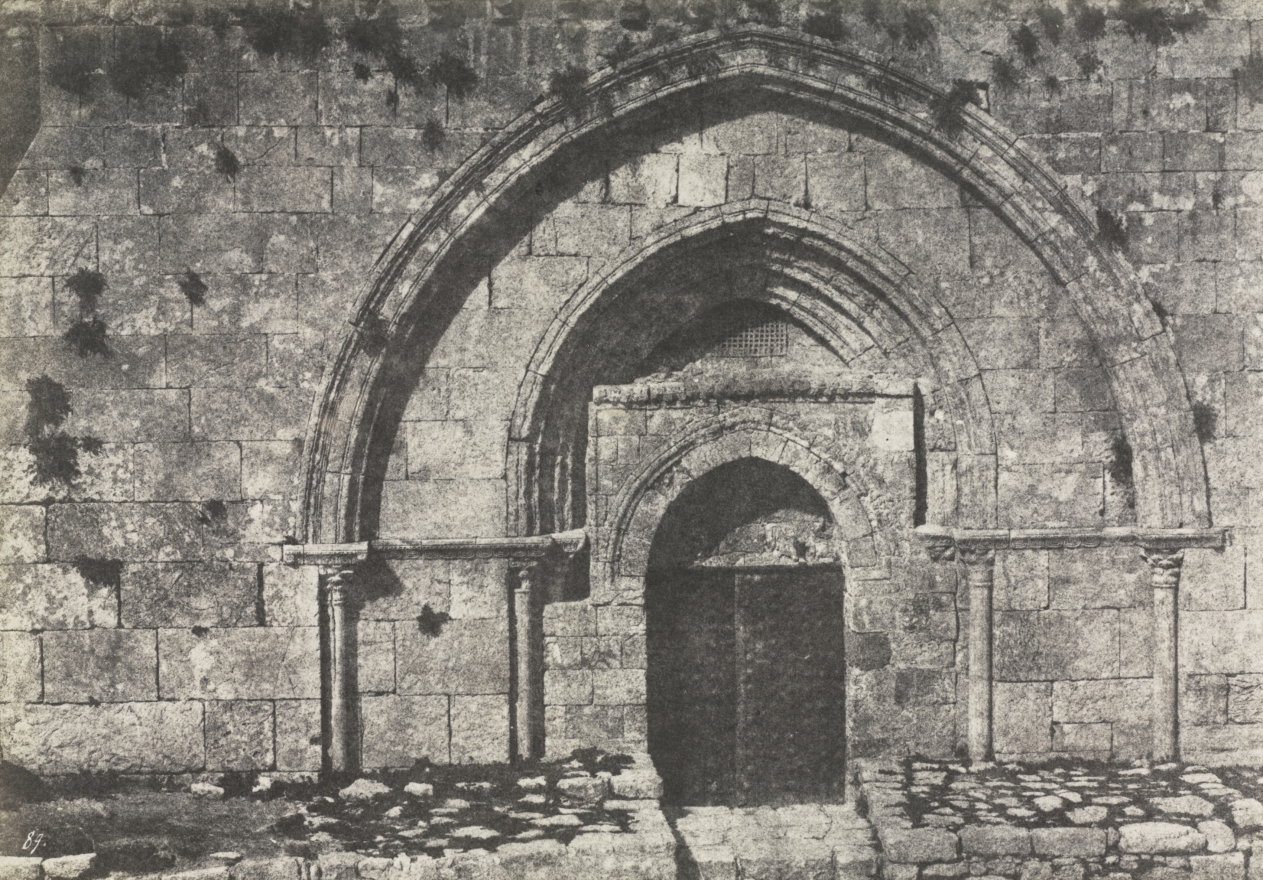
Tomb of the Virgin, Jerusalem
Auguste Salzmann (French, 1824–1872)
publisher Gide et J. Baudry
1854
- Medium
- salted paper print, Blanquart-Évrard process, from waxed paper negative
- Classification
- Photograph
- Dimensions
- Image: 22.7 x 32.8 cm (8 15/16 x 12 15/16 in.); Matted: 50.8 x 61 cm (20 x 24 in.)
- Culture
- France
- Museum
- Cleveland Museum of Art, Photography
- Credit line
- John L. Severance Fund
- Rights
- Public domain (CC0), as the museum states it.
- Who can see it
- Tweens profiles and older: its subjects are known and suit older children. How works are placed
View at the Cleveland Museum of Art
About this work
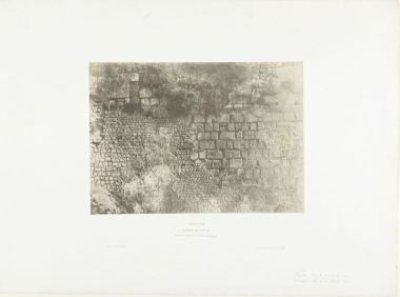
In 1854, Auguste Salzmann was commissioned by the French Ministry of Public Instruction to document the holy city of Jerusalem. His charge was to substantiate the controversial theories about dating ancient ruins proposed by his friend, Louis Félicien de Saulcy, a noted antiquarian. Unlike almost all other photographers documenting architecture in the 19th century, Salzmann relied on extreme close-up views. In this example, he eliminated most of the building, concentrating on the door of the tomb and its surrounding architectural elements. As a result, all indications of scale, terrain, placement, and context normally found in documentary photographs are absent, while the abstract textural and surface qualities of the tomb are emphasized.