Window mode follows your eyes with your camera, in this browser only: no picture or position leaves your device.
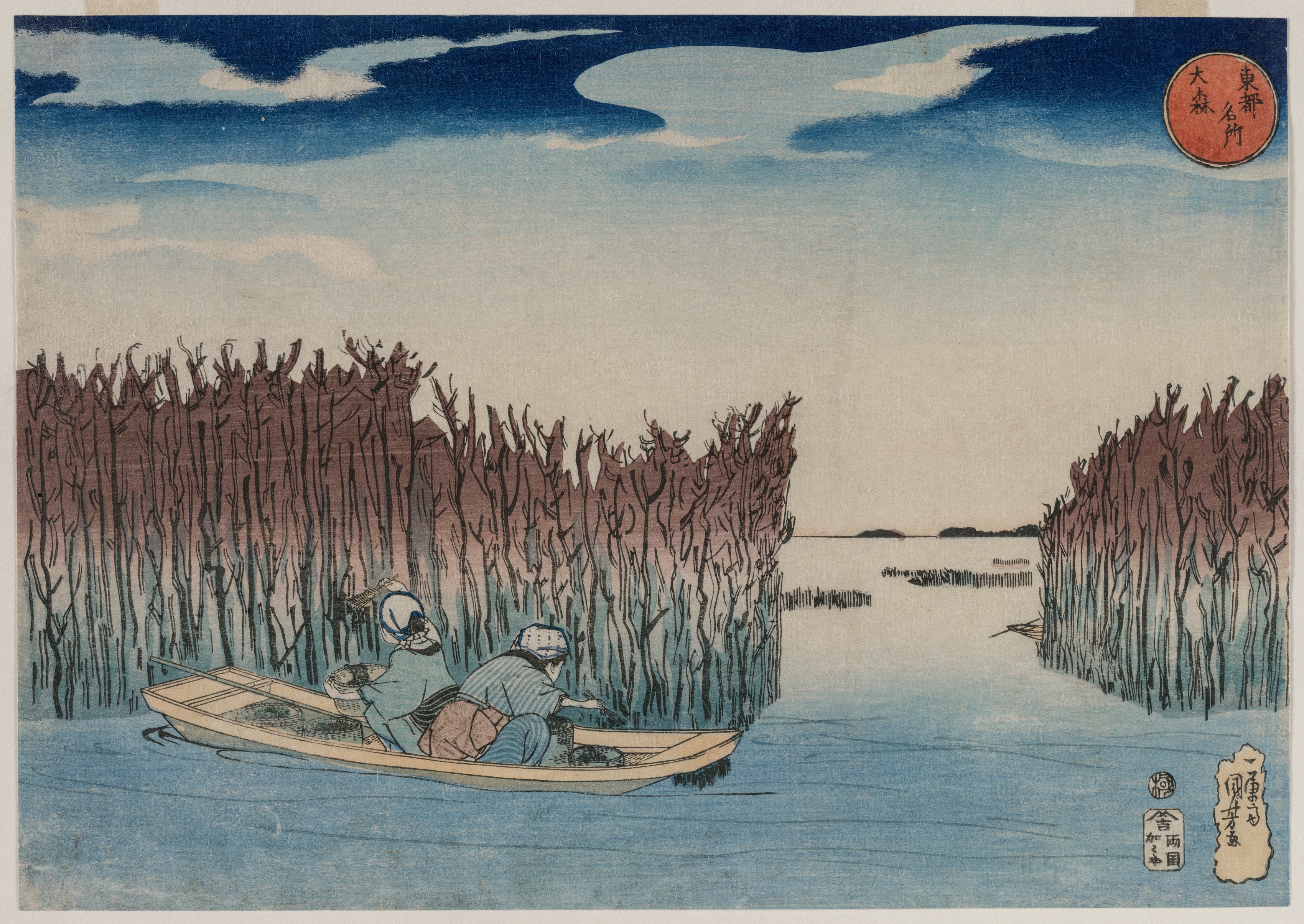
Ōmori, from the series Famous Places in the Eastern Capital
Utagawa Kuniyoshi (Japanese, 1797–1861)
early 1830s
- Medium
- Color woodblock print
- Classification
- Dimensions
- Overall: 23.9 x 34.2 cm (9 7/16 x 13 7/16 in.)
- Culture
- Japan, Edo period (1615–1868)
- Museum
- Cleveland Museum of Art, Japanese Art
- Credit line
- The Kelvin Smith Collection, given by Mrs. Kelvin Smith
- Rights
- Public domain (CC0), as the museum states it.
- Who can see it
- Teens profiles and older: its museum says too little about what it shows to place it for younger viewers. How works are placed
View at the Cleveland Museum of Art
About this work
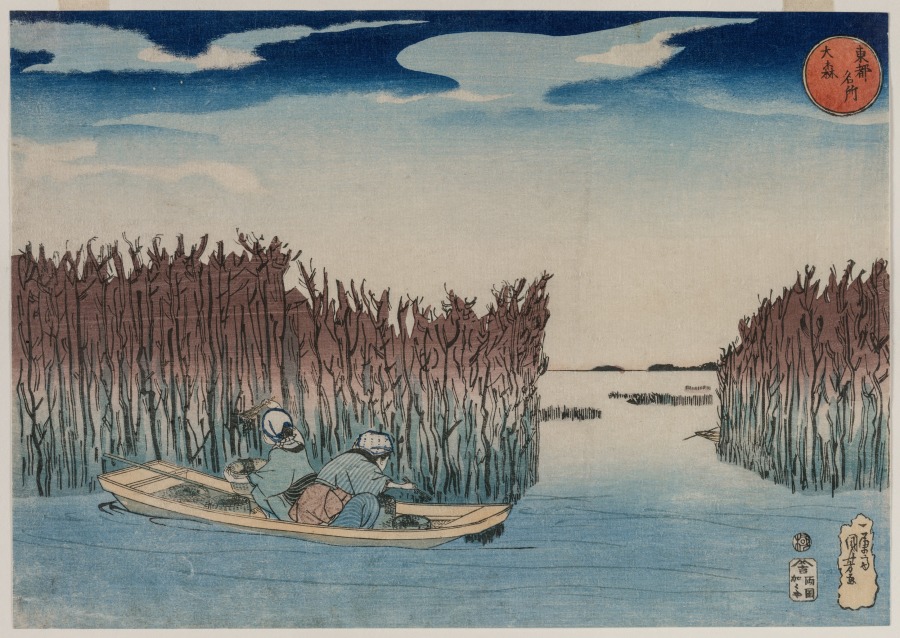
Sites around Edo (present-day Tokyo) were popular subjects of ukiyo-e (pictures of the floating world) prints in the early 1800s. The calligraphy in the red circle on the upper right is the title of the series, The Famous Places in the Eastern Capital. The Ōmori district, on Edo Bay a few miles south of Edo, was known for its cultivation of nori, the crackly sheets of seaweed commonly wrapped around rice balls or sushi rolls. Utagawa Kuniyoshi depicted two women gathering seaweed from cultivation beds. One uses chopsticks, while the other gently rakes the seaweed into the baskets in their boat. The tip of another skiff behind the stand of plants on the right and the cultivation beds in the distance suggest the scale and importance of this industry.