Window mode follows your eyes with your camera, in this browser only: no picture or position leaves your device.
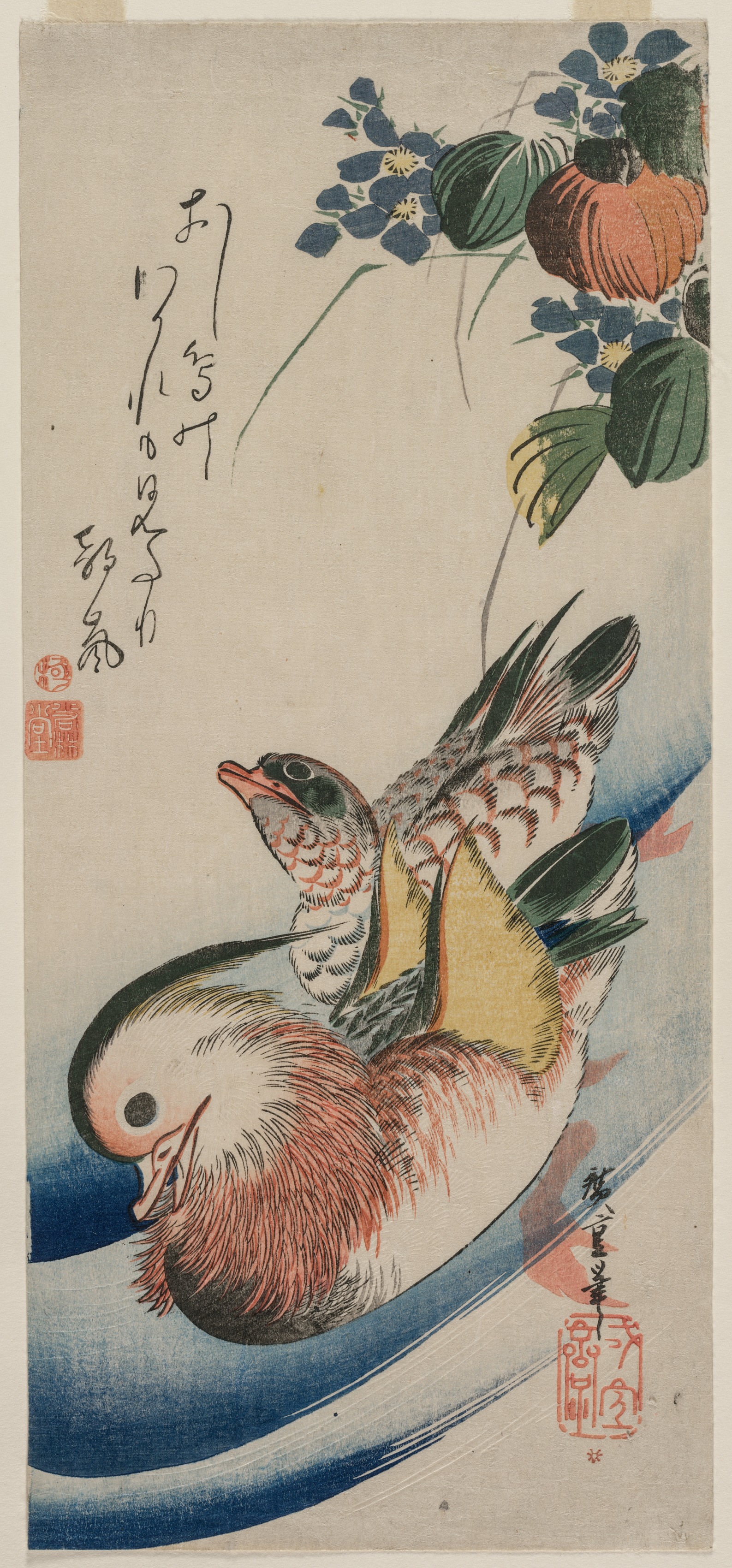
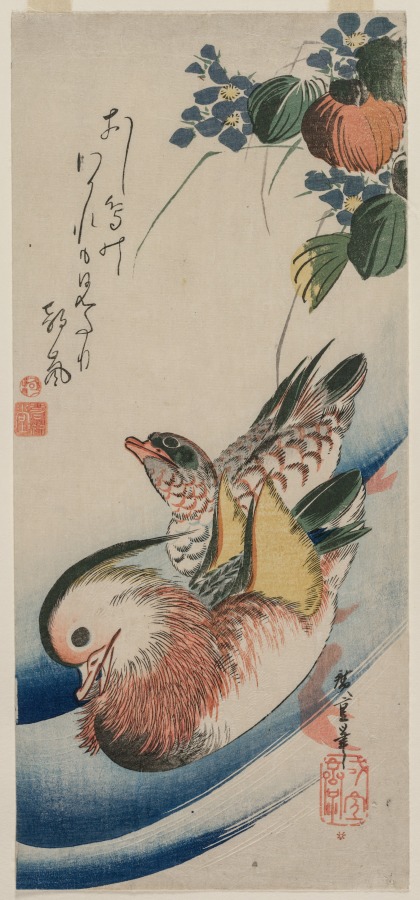
Mandarin Ducks and Flowering Plants
Utagawa Hiroshige (Japanese, 1797–1858)
early or mid-1830s
- Medium
- color woodblock print
- Classification
- Dimensions
- Overall: 38.2 x 17.1 cm (15 1/16 x 6 3/4 in.)
- Culture
- Japan, Edo period (1615–1868)
- Museum
- Cleveland Museum of Art, Japanese Art
- Credit line
- The Kelvin Smith Collection, given by Mrs. Kelvin Smith
- Rights
- Public domain (CC0), as the museum states it.
- Who can see it
- Little Ones profiles and older: it shows gentle subjects for the very young. How works are placed
View at the Cleveland Museum of Art
About this work
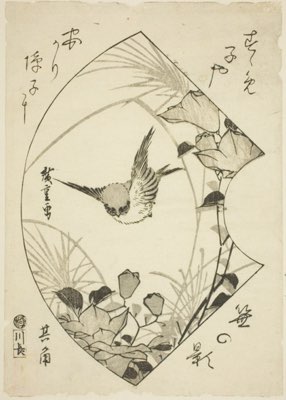
In Asian painting, ducks are usually shown in pairs because a male and female mate for life. They symbolize fidelity and tranquility. The presence of another duck is suggested here by the gesture of the bird's head. Notice the variety of brushstrokes and ink tones used to depict the duck's plumage.
The bird and flower genre is a popular theme in the paintings and prints of the Kelvin Smith Collection. Kachoga, or bird and flower pictures, became popular among collectors in Japan during the 19th century, due in large part to Hiroshige. Although better known for his landscape prints, Hiroshige made several exceptional prints of birds, plants, and animals that reveal his keen observation of nature.