Window mode follows your eyes with your camera, in this browser only: no picture or position leaves your device.
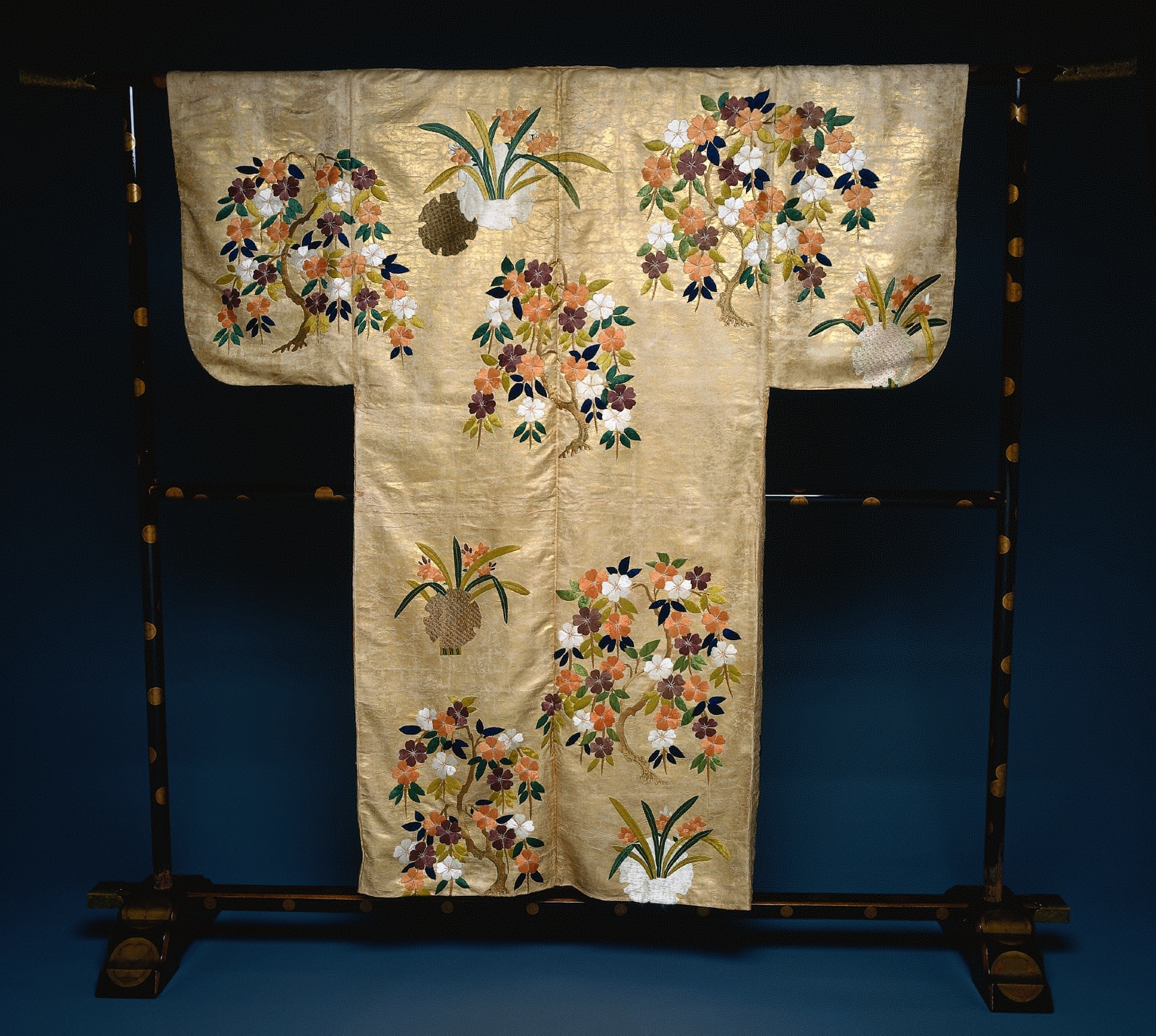
Nō Costume (Nuihaku) with Blossoming Trees and Flowers
1675–99
- Medium
- embroidery, silk and applied gold leaf on silk ground
- Classification
- Garment
- Dimensions
- Overall: 164 x 138 cm (64 9/16 x 54 5/16 in.)
- Culture
- Japan, Edo period (1615–1868)
- Museum
- Cleveland Museum of Art, Textiles
- Credit line
- Purchase from the J. H. Wade Fund
- Rights
- Public domain (CC0), as the museum states it.
- Who can see it
- Tweens profiles and older: its subjects are known and suit older children. How works are placed
View at the Cleveland Museum of Art
About this work
This magnificent robe was a costume specifically designed for performances of Noh theater in Japan. Originating during the 1300s from simple folk plays, Noh drama evolved into formal presentations of ritual, theater, dance, and music performed in the courts and shrines of the nobility. Stories were derived from a variety of sources—myths, legends, poetry, and prose—many dating back to the medieval period. Because great importance was placed on subtlety and elegance, plots tended to be minimal. Whether male or female all roles were played by men. Central to these performances were the masks and costumes worn by the actors. The brilliance and elegance of this robe are characteristic of costumes made solely for Noh theater. Its date in the first half of the 1700s is indicated by the proportions of the robe, the choice of embroidery stitches (satin, couching, and outline), and the absence of decoration at the hips, a fashion also reflected in kimonos at that time. The design of weeping cherry trees and irises in the snow was very likely inspired by a medieval Japanese poem. Robes decorated with embroidery against a gold ground were reserved for female roles. These robes were worn…