Window mode follows your eyes with your camera, in this browser only: no picture or position leaves your device.
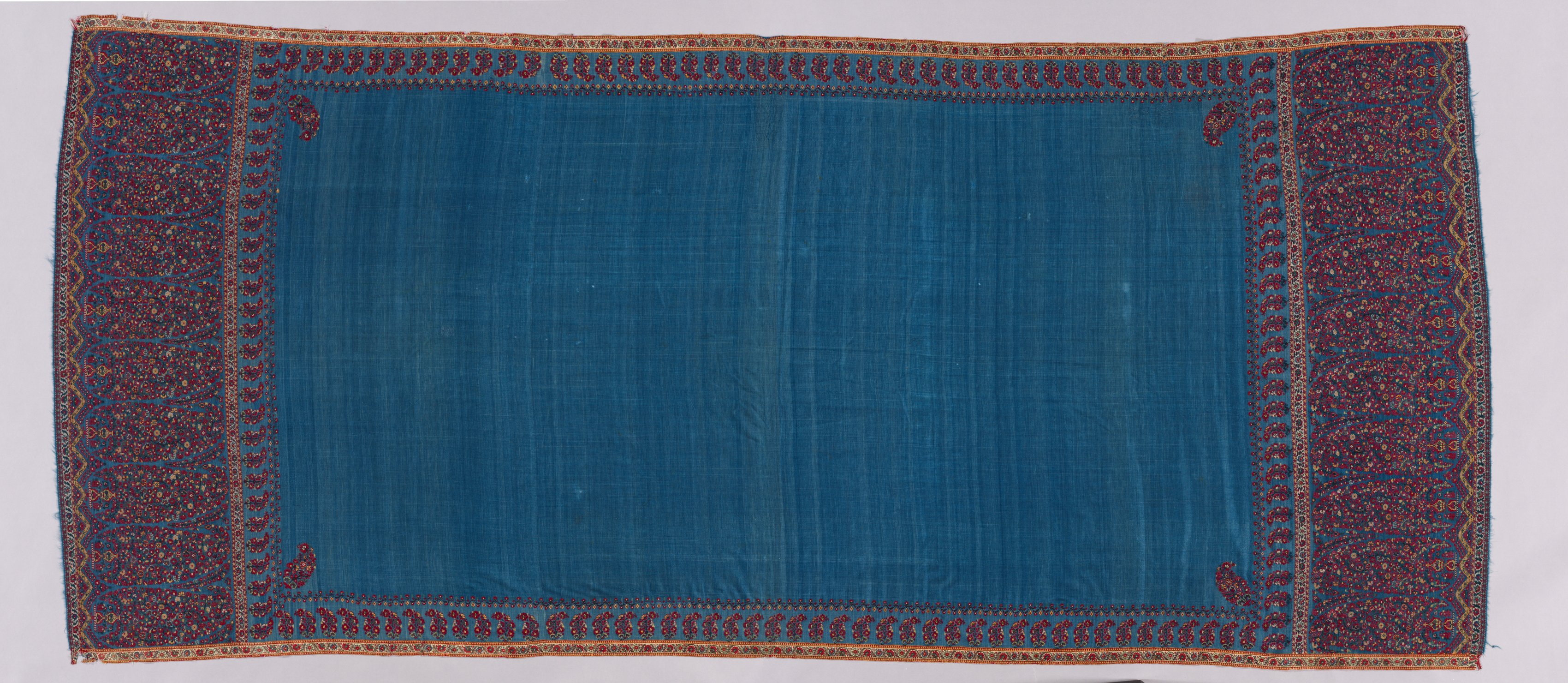
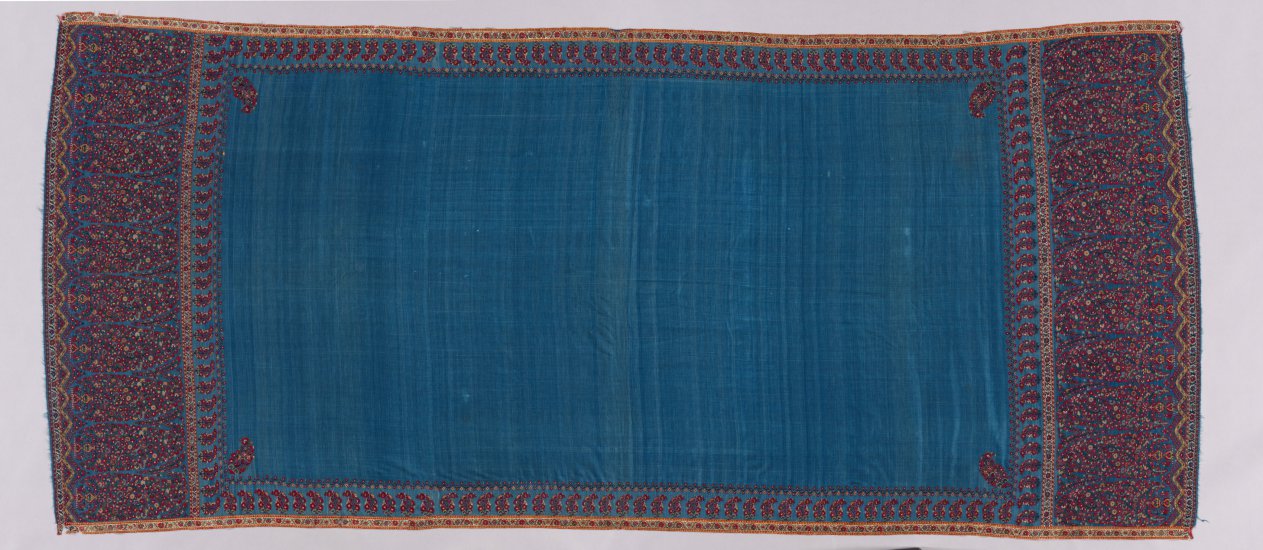
Shawl with boteh
1820–1830
- Medium
- 2/2 twill tapestry weave, double interlocked: wool, possibly pashmina
- Classification
- Textile
- Dimensions
- Overall: 325 x 136.5 cm (127 15/16 x 53 3/4 in.)
- Culture
- India, Kashmir
- Museum
- Cleveland Museum of Art, Textiles
- Credit line
- Gift of Mrs. Arthur Loesser
- Rights
- Public domain (CC0), as the museum states it.
- Who can see it
- Tweens profiles and older: its subjects are known and suit older children. How works are placed
View at the Cleveland Museum of Art
About this work
Thousands of luxurious shawls imported from Kashmir, India, were status symbols that European-manufactured imitations could not equal. Those woven in Paisley, Scotland, gave rise to the popular term paisley. Their representation in portraits records the evolution of shawl fashions, which helps to date surviving examples. The coveted quality of Kashmir shawls was achieved with luxurious fine goat hair woven in twill tapestry to form small colorful blossoms. Such shawls are lightweight, supple, and warm. A plethora of blossoms arranged in small vases on stands form the large paisley or boteh motifs, while smaller versions enliven the sides of the field. Such floral displays evolved from blossoming plants possibly in 16th-century India.