Window mode follows your eyes with your camera, in this browser only: no picture or position leaves your device.
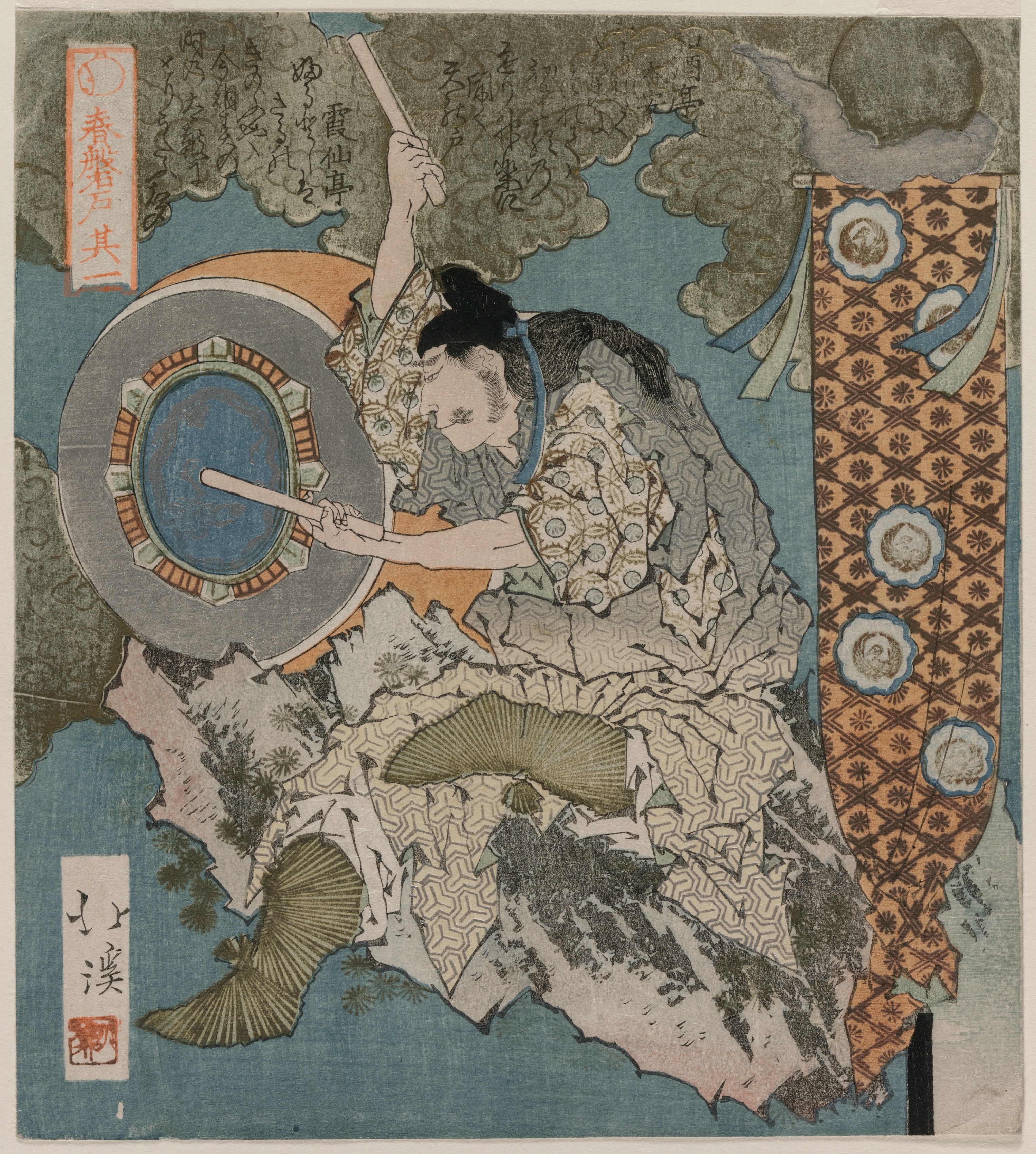
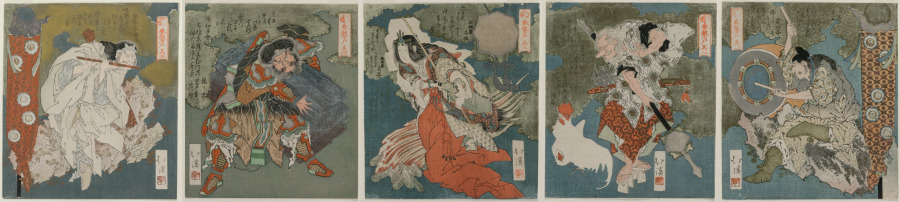
The Cave Door of Spring
Totoya Hokkei (Japanese, 1780–1850)
1825
- Medium
- pentaptych of woodblock prints; ink and color on paper
- Classification
- Dimensions
- Each: 18.8 x 21.4 cm (7 3/8 x 8 7/16 in.)
- Culture
- Japan, Edo period (1615–1868)
- Museum
- Cleveland Museum of Art, Japanese Art
- Credit line
- Bequest of James Parmelee
- Rights
- Public domain (CC0), as the museum states it.
- Who can see it
- Teens profiles and older: its museum says too little about what it shows to place it for younger viewers. How works are placed
View at the Cleveland Museum of Art
About this work
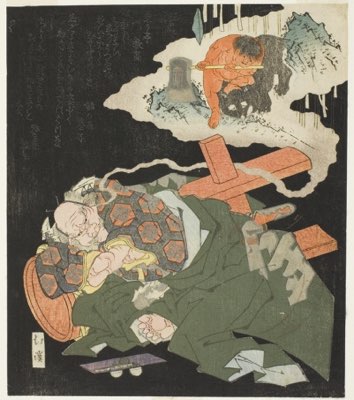
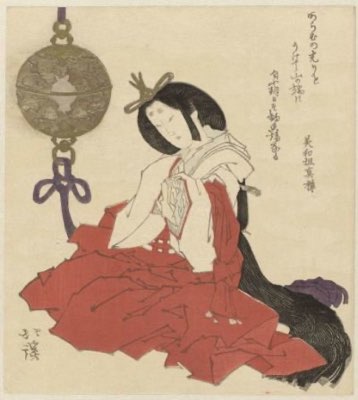
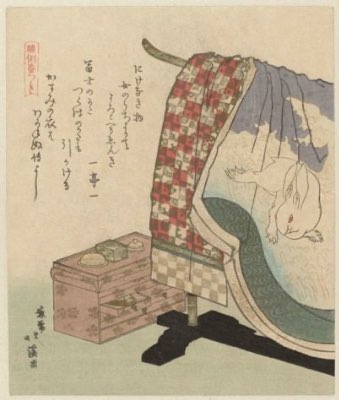
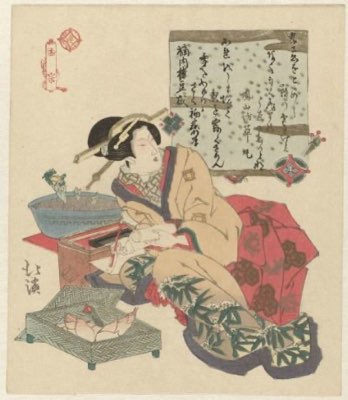
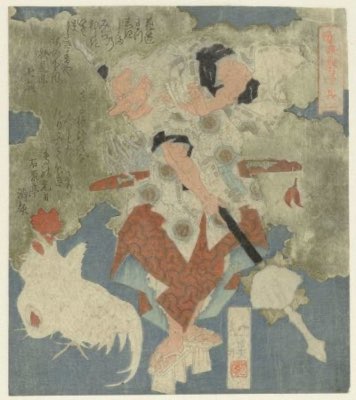
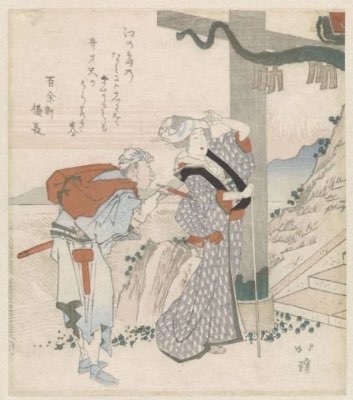
These prints form a composition inspired by a story about the deity Amaterasu. She was once so offended by her brother that she retreated into a cave, leaving the earth in darkness. Several attempts to lure her out with cocks crowing, music-making, and a goddess dancing failed, but a mirror hung from a nearby tree made Amaterasu curious, bringing her to the entrance of the cave. A stone was quickly placed at the entrance to block her way back into the cave, and light was restored to the world. The scene across the prints is unified by embossed clouds enriched with gold, silver, and copper.