Window mode follows your eyes with your camera, in this browser only: no picture or position leaves your device.
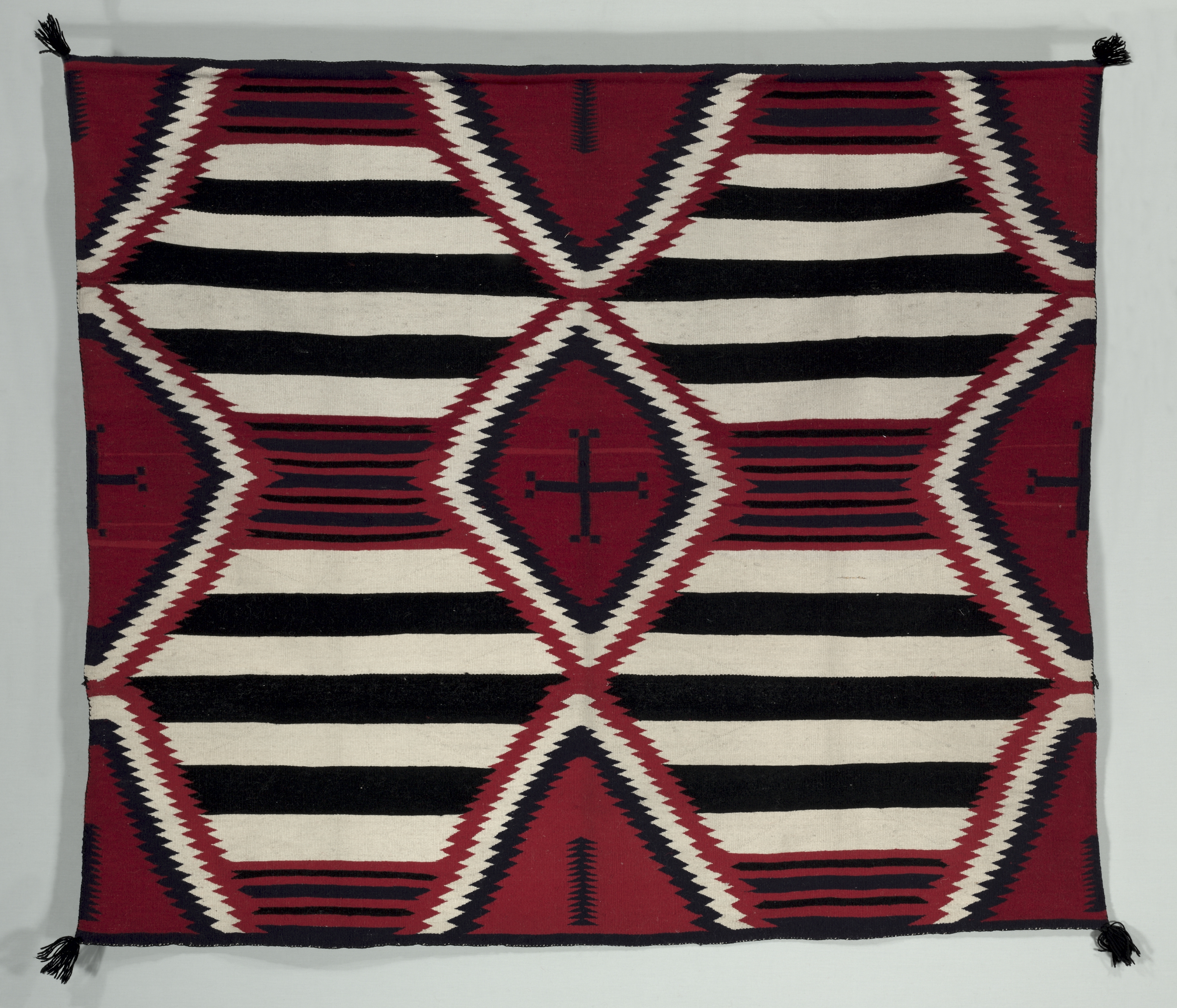
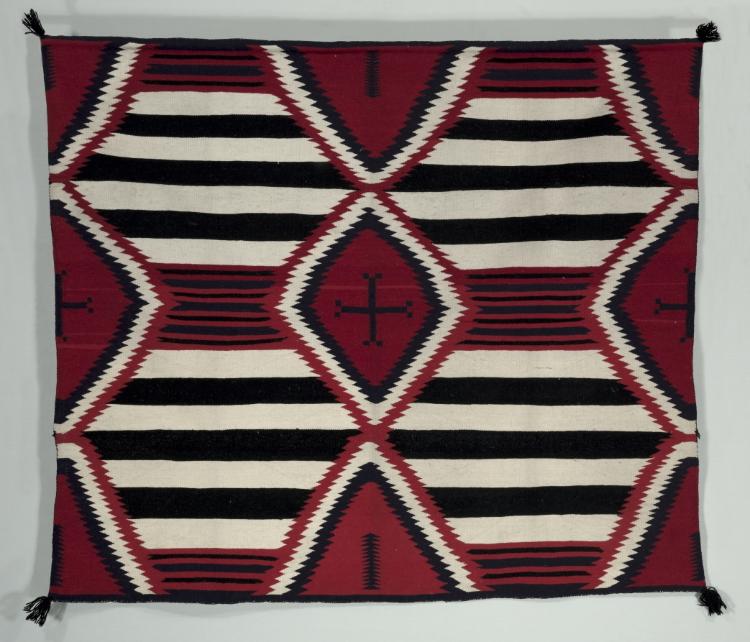
Fourth-Phase Chief Blanket Style Rug
c. 1900
- Medium
- wool (handspun, Germantown, and bayeta): tapestry weave
- Classification
- Textile
- Dimensions
- Overall: 178.4 x 151.1 cm (70 1/4 x 59 1/2 in.)
- Culture
- Native North American, Southwest, Navajo (Diné)
- Museum
- Cleveland Museum of Art, Textiles
- Credit line
- Gift of Amelia Elizabeth White
- Rights
- Public domain (CC0), as the museum states it.
- Who can see it
- Tweens profiles and older: its subjects are known and suit older children. How works are placed
View at the Cleveland Museum of Art
About this work
This rug is modeled on a coveted Diné (Navajo) garment type—a waterproof blanket worn around the shoulders. By the late 1700s, other Natives traded avidly for such blankets, which are classified according to design phases and known as “chief’s blankets,” a misnomer since the Diné have no chiefs. In the late 1800s, old Indigenous trade outlets collapsed, especially after the disastrous imprisonment of the Diné at Bosque Redondo in the 1860s. Responding to the dramatically transformed landscape in the aftermath, Diné weavers began to shift from making garments for Indigenous use, including trade, to creating items for the outside collectors’ market, such as rugs like this one.