Window mode follows your eyes with your camera, in this browser only: no picture or position leaves your device.
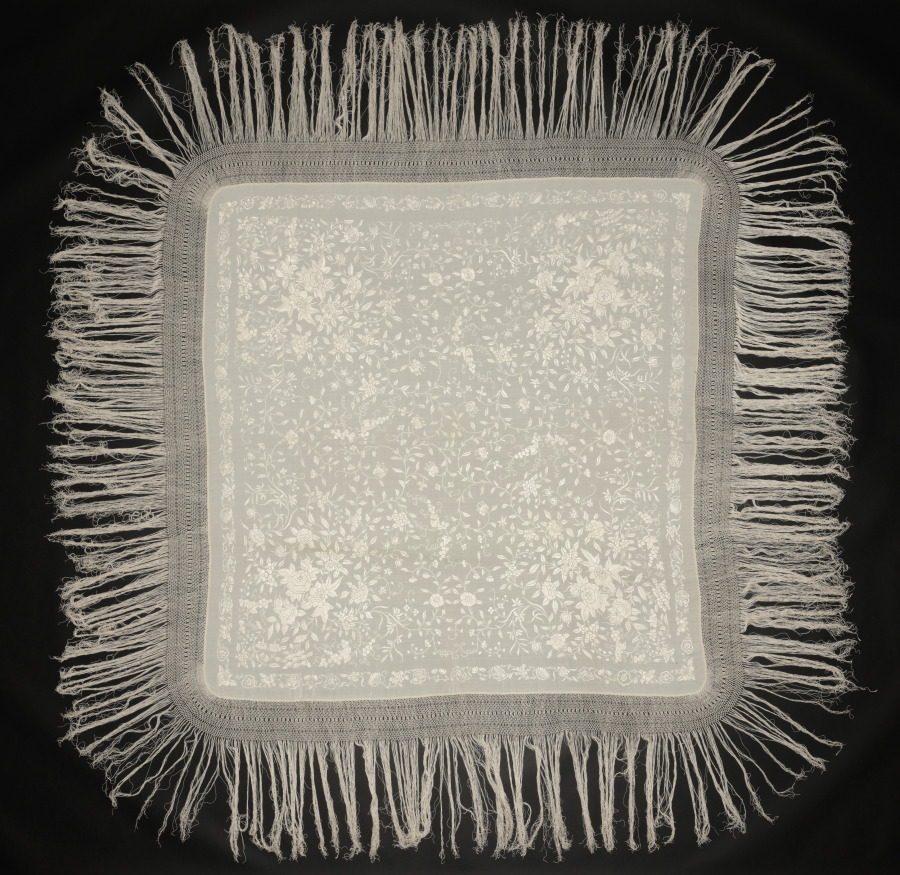
Silk Shawl
1800s
- Medium
- embroidery, silk
- Classification
- Embroidery
- Dimensions
- Overall: 256.5 x 251.5 cm (101 x 99 in.); central area: 154.9 x 149.9 cm (61 x 59 in.)
- Culture
- China
- Museum
- Cleveland Museum of Art, Textiles
- Credit line
- Gift of Phebe Blauvelt Chipman
- Rights
- Public domain (CC0), as the museum states it.
- Who can see it
- Teens profiles and older: its museum says too little about what it shows to place it for younger viewers. How works are placed
View at the Cleveland Museum of Art
About this work
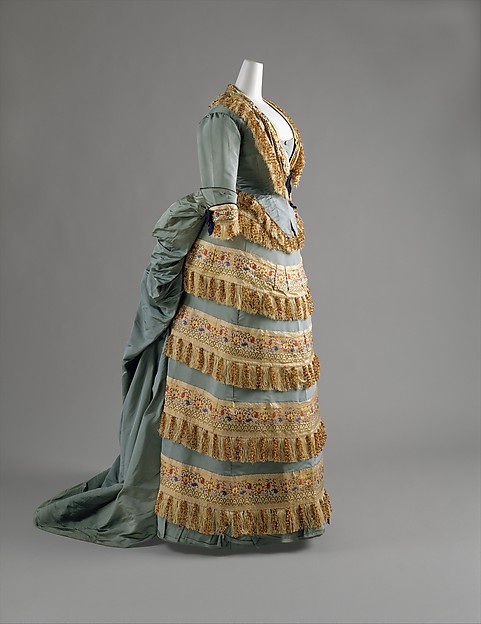
Both local and global textiles inspired Merina Kingdom (about 1540–1897) weavers of lamba akotifahana. Inspired by a Malagasy hairstyle, they made complex braided knots called tain'ondry, on view in the case nearby. When these became unfashionable in the 1870s, knotted fringes, adapted from newly popular “Manila shawls,” replaced them. While associated with the capital city of the Spanish Philippines islands, Chinese textile workers produced these shawls in mainland Asia. Unlike the multitiered knotted fringe on the Manila shawls, Malagasy lamba typically had only two rows of knots. Into the early 1900s, Malagasy women draped both imported Manila shawls and locally made lamba akotifahana over tailored dresses.