Window mode follows your eyes with your camera, in this browser only: no picture or position leaves your device.
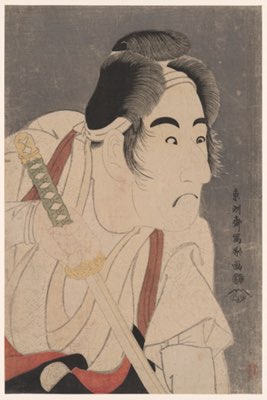
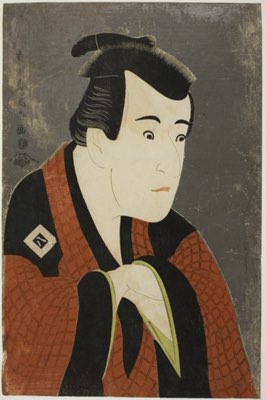
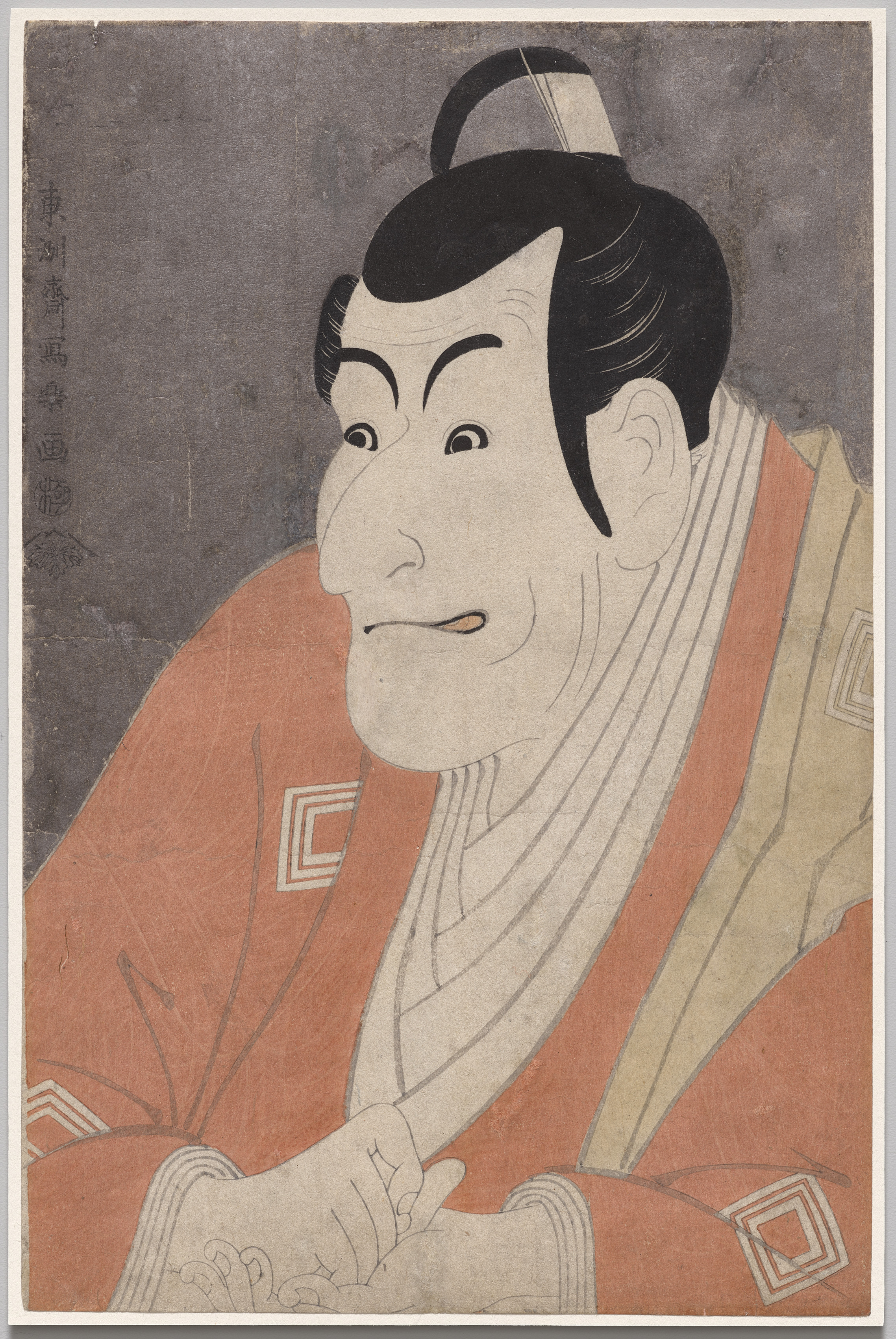
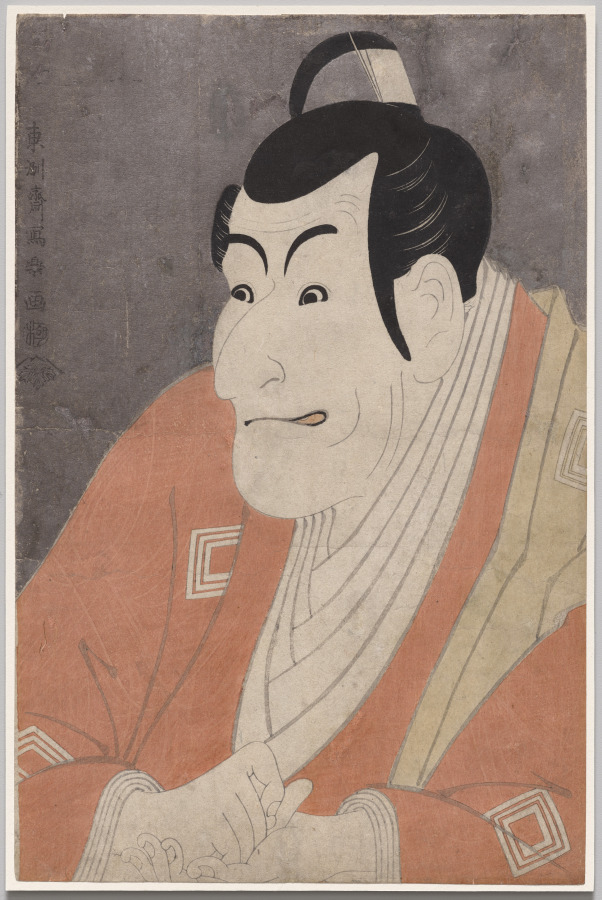
Ichikawa Ebizō IV (Danjurō) as Takemura Sadanoshin in The Loving Wife's Parti-Colored Reins
Tōshūsai Sharaku (Japanese, active 1794–95)
1794
- Medium
- color woodblock print
- Classification
- Dimensions
- 36 x 23.6 cm (14 3/16 x 9 5/16 in.)
- Culture
- Japan, Edo period (1615–1868)
- Museum
- Cleveland Museum of Art, Japanese Art
- Credit line
- Bequest of Edward L. Whittemore
- Rights
- Public domain (CC0), as the museum states it.
- Who can see it
- Teens profiles and older: its museum says too little about what it shows to place it for younger viewers. How works are placed
View at the Cleveland Museum of Art
About this work
Ichikawa Ebizō IV’s (1741–1806) character, an actor called Takemura Sadanoshin, is permitted to perform opposite his daughter so he can see and hear her for the last time before her banishment for a forbidden love affair.
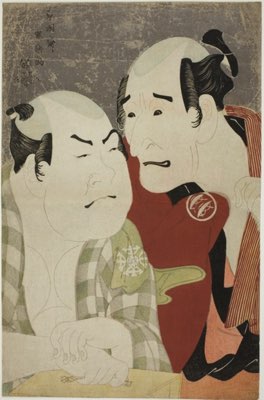
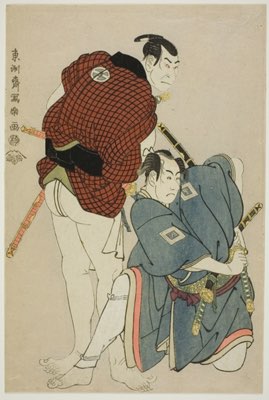
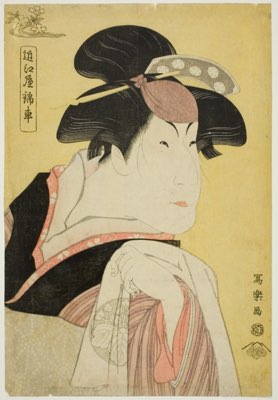
This design belongs to a category of Japanese prints called “actor images” (yakusha-e or 役者絵). They were collected by fans of popular Kabuki actors. Kabuki is a kind of entertainment that got its start in the early Edo period, evolving from dance performances with simple storylines to long plays with complex plots, elaborate sets, and full musical accompaniments. Performers wear showy costumes and heavy makeup and strike poses called mie at critical moments in the narrative. Dialogue is spoken in a stylized way that resembles singing.