Window mode follows your eyes with your camera, in this browser only: no picture or position leaves your device.
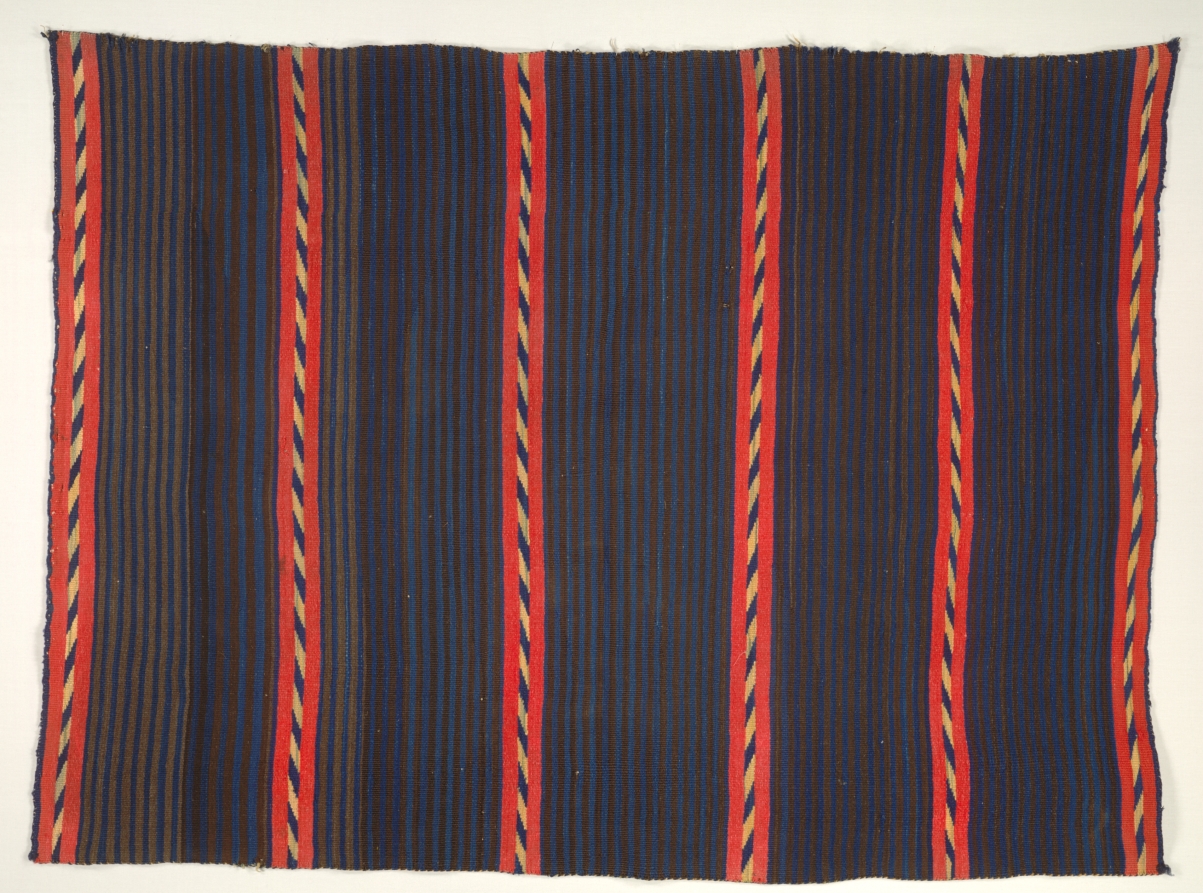
Wearing Blanket with Moki (Moqui) Stripes
1865–75
- Medium
- Wool (handspun, Germantown, and bayeta): tapestry weave
- Classification
- Textile
- Dimensions
- Overall: 181 x 131.5 cm (71 1/4 x 51 3/4 in.)
- Culture
- America, Native North American, Southwest, (Dine) Navajo or Zuni Pueblo, female artist
- Museum
- Cleveland Museum of Art, Textiles
- Credit line
- Gift of J. H. Wade
- Rights
- Public domain (CC0), as the museum states it.
- Who can see it
- Tweens profiles and older: its subjects are known and suit older children. How works are placed
View at the Cleveland Museum of Art
About this work
Diné (Navajo) blankets reflect the Southwest’s cultural diversity. Both of these examples feature a striped moki pattern. The origin of moki is unclear, but it may have come from Pueblo peoples, from whom the Diné learned weaving after migrating to the Southwest from the sub-Arctic north. Or it could have come from the Spaniards, who arrived in the Southwest in 1540, not long after the Diné. Although its patterns are centuries old, these blankets were created during the late 1800s to early 1900s, when Diné weavers began to shift from making garments for Indigenous use, including trade, to creating items for outside collectors. In this market, traditional wearing-blankets, which were worn around the shoulders, became rugs sold to outsiders.