Window mode follows your eyes with your camera, in this browser only: no picture or position leaves your device.
Cover
17th century
- Medium
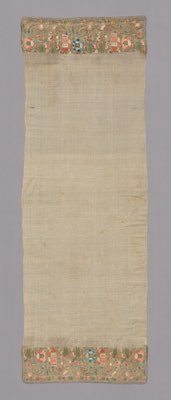
- Linen, plain weave; embroidered with silk floss in running stitches, pattern darning; main warp fringe
- Classification
- Textile
- Dimensions
- 160 × 57.4 cm (63 × 22 5/8 in.); Irregular weft repeat: H.: 9.5 cm (3 3/4 in.)
- Culture
- Turkey
- Museum
- Art Institute of Chicago, Textiles
- Credit line
- Gift of Burton Y. Berry
- Rights
- Public domain (CC0), as the museum states it.
- Who can see it
- Tweens profiles and older: its subjects are known and suit older children. How works are placed
View at the Art Institute of Chicago
About this work
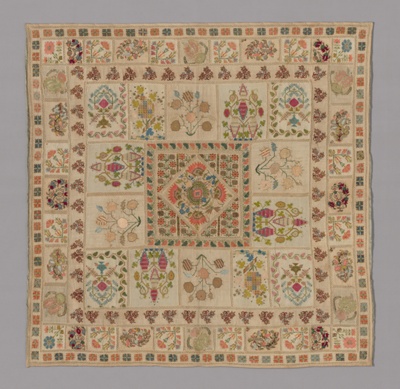
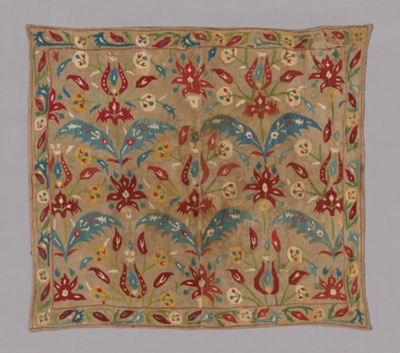
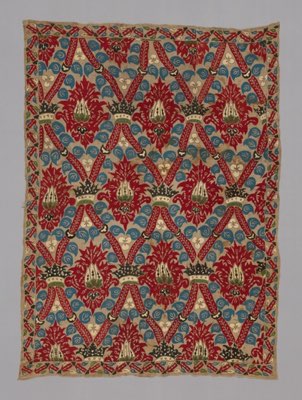
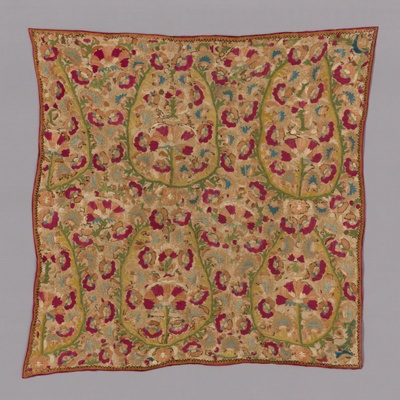
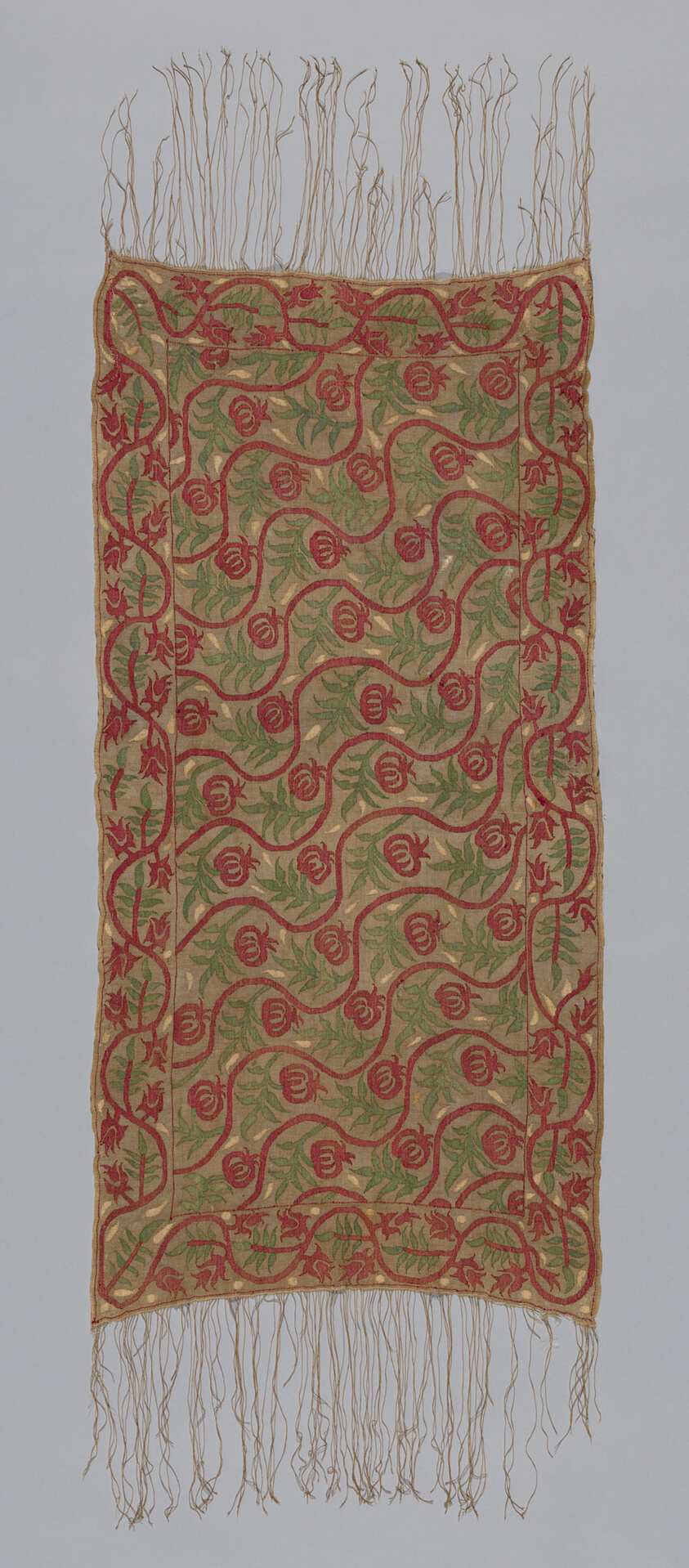
Small, rectangular panels like this example are sometimes referred to as mirror covers, used to hang over mirrors as talismans to ward off the evil eye, a curse believed to be cast by a malevolent stare caused by jealousy or envy. They might also be used as covers for serving trays or for Qur'ans resting on reading stands. Embroidery represented domestic production that, at least until the early 18th century, imitated the more costly silks and velvets popular at the imperial court. Here, the embroidered pattern consists of pomegranate fruits, leaves, and scrolling vines.
Description © Art Institute of Chicago, CC BY 4.0