Window mode follows your eyes with your camera, in this browser only: no picture or position leaves your device.
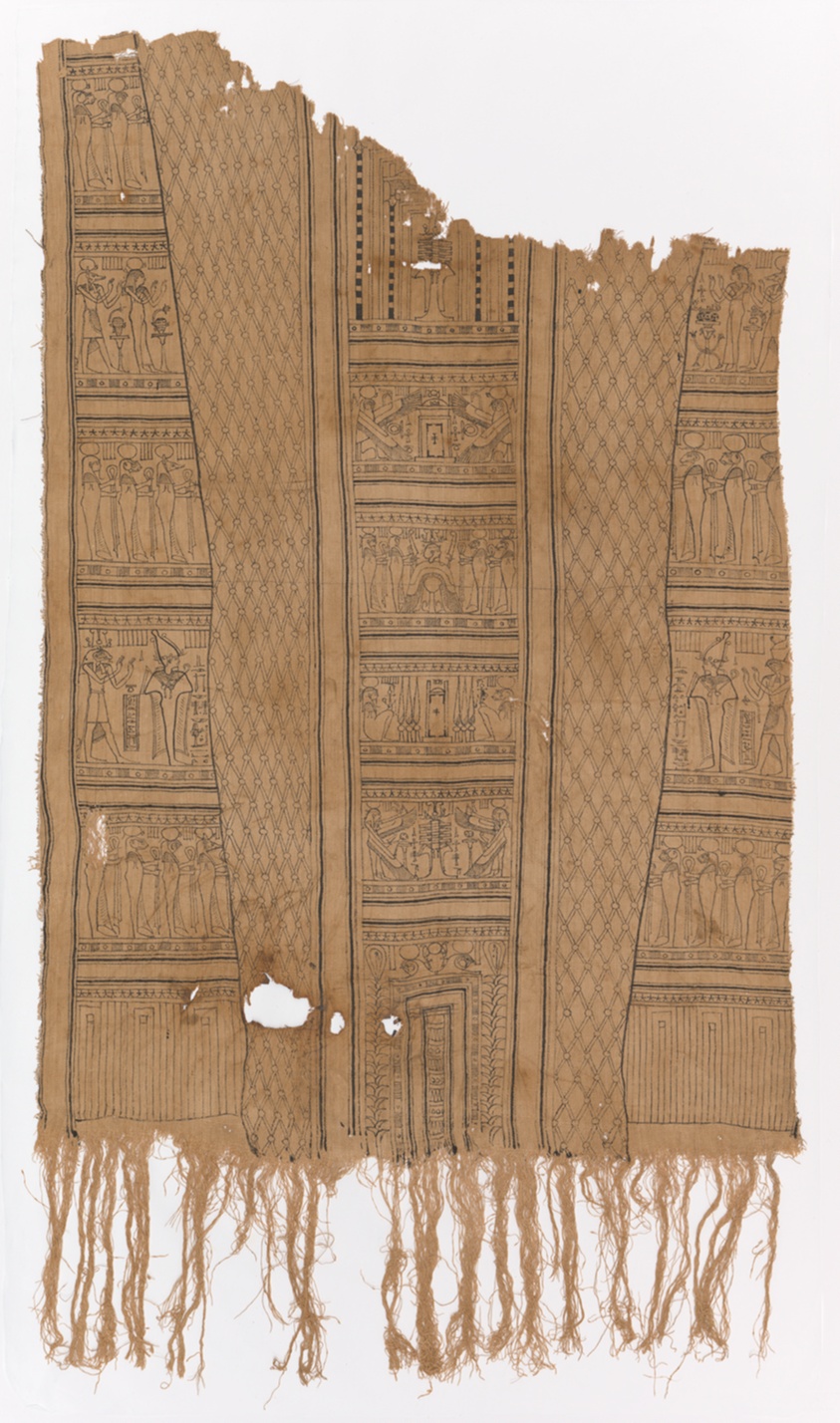
Funerary Shroud Fragment
Ptolemaic Period (332-30 BCE)
- Medium
- Linen, plain weave; painted; warp fringe
- Classification
- Textile
- Dimensions
- 105.5 × 59.9 cm (41 1/2 × 23 1/2 in.)
- Culture
- Egypt
- Museum
- Art Institute of Chicago, Textiles
- Credit line
- W. Moses Willner Fund
- Rights
- Public domain (CC0), as the museum states it.
- Who can see it
- Teens profiles and older: its subject is for older viewers (war, death, the Passion, drink or the like). How works are placed
View at the Art Institute of Chicago
About this work
For thousands of years ancient Egyptians used linen for clothing and other purposes. Such textiles included mummy wrappings and funerary shrouds, like this fragmentary example, that were essential to preserving the body after death. The images of gods, goddesses, and other sacred symbols painted onto this shroud magically protected its owner, ensuring their access to a corporeal form in the afterlife.
Along the sides, alternating panels depict deities with their hands raised in worship and gods carrying long folded strips of cloth to be used in the mummification process. The decoration at the center of the shroud replicates the form of the mummified body that once lay below, with the contours of the legs (covered in a beaded net) still preserved on this fragment.
Description © Art Institute of Chicago, CC BY 4.0