Window mode follows your eyes with your camera, in this browser only: no picture or position leaves your device.
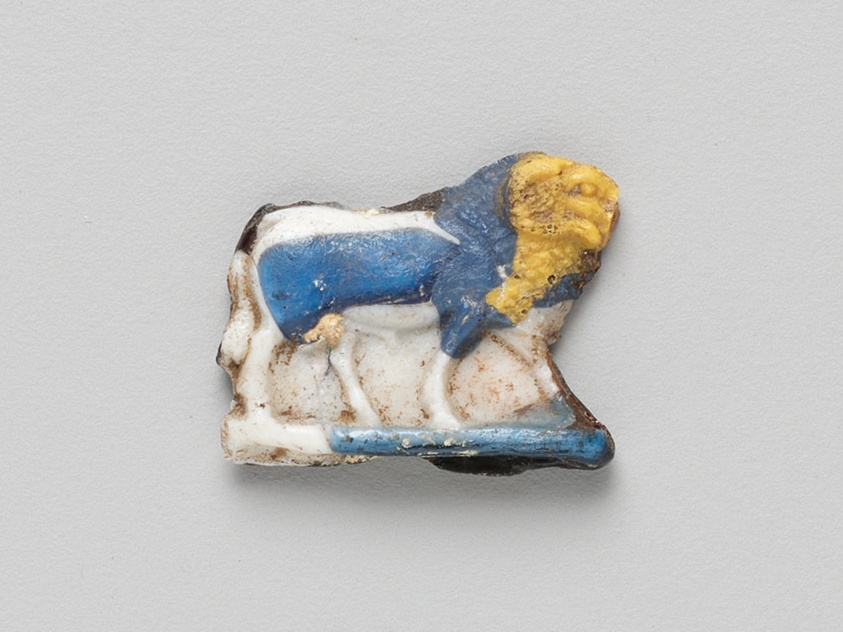
Ram Amulet
Late Period–Ptolemaic Period (664–30 BCE)
- Medium
- Glass
- Classification
- Costume and Accessories
- Dimensions
- 1.9 × 2.4 × 0.5 cm (3/4 × 1 × 3/16 in.)
- Culture
- Egypt
- Museum
- Art Institute of Chicago, Arts of Africa
- Credit line
- W. Moses Willner Fund
- Rights
- Public domain (CC0), as the museum states it.
- Who can see it
- Tweens profiles and older: its subjects are known and suit older children. How works are placed
View at the Art Institute of Chicago
About this work
Small-scale Egyptian figurines, known as amulets, were thought to promote health and good luck. Amulets were such an important part of Egyptian religious beliefs that they were worn by both the living and the dead. They could be mounted on rings or strung as bracelets or necklaces and were placed among the mummy wrappings to secure the deceased’s rebirth and well-being in the afterlife. Many varieties of amulets survive, including figures of deities, parts of the human (ordivine) body, animals, plants, and objects of daily life. The ram symbolized of virility and power. The amulet was also a pun: the words “ram” and “soul” were the same in ancient Egyptian, and so by extension, the amulet gave power to the soul of the deceased.
Description © Art Institute of Chicago, CC BY 4.0