Window mode follows your eyes with your camera, in this browser only: no picture or position leaves your device.
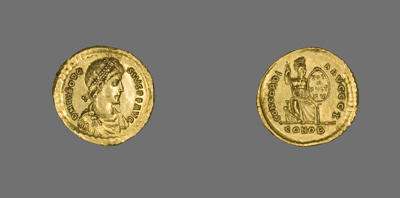
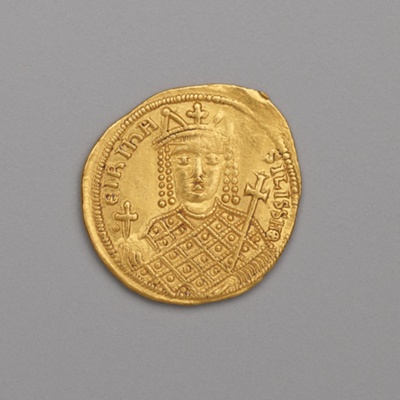
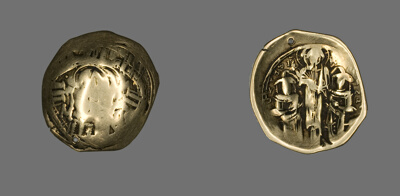
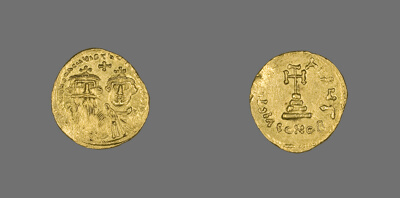
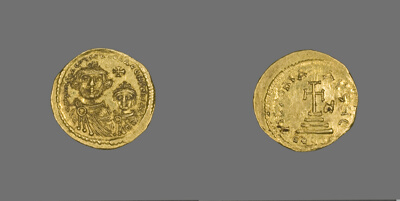
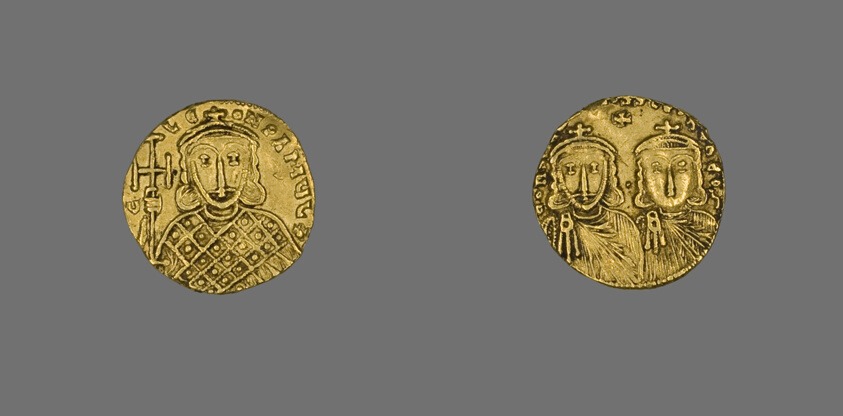
Solidus (Coin) of Constantine V and Leo IV
Byzantine (now Istanbul, Turkey)
751-775 (reigned 741–775)
- Medium
- Gold
- Classification
- Coin
- Dimensions
- Diam.: 1.9 cm (3/4 in.)
- Culture
- Byzantine Empire
- Museum
- Art Institute of Chicago, Arts of Greece, Rome, and Byzantium
- Credit line
- Gift of Emily Crane Chadbourne
- Rights
- Public domain (CC0), as the museum states it.
- Who can see it
- Tweens profiles and older: its subjects are known and suit older children. How works are placed
View at the Art Institute of Chicago
About this work
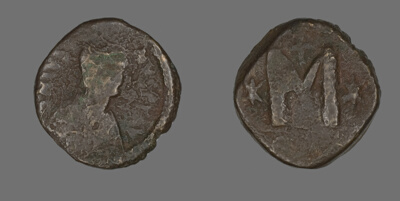
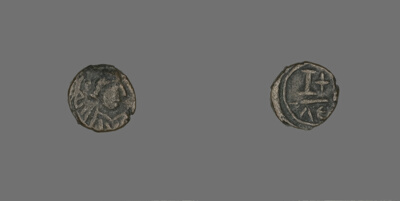
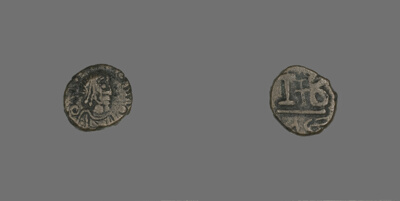
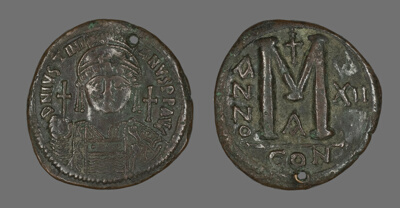
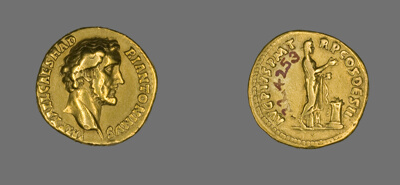
The purpose of the first portrait coins was to identify the ruler. The front side became a mirror of the sovereign’s self-image. The back was often used to communicate the ruler’s accomplishments or intentions. The profile portrait was used because it suited the very shallow depth and limited surface of the coin. The tiny images were carved by engravers into bronze dies, one for the front and another for the back. The coins were then struck, one by one, in a process similar to how modern coins are created today.
Portraits with Royal Regalia Since few citizens actually saw their sovereign, recognizable symbols such as crowns, robes, and regalia served to identify the ruler. This image of an emperor can no longer be thought of as a likeness of the man, but instead a portrait of kingship in the regalia of royalty.
Description © Art Institute of Chicago, CC BY 4.0