Window mode follows your eyes with your camera, in this browser only: no picture or position leaves your device.
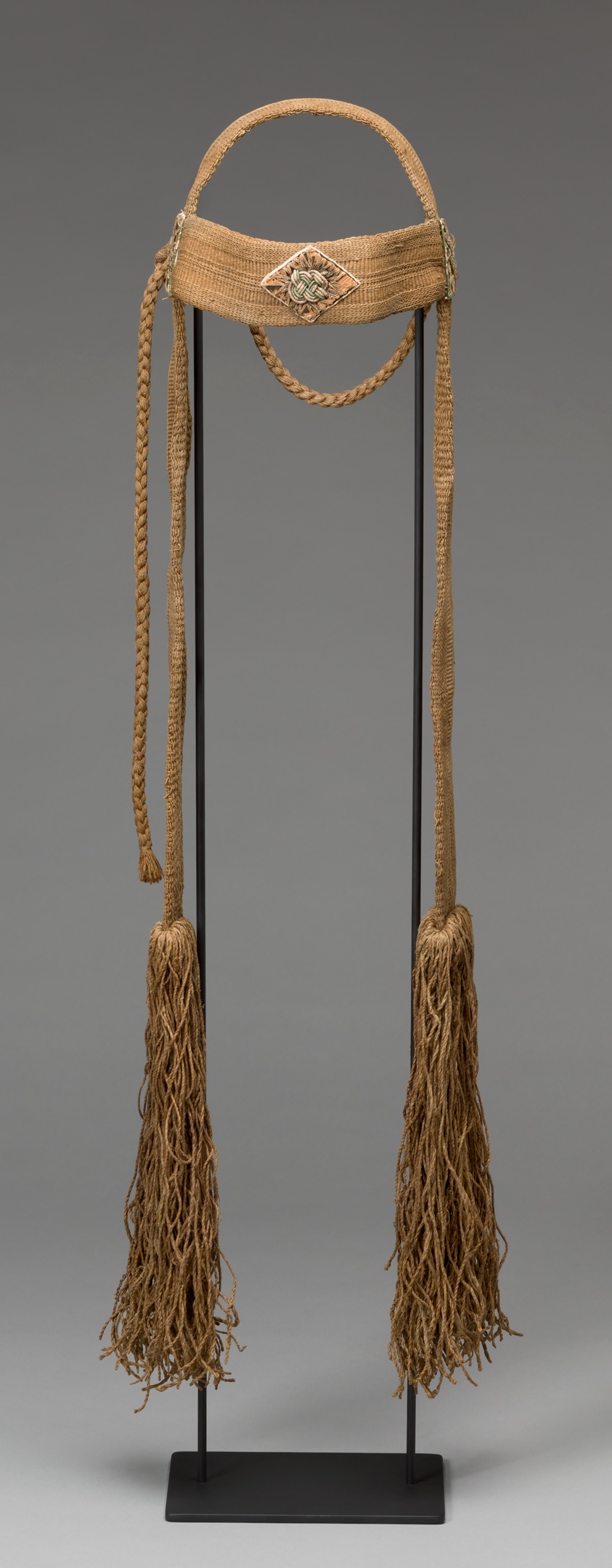
Ceremonial Headdress
Ainu (Hokkaidō, Japan)
Edo period (1615–1868), first half of the 19th century or earlier
- Medium
- Bast fiber, gilt-paper-wrapped silk, silk, and wood
- Classification
- Costume and Accessories
- Dimensions
- 91 × 20 cm (36 × 7 3/4 in.)
- Culture
- Hokkaido region
- Museum
- Art Institute of Chicago, Textiles
- Credit line
- Purchased with funds provided by the Patrick and Shirley Ryan Family in Honor of Alice Welsh Skilling
- Rights
- Public domain (CC0), as the museum states it.
- Who can see it
- Tweens profiles and older: its subjects are known and suit older children. How works are placed
View at the Art Institute of Chicago
About this work
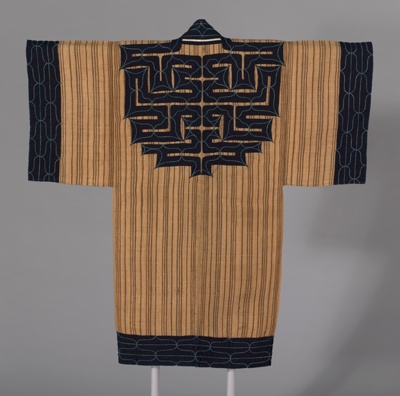
The Ainu people of northern Japan and eastern Russia are an aboriginal group that maintains a way of life separate from that of the mainstream culture in Japan. They have their own language, religion, and material culture, all of which had been suppressed until the later 20th century—even though anthropologists, ethnographers, and art historians have long been interested in studying and preserving their traditions. The Ainu are best known for their visually striking coats as well as carved and decorated wooden implements and headbands, baskets, mats, and other weavings.
Description © Art Institute of Chicago, CC BY 4.0